
We often share our tactical views in our blogs, interpreting recent macro data, looking at policy and geopolitics, monitoring earnings and valuations, and discussing the expected impact on markets from the next three months to three years. We also frequently include strategic perspectives, but the amount of strategic coverage versus tactical is probably about the inverse of their importance to success as an investor. In order to help address that imbalance, we’ve recently put together our Principles of Investing chartbook. Here are some basic charts based on historical stock performance that provide some highlights.
Historically, Time in the Market Beats Timing the Market
This is the one that provides the groundwork for a strategic approach to investing. Long-term research consistently demonstrates that an investor’s time in the market outperforms guessing the best time(s) to invest. This is especially true because markets often work backward: the actual best time to invest is when people feel least inclined to (and vice versa). Empirically, this is a basic driver of mistiming markets, and one that many investors are familiar with. A strategic approach can often lead to a better outcome.
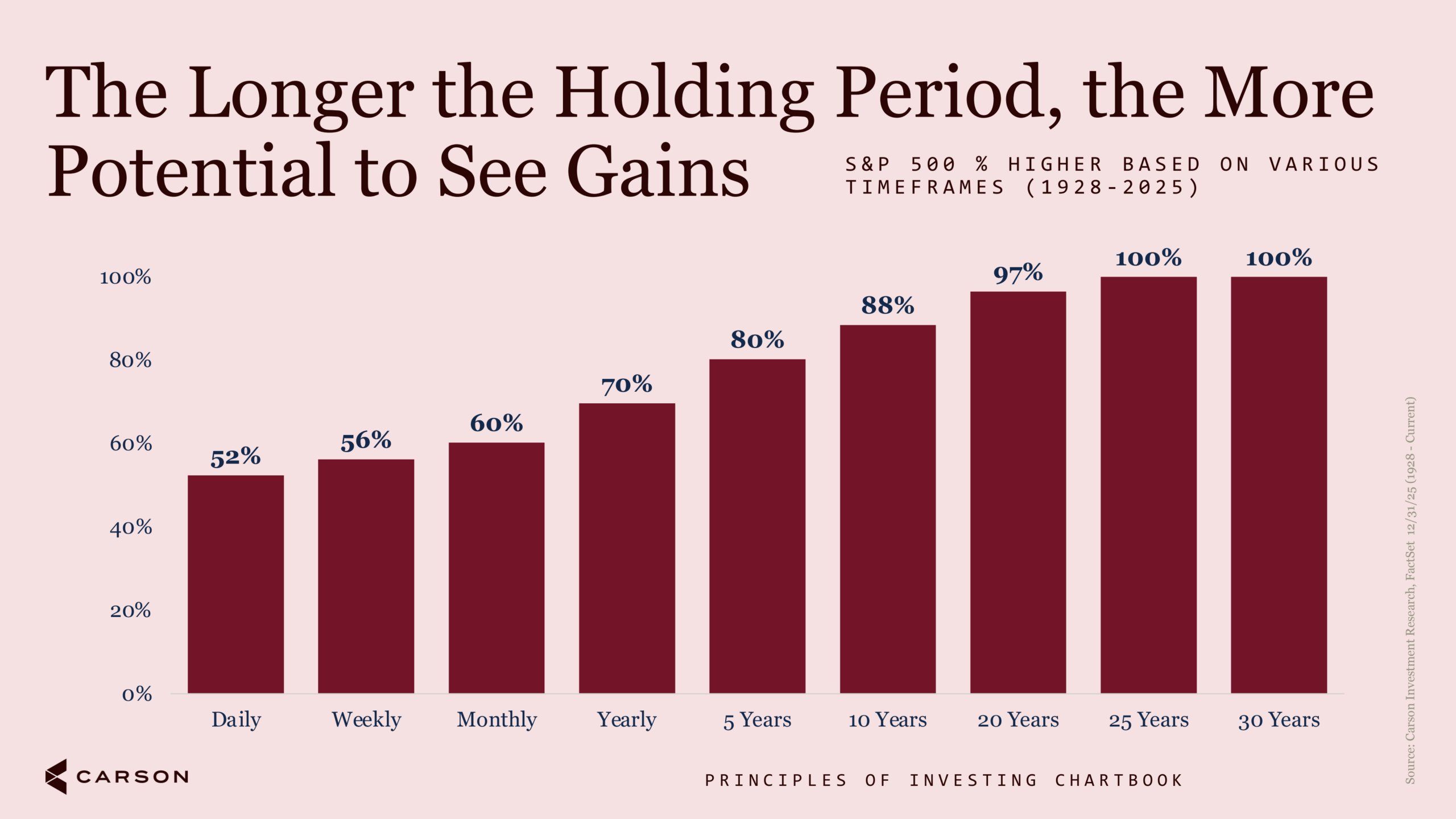
Theoretically, successfully timing the market requires two outstanding decisions: knowing exactly when to exit and when to re-enter. But the market’s best days frequently occur after the worst ones, making these time frames difficult to gauge. That can make a mistimed decision so harmful that multiple years of “time in the market” can be lost. Generally, the longer one has to invest without the risk that a mistimed decision will delay value accumulation, the better an investor’s chance of achieving their long-term goals.
Volatility Is the Toll We Pay to Invest
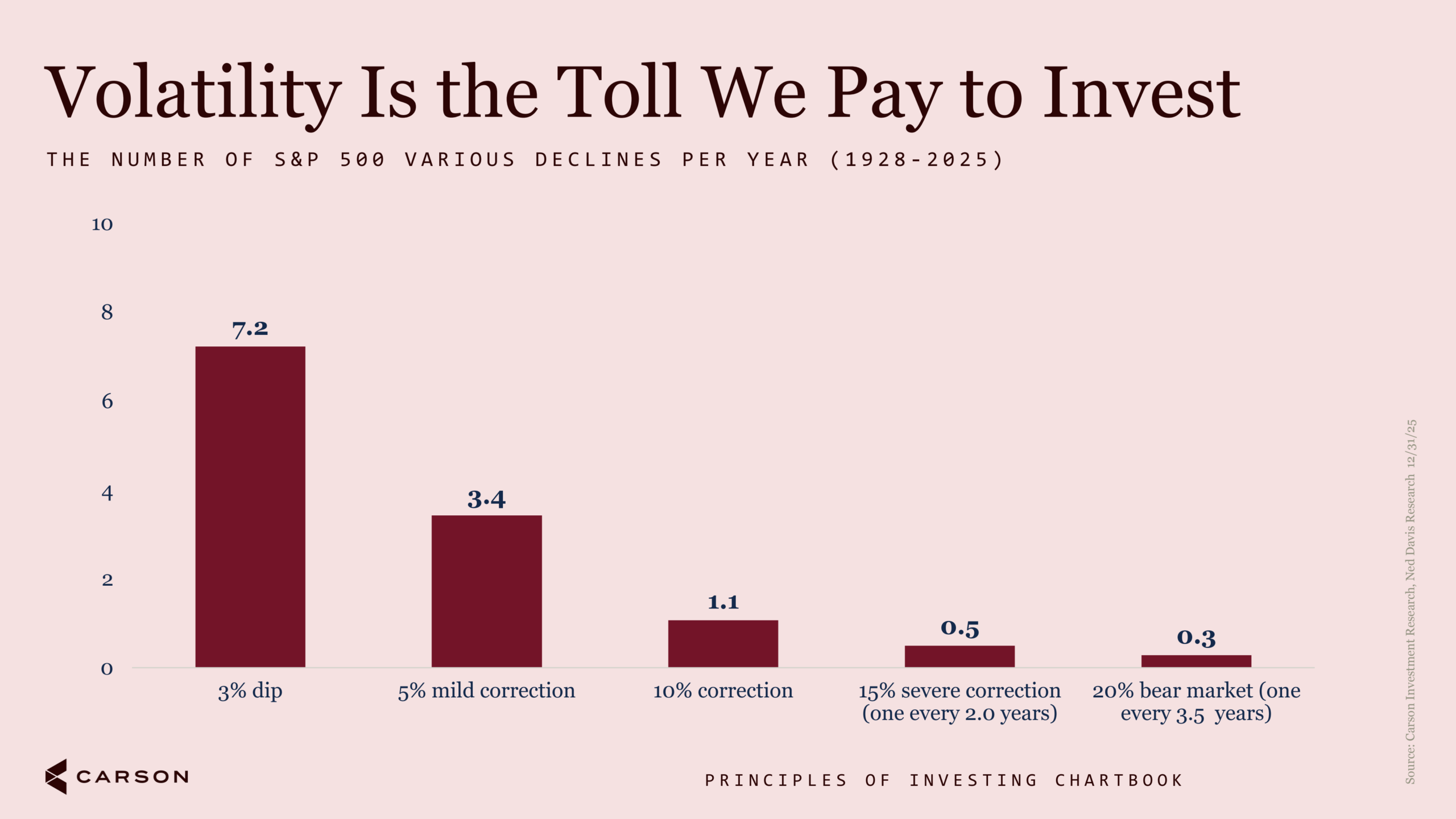
Carson CEO Burt White and Chief Market Strategist Ryan Detrick have often highlighted that volatility is the toll we pay to invest. Strategically, that means understanding that market volatility is normal, as are the historic outcomes we get despite those ups and downs, which are driven over time by economic fundamentals. Truly understanding that helps to build important perspective for when volatility does come along. Market declines feel awful, even for seasoned investors. We all know volatility happens, but in the moment, it always feels like this time it’s different. And it doesn’t take a bear market to feel that way. Sometimes just a 5% decline will do it. Being prepared in advance for the emotions that will come during volatile periods can help a lot.
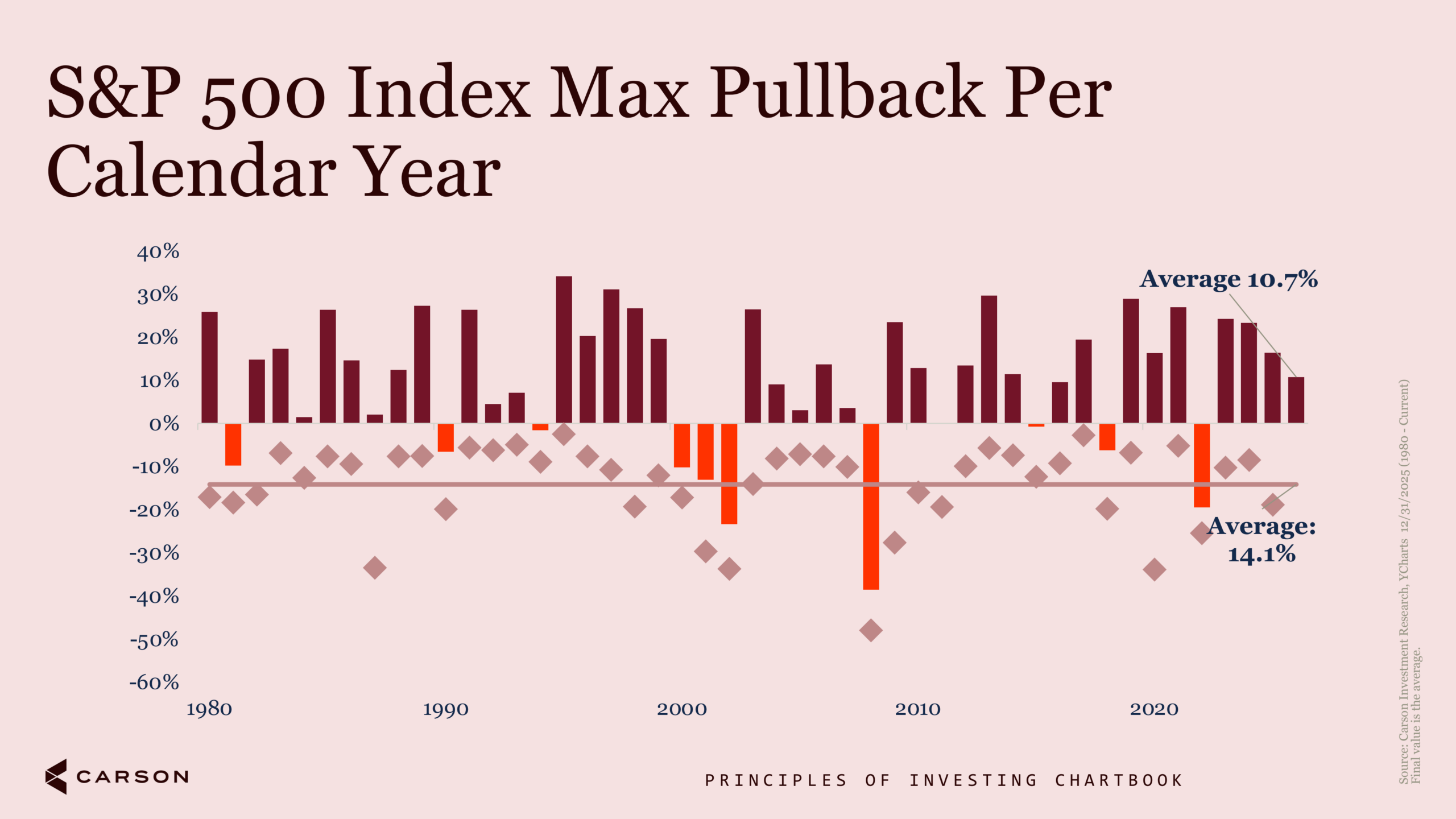
Here’s another perspective on volatility. During the average year, the S&P 500 sees an average drawdown of 14.1% just within that calendar year. Granted, drawdowns are usually smaller during positive years, but even good years can have scary drawdowns (as we saw both in 2025 and even so far in 2026).
Even when the economy is expanding, and stocks are in a “bull market,” markets will decline. Bottom line is there will always be something to be concerned about that could challenge markets during a short-term time horizon. But over the long-term, stocks have appreciated, but it may take a little bit of patience.

Stay on Top of Market Trends
The Carson Investment Research newsletter offers up-to-date market news, analysis and insights. Subscribe today!
"*" indicates required fields
Stocks Historically Have Overcome Major Shocks
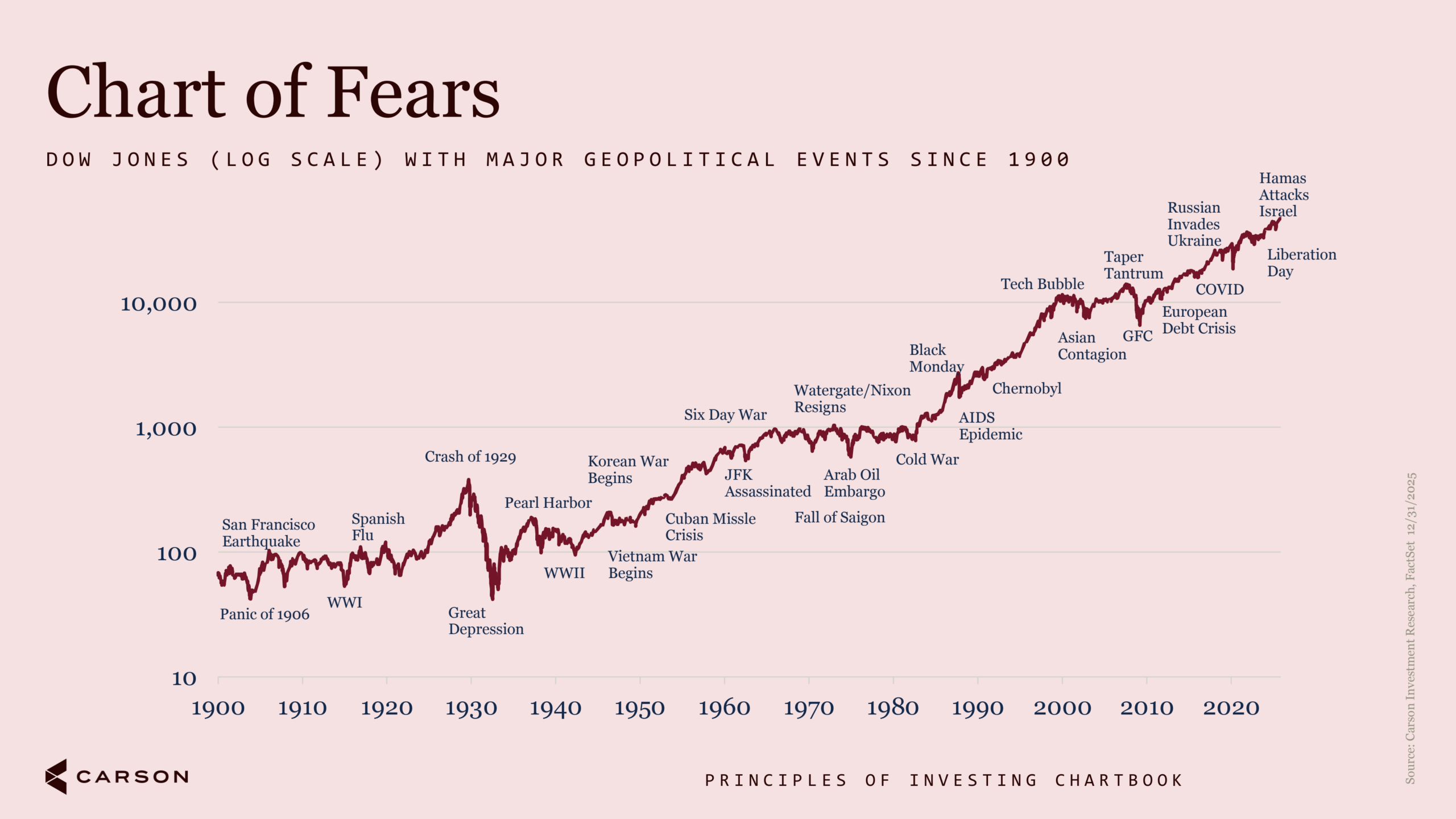
To get a longer historical perspective, we took a look at the Dow Jones Industrial Average, which is one of the first modern stock indexes that is still around today. What events are in that chart? Two world wars. The Great Depression. The Great Financial Crisis. A global pandemic that temporarily stopped economic growth in its tracks. Yes, there were some big market swings, but overall markets continued to advance. And there’s a “why” behind that.
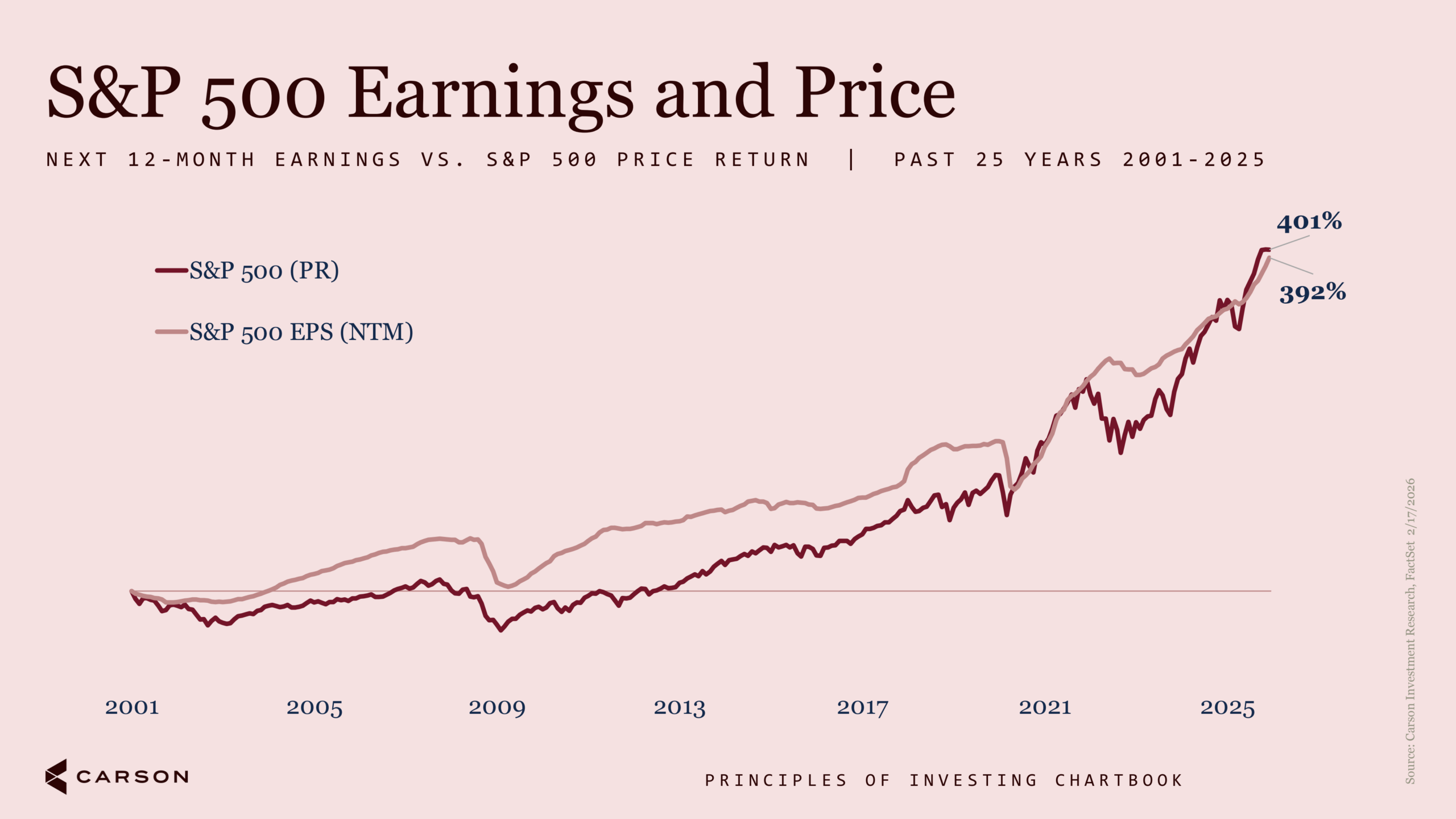
Earnings Gains Imply Stock Gains
Why have stocks been able to advance through global shocks? Stocks represent ownership, a claim on a company’s earnings. Ultimately, if corporate America in aggregate can grow earnings over time, the value of the stock market advances. Stocks in the near term are speculative; over the long run they’ve been driven by economic fundamentals. Even more simply, that means if the economy can continue to grow, even just in nominal terms (that is, including inflation), the stock market will advance, since economic growth flows through to earnings growth. How I see it, that means earnings growth is ultimately much more important than the shocks that may temporarily slow the market down.
Don’t Forget Inflation
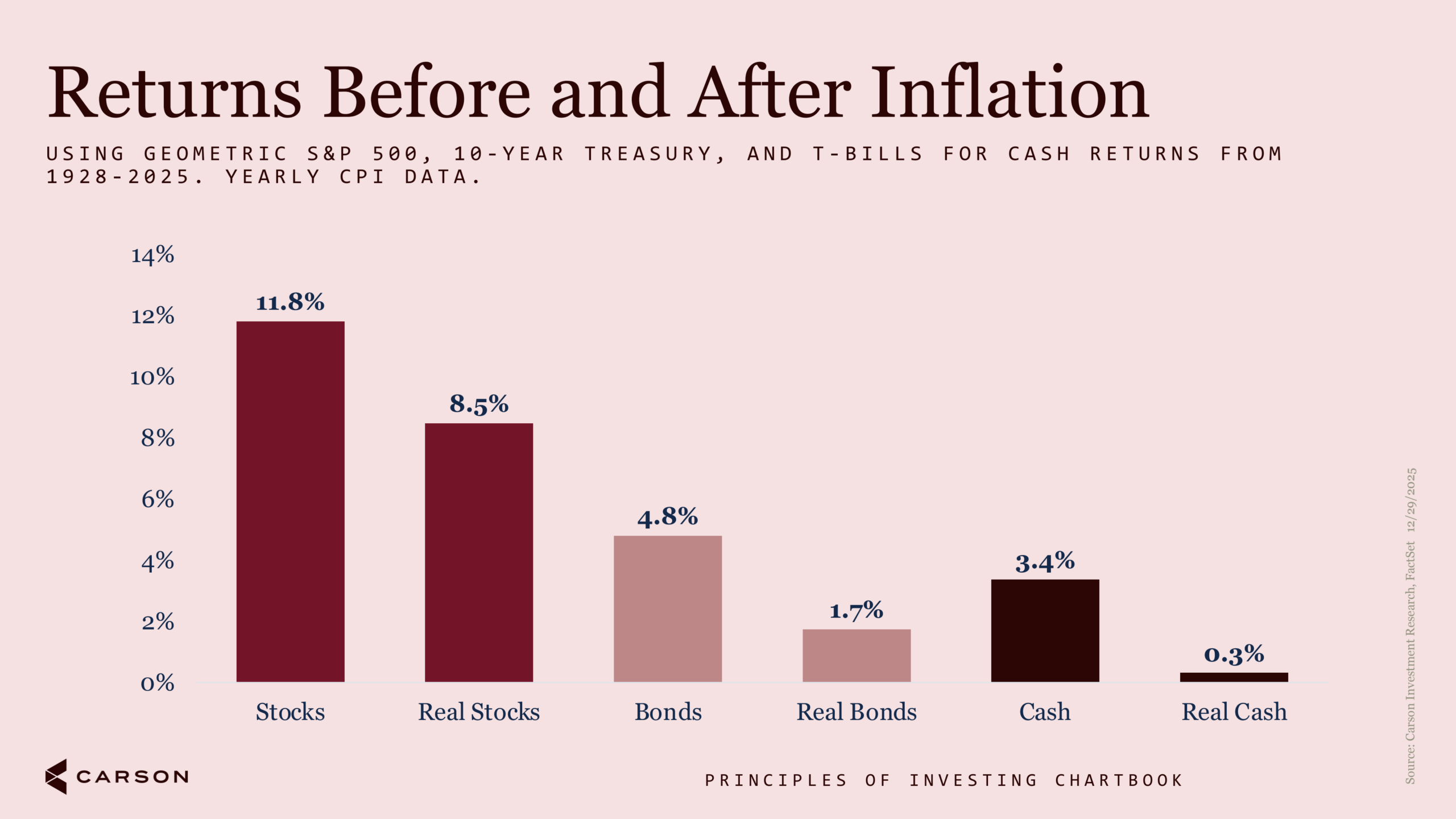
Stocks have two qualities that give them an edge over inflation. First, they are risky, and that allows them to grow into their actual economic value. That’s what gives them their “risk premium,” or extra payoff for being riskier. Also, since the price depends on earnings growth and earnings growth comes partially from inflation, a kind of inflation adjustment is baked into stock prices. Combine those, and it gives stocks an important quality — over the long run stocks tend to be an effective inflation hedge. In the chart below, you can see the return and “real return” (return after you take out inflation) of stocks, bonds, and “cash” (very short-maturity Treasuries). They are all degraded by inflation, but stocks historically have provided the best opportunity to increase value after inflation.
Even a Rising Market Can Be a Good Time to Invest
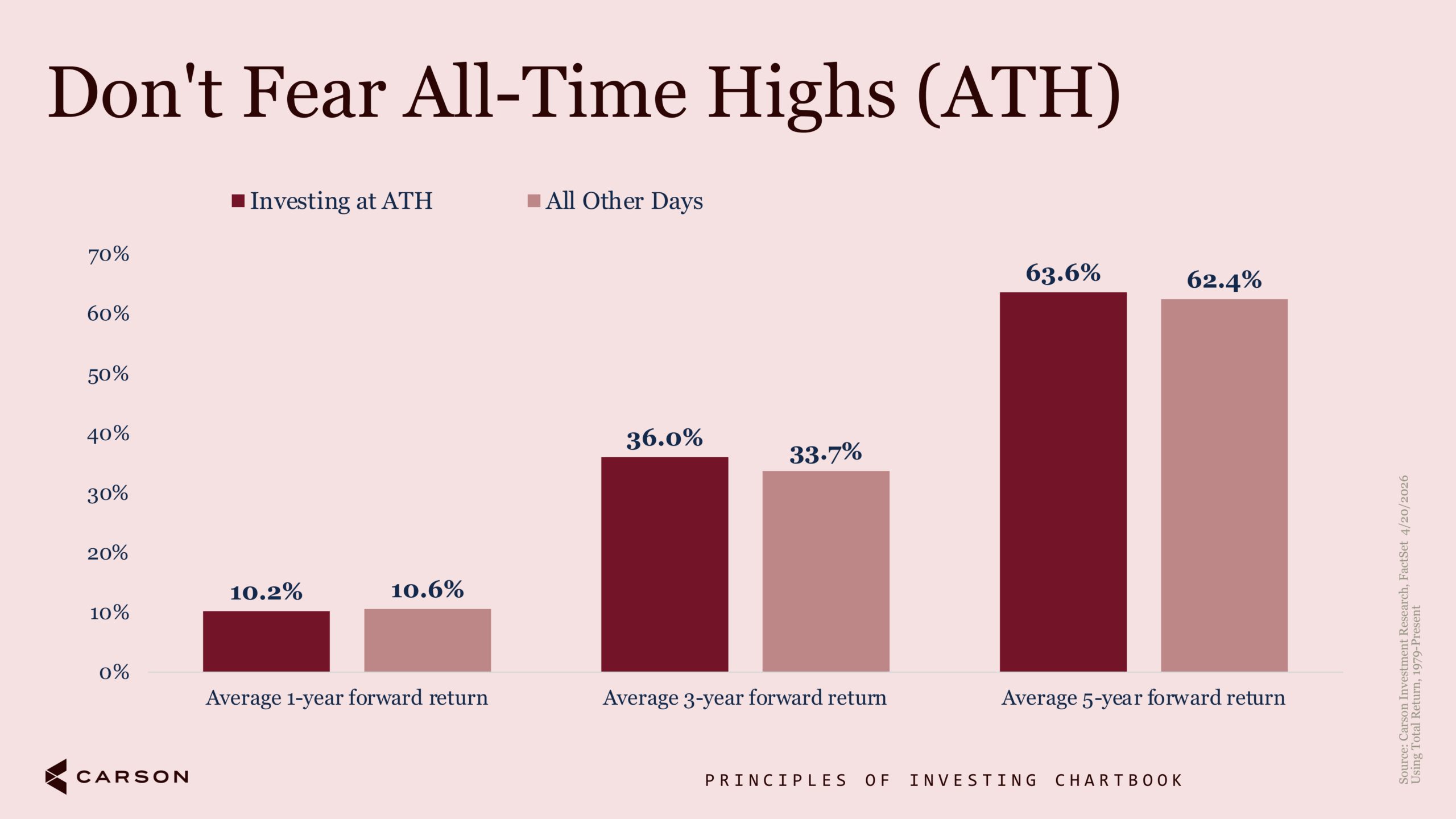
It’s true that the best time to invest is after a major market sell-off. But if you wait for a major sell-off, stocks are likely to have advanced so much that you’ll still get a higher entry than if you had invested earlier. One way to show this is the consequence of investing at an all-time high. Historically, investing at an all-time high does not necessarily have a lower market return than investing at other parts in the market cycle, and timing the market offers little edge because opportunities are relatively rare.
There you have it — some basic market guidelines from Carson’s Principles of Investing Chartbook. The ideas here are only the starting point of our more extensive market analysis, but we think they’re the right starting point. And while we focused on stocks for this piece, it’s always important to be invested at a risk level appropriate for the investor’s risk tolerance. We do cover other assets in the chartbook that can help lower investment volatility, but stocks are often where the biggest mistakes are made, so they’re a good place to start.
By David Matzko, Sr. Analyst, Investment Research
9060720.1. – 5AUG26A