“At this juncture, however, the impact on the broader economy and financial markets of the problems in the subprime market seems likely to be contained.” Ben Bernanke, former Fed Chairman, on March 28, 2007 in a testimony to Congress
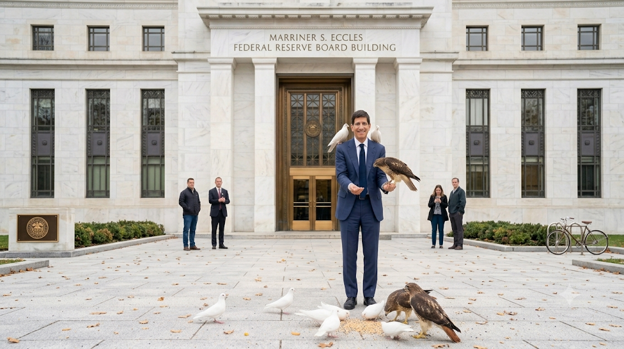
The Federal Reserve Bank (Fed) hiked interest rates for the first time in three years yesterday, moving its benchmark interest rate up 0.25% (25 basis points) to a target range of 3.75% – 4.00%.
The hike was widely expected, as betting markets had 90% plus odds of a 25 basis point hike. What came as more of a surprise is that all 12 voting members voted for the hike, making the official vote 12-0. We expected this to be more like 9-3 or 8-4, but the committee was unified in the decision. Remember last month we saw three members vote for a hike (when the Fed left rates unchanged) and it was described by Kevin Warsh, the Fed Chairman, as a ‘good family fight’.
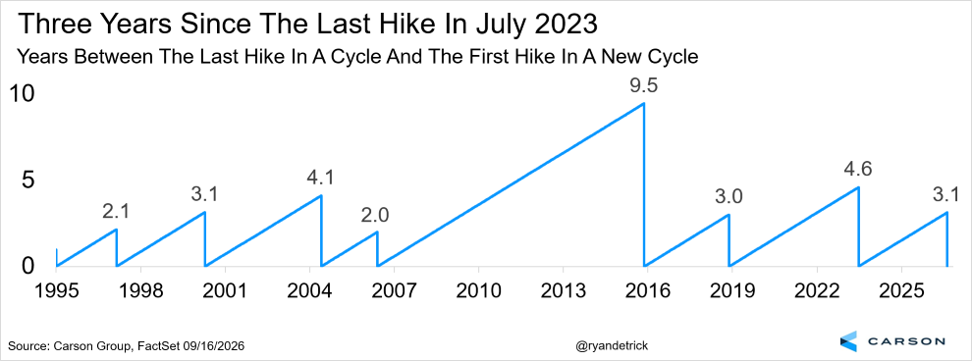
Outside of the post-Great Financial Crisis World, three years between rate hikes is pretty normal.
A Hawkish Hike?
Warsh, in his statement, noted that ‘inflation remained elevated’ and they were trying to bring inflation back to the Committee’s 2% target, a level it hasn’t seen in more than five years.
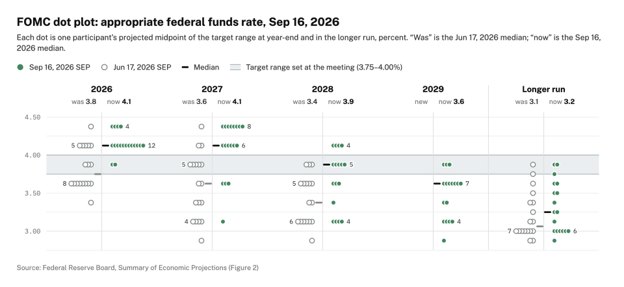
The overall take from the market and many talking heads yesterday was that this was a hawkish hike, meaning more hikes would come. This was somewhat true, as the Summary of Economic Projections, aka the dot plot (a view of members’ expectations for future policy), showed many members now looking for another hike this year (which wasn’t the case at last meeting six weeks ago).

Stay on Top of Market Trends
The Carson Investment Research newsletter offers up-to-date market news, analysis and insights. Subscribe today!
"*" indicates required fields
Breaking it down, 16 out of the 18 members (Warsh once again didn’t give any forecasts) now expect another hike this year, with four expecting two hikes. Interestingly, we didn’t see any increase in the number of hikes next year, and a cut is still expected in 2028.
The bottom line is the path for forward monetary policy moved up only slightly, with the median dot plot showing just one more hike this year and none in 2027. Was this really so hawkish? We don’t think so, but we will get to that soon enough.
Not Everyone Liked It
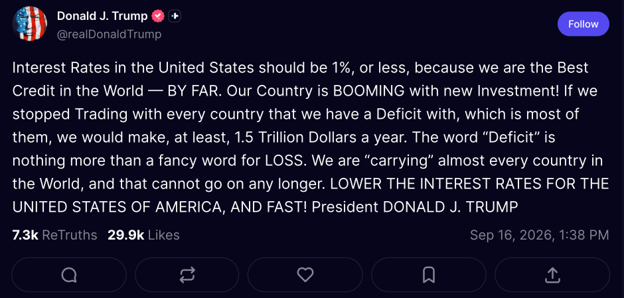
Remember, Warsh was appointed by President Trump, and let’s just say the boss didn’t seem to be happy. Then again, President Trump has been very vocal; he wants cuts, and now the person he appointed just voted for a hike a few months into the job. We don’t like to dive too much into politics, but here you kind of have to I think. With a night to sleep on it, my take is that 12-0 vote was a show of unity from the Committee. It probably won’t be that way next time, but for this first hike, a unified front was deemed necessary.
Some Good News
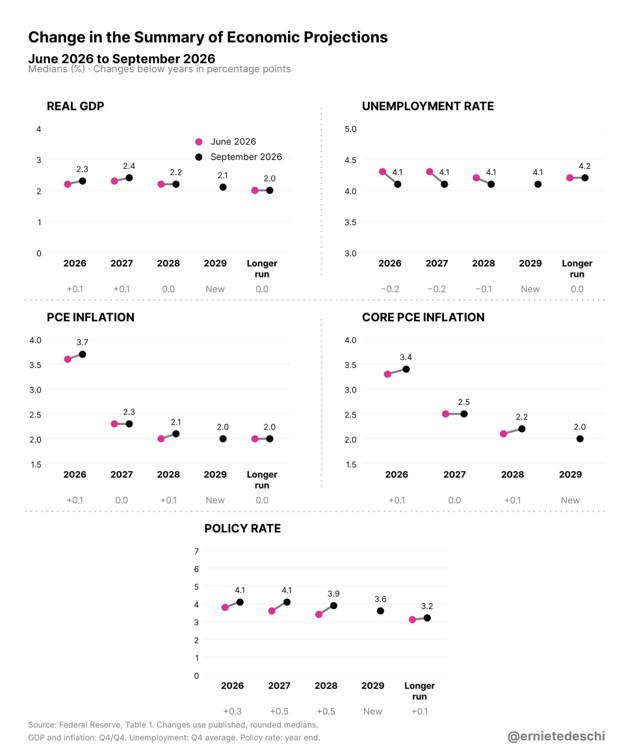
They might see more hikes, but they were also optimistic about the economy. In fact, members expect stronger growth, lower unemployment, and higher inflation compared with their previous estimates.
We’ve said all year this was a period of inflationary growth, and that sounds like we are still in that regime to us. “There’s been a pretty wide-ranging set of data, including the labor markets, that the economy has strengthened,” explained Warsh, likely giving the Fed a runway to hike rates to slow inflation, while expecting the economy to handle the higher rates.
Now What?
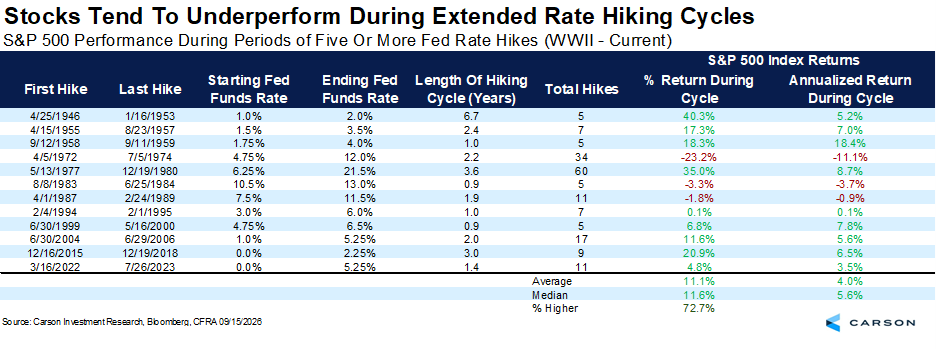
Here’s the thing, once the Fed starts hiking, it is rare for them to do a ‘one and done’. We saw this in 1997, but it is extremely rare. Here we looked at other periods that saw at least five hikes and how stocks did during the period of hiking. Overall, higher returns are common, but an annualized return of 4.0% is well below average. Let’s be clear, there are many other factors to note here, mainly how quickly they hike. Yes, the last hiking cycle saw gains from March 2022 to July 2023, but the Fed hiked aggressively in 2022, and we saw a vicious bear market before the recovery in 2023.
Not All First Hikes Are The Same
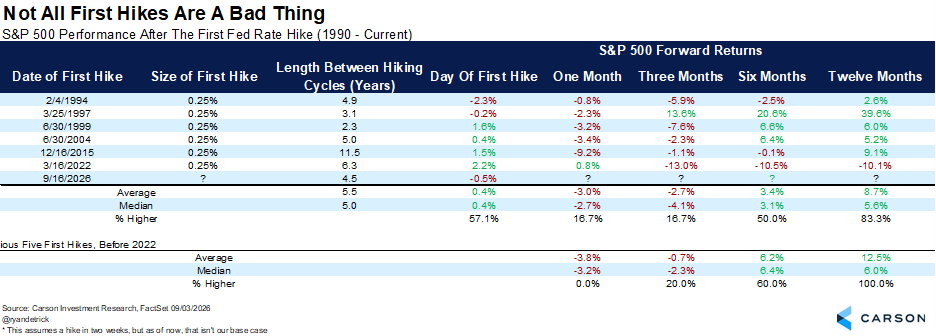
Building on this, yes, stocks didn’t do well after the first hike in the last cycle back in 2022. But the Fed hiked 25 basis points, then quickly hiked 50 basis points, and then 75 basis points three meetings in a row. They were extremely behind the curve on inflation (guess it wasn’t transitory 😉) and had to hike quickly, which the market didn’t like one bit. Looking at what happened after the other first hikes, you can see stocks have actually done pretty well overall, but early weakness is normal. 1997 is the clear outlier, as that was truly a ‘dovish hike’, given they didn’t hike anymore after that first hike. Still, a year after the first hike, stocks had been higher five times in a row before the 2022 hiking cycle.
Maybe They Weren’t So Hawkish?
Our initial take was different than many others. Looking again at the dot plot showed that only eight of 18 members expect two hikes over the next year, and not a single member is looking for more than two hikes over the next 12 months. We don’t see how this isn’t net dovish.
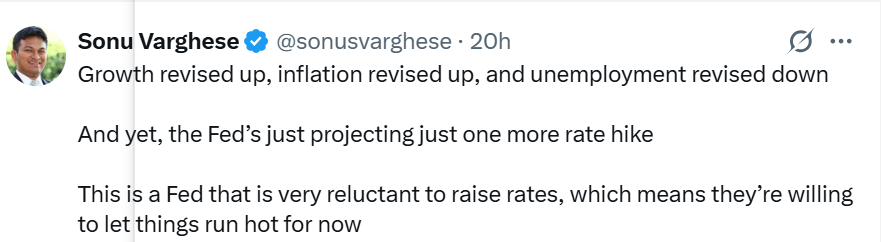
Or as Sonu Varghese, our Chief Macro Strategist, put it, we think this is a Fed that is very reluctant to hike, even in the face of many reasons to hike. We’ve said all year they will likely run it hot, and yesterday’s decision does little to change our opinion there.
Thank you so much for reading what our team has to say about the Fed, as we know you have many places to get this information. We will have many more thoughts coming out soon on this, but the bottom line is we remain bullish and don’t think a couple of Fed rate hikes will slow down this bull market when you have a major AI CAPEX boom taking place, earnings and profit margins soaring, and a suddenly improving labor market. We don’t think the Fed is really interested in slowing any of that down.
Lastly, for all of our latest thoughts on things, including if AI will kill us all, be sure to check out our latest Facts vs Feelings podcast.
For more content by Ryan Detrick, Chief Market Strategist, click here.
9132533.1. – 17SEPT26A