Welcome to Carson Investment Research’s Earnings Check-In. This series is built weekly from FactSet’s Earnings Insight report (John Butters, VP, Senior Earnings Analyst with FactSet), with index weights and market caps sourced from YCharts, and aggregation performed in-house. We tie every figure to FactSet’s published numbers, then add Carson’s perspective on top of that. We publish our Earnings Check-In weekly during earnings season.
Companies just put up one of the best earnings quarters in years, and investors are more nervous than they’ve been all year. Nvidia’s CEO resigned last week. Chip stocks are getting hammered, the Fed is considering raising rates again (potentially a lot), and Anthropic is about to go public at a valuation above a trillion dollars. Somehow, the S&P 500 is only about 5% off its high, all while, investors are nervous!
That’s a lot at once, so I want to step back this week. With this much going on, we need to look at the incentives. Who are the players at the table? What do they want? How do those incentives clash? When that happens, what matters most is who has the most power at the table.
Where the Season Stands
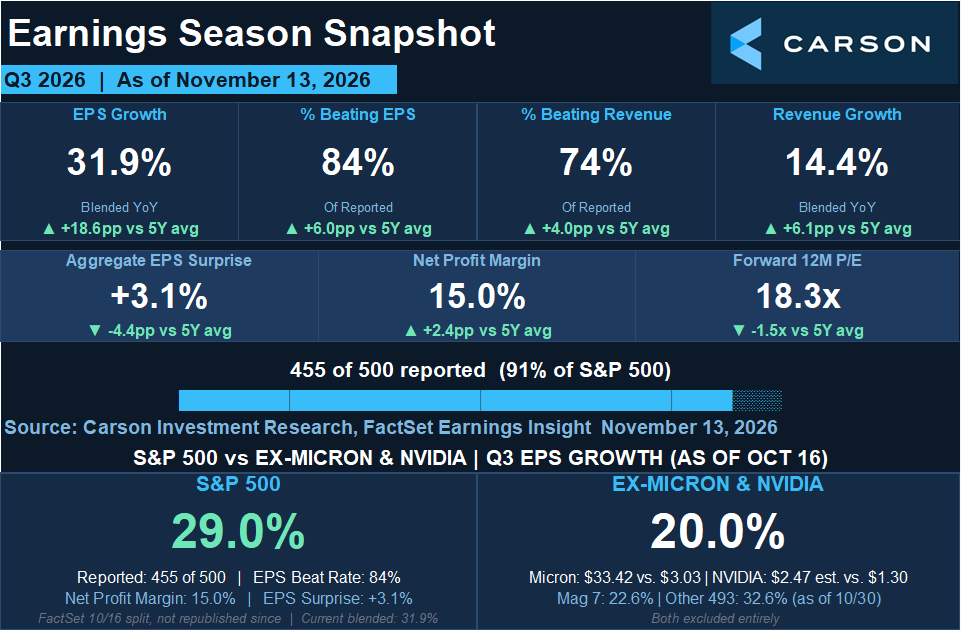
With 91% of the S&P 500 reported, earnings are growing 31.9% from a year ago, up from 31.3% last week, according to FactSet. That’s the third straight quarter above 25%. 84% of companies beat estimates, well above the 5-year average of 78%, and revenue is growing 14.4%.
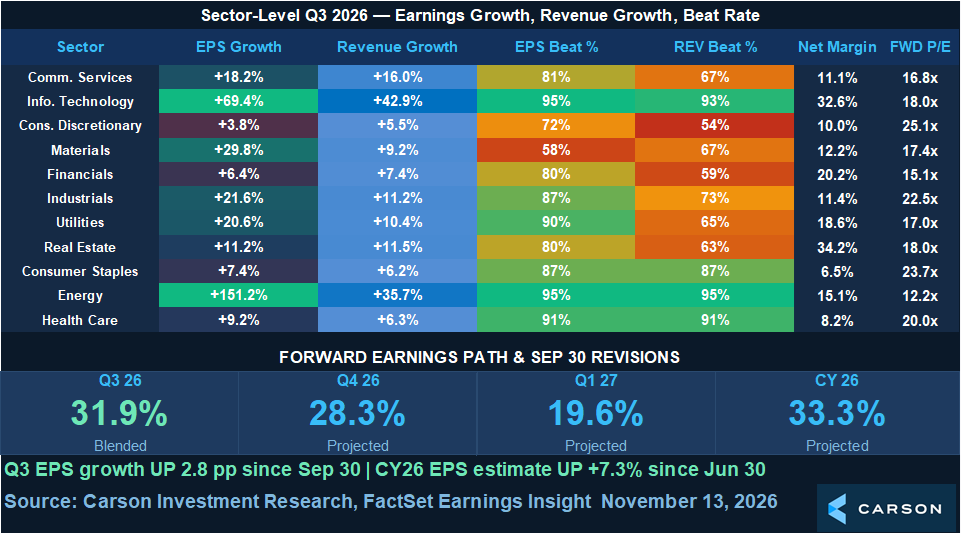
Energy and Technology are still doing most of the heavy lifting, but all 11 sectors are growing. Bottom line, the earnings picture looks great right now… So, what does it look like over the following quarters?
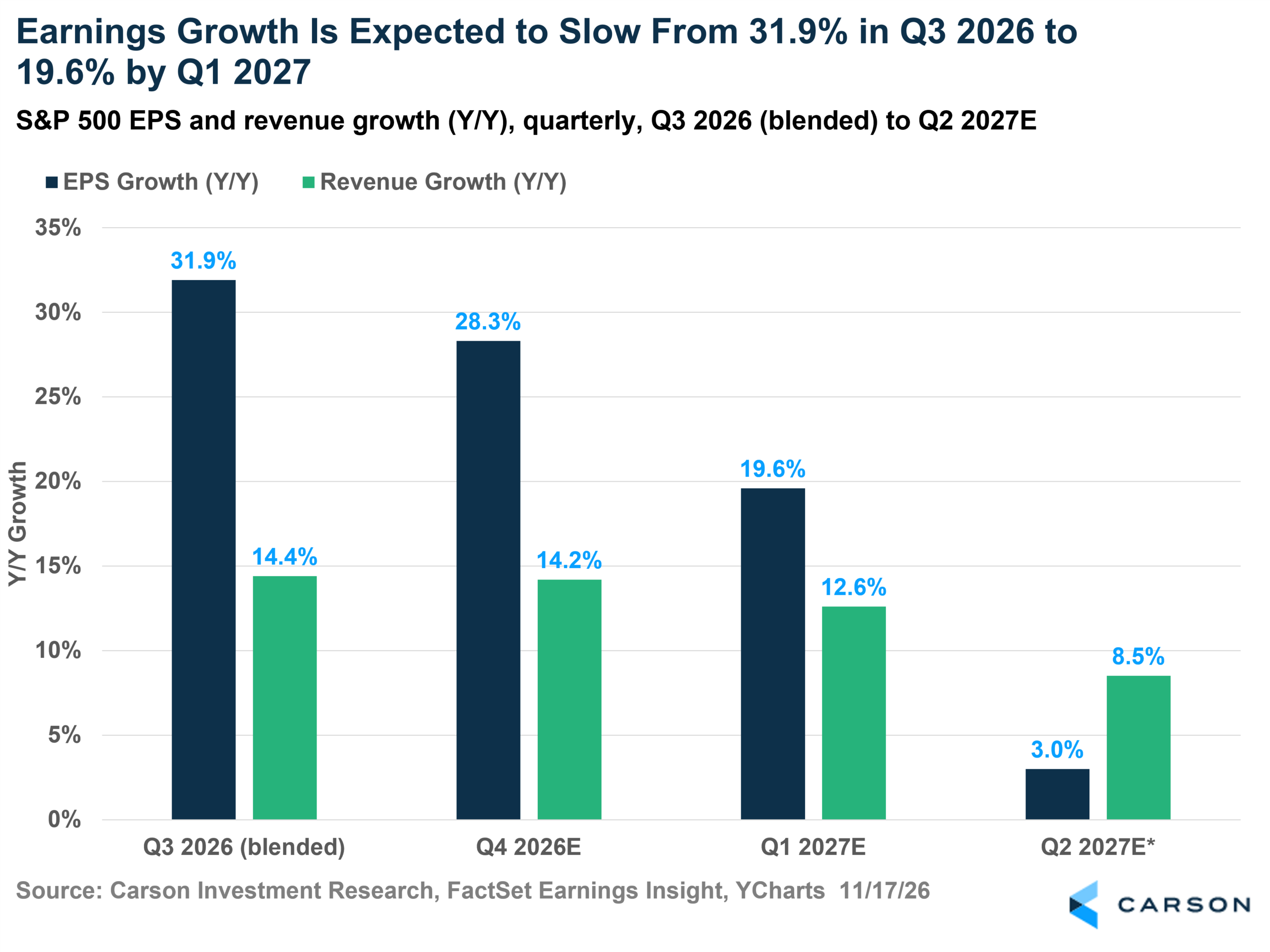
Part of the nervousness comes from the fact that the stock market always looks ahead, usually six months to a year, with some valuation methods going out much further. Analysts see growth slowing from 31.9% now to 19.6% by early next year. Twenty percent growth is still great. It just feels a lot less exciting when you’ve gotten used to thirty.
Everybody Wants Something
This brings me to the incentives. Start with the White House: President Trump has wanted lower interest rates since his first week back in office, when he said he’d “demand that interest rates drop immediately.” He also wants America to win the AI race, and on Monday he said he “wouldn’t mind” seeing Jensen Huang back at Nvidia.

Stay on Top of Market Trends
The Carson Investment Research newsletter offers up-to-date market news, analysis and insights. Subscribe today!
"*" indicates required fields
Big Tech wants to keep building. The largest tech companies are spending more than a trillion dollars a year on data centers, and none of them wants to be the first to slow down and fall behind. The AI labs need cash too: Anthropic plans to raise $83 to $90 billion this week, mostly for computing power, in a year when the 10 biggest IPOs are down 20.5% on average from their offer prices.
Then there’s the new Congress. After their midterm sweep, Democrats want to follow through on campaign promises to slow data centers and get tougher on chip sales to China.
The Fed Has the Most Power Right Now
All of those players matter, but the one holding the most cards right now is the Fed, and it’s worried about inflation. Producer prices, which track what businesses pay, are up 6.5% over the past year, the biggest jump since 2022. The Fed’s favorite inflation measure ran at 3.1% in September, well above its 2% goal.
While the base numbers are already hot, look at what AI is doing to that!
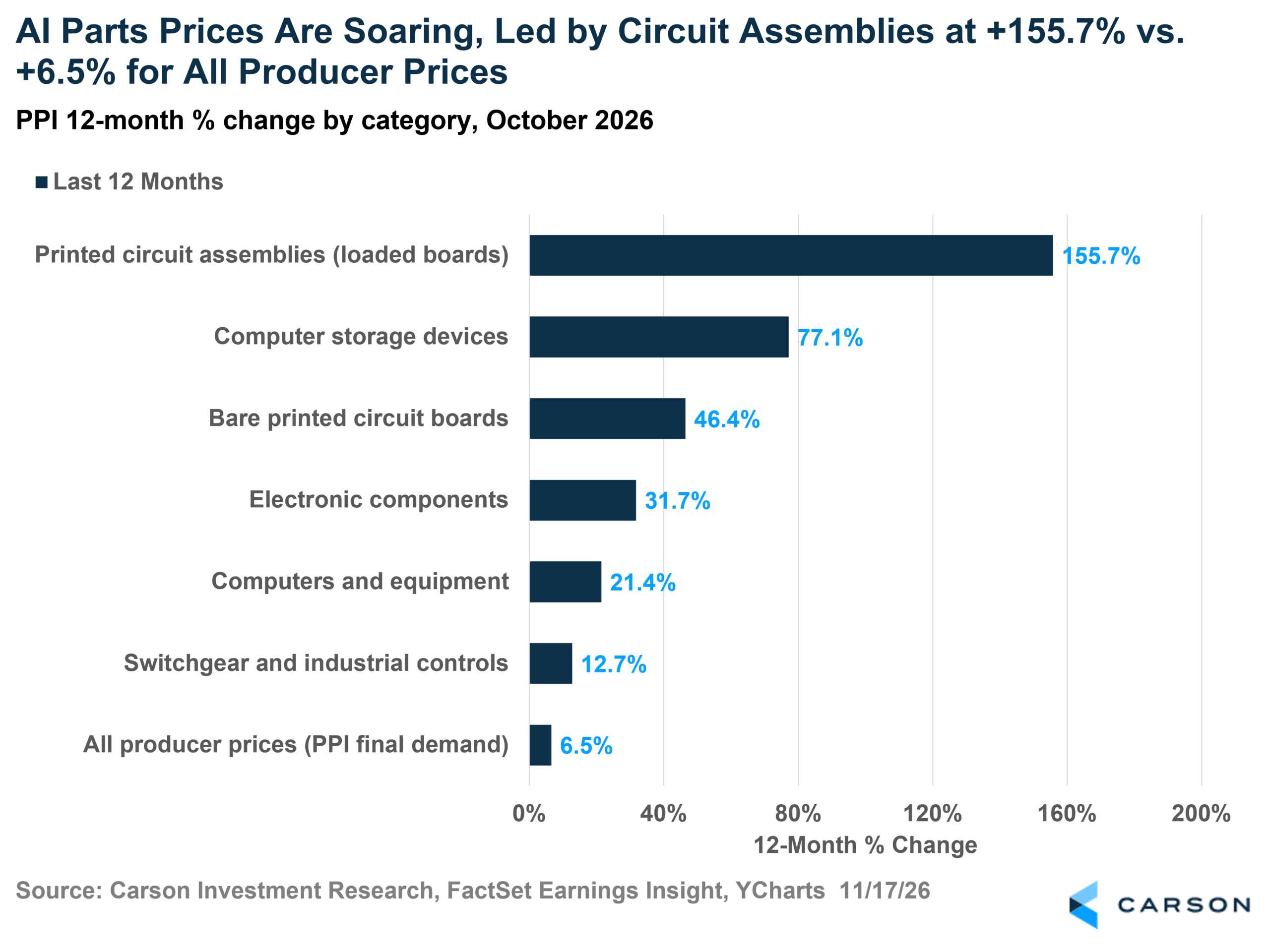
Prices for loaded circuit boards, a key piece of every AI server, are up 156% from a year ago. Electronic components are up 32%. When every big tech company is racing to buy the same parts at the same time, those parts get expensive, and some of that eventually trickles into the prices you and I pay.
That’s why the Fed raised rates in September for the first time in over three years, and why traders now see a 92% chance of another hike in December. Two weeks ago, markets were expecting fewer than two more hikes by next September. Now they’re expecting more than three.
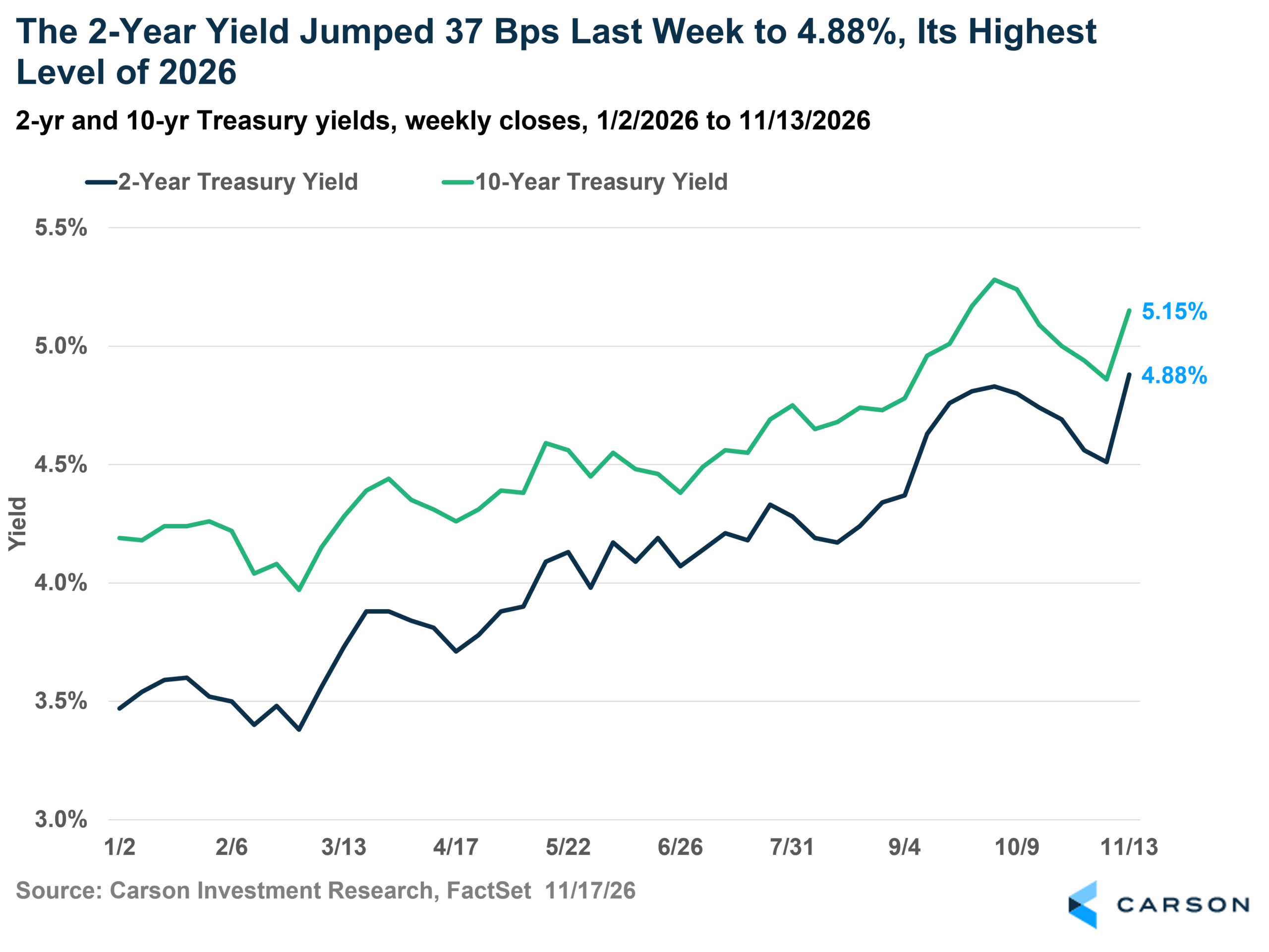
Think of the 2-year Treasury yield as the market’s best guess for where the Fed is headed. It jumped from 4.51% to 4.88% in a single week after two hot inflation reports, and it’s been steadily rising since the Iran war broke out in late February.
That’s what makes the Fed so powerful right now. The White House wants lower rates, but even Kevin Warsh, the Fed chair Trump picked himself, is raising them. Big Tech wants cheap money to keep building, but every hike makes borrowing more expensive. The bond market is piling on, too, with the 10-year Treasury yield back above 5%. The AI boom is pushing against the one player at the table that can make money more expensive for everybody.
Investors Are Picking Sides
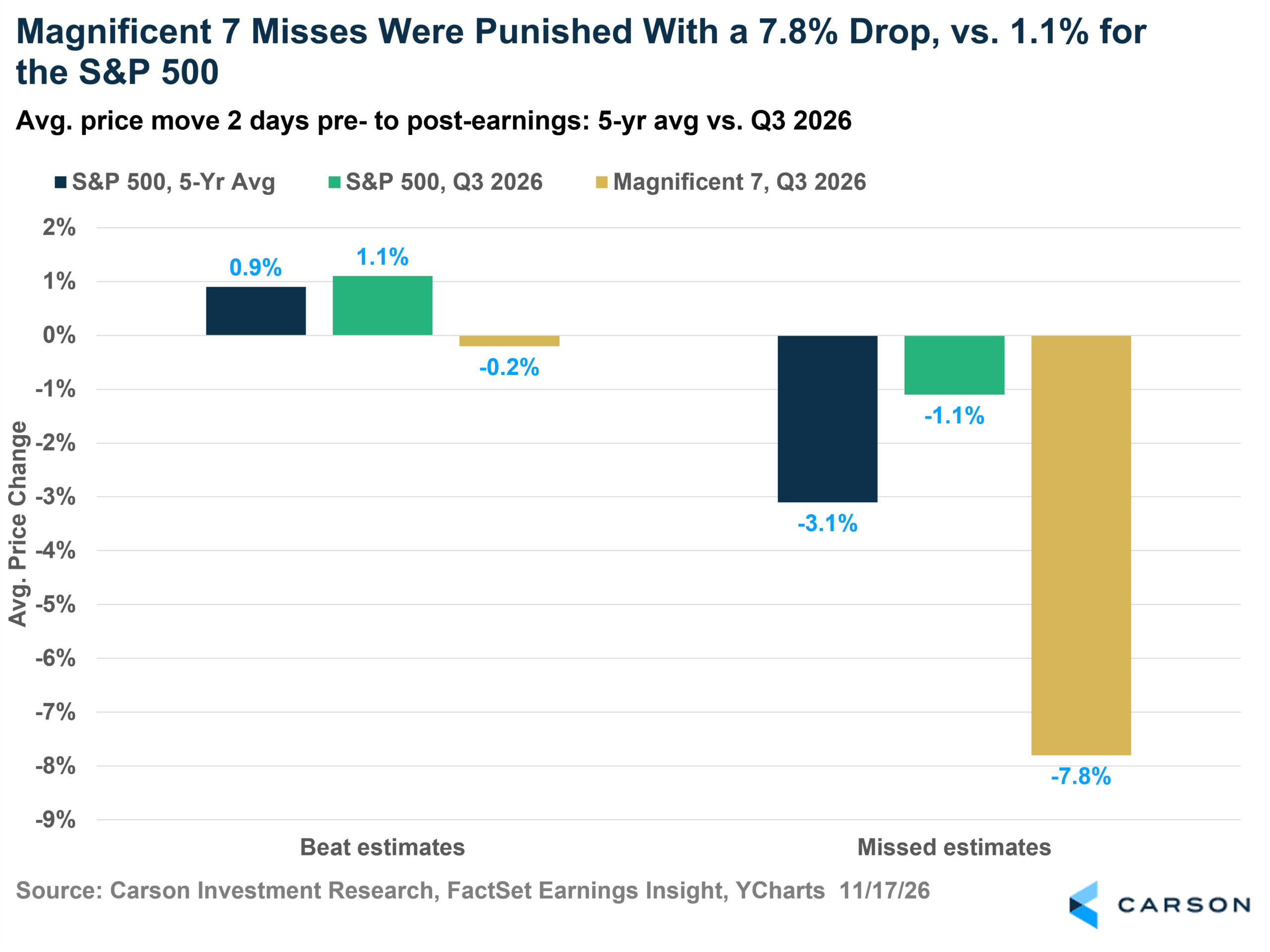
And you don’t have to look far; investors are already reacting to this. When a typical company missed estimates this season, its stock fell about 1% around the report, much gentler than the usual 3%, according to FactSet. When Alphabet, Amazon, and Meta missed, their stocks fell an average of almost 8%. Investors are going easy on nearly everyone except the companies paying for the AI buildout.
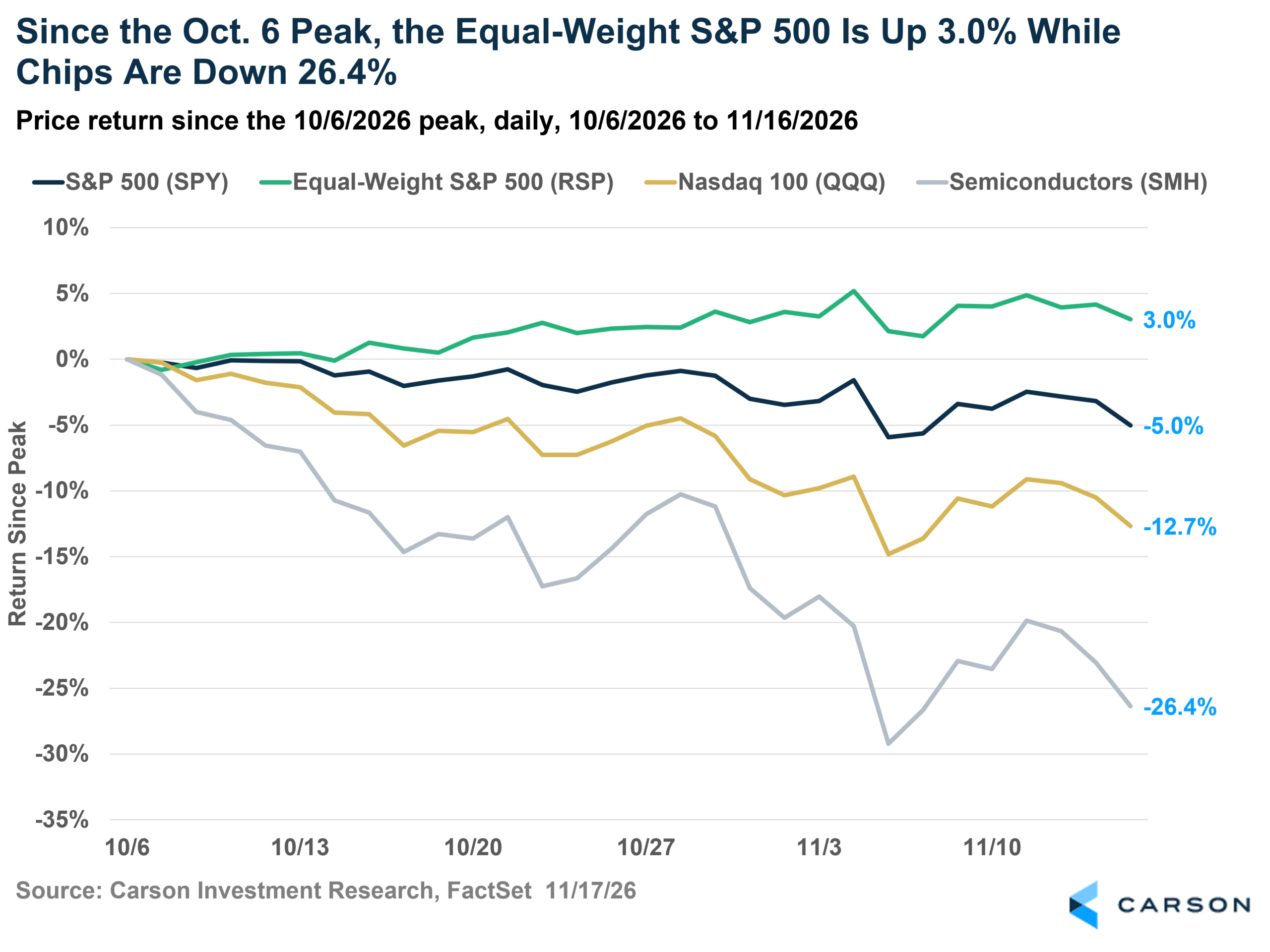
This has made the market very split, as shown by the dispersion among indexes. Since the S&P 500’s record close on October 6, chip stocks are down 26% and the Nasdaq 100 is down about 13%. The average S&P 500 stock, on the other hand, is up 3%. People are pulling back on AI spending, and most are keeping their money in stocks.
Where I Think This Goes
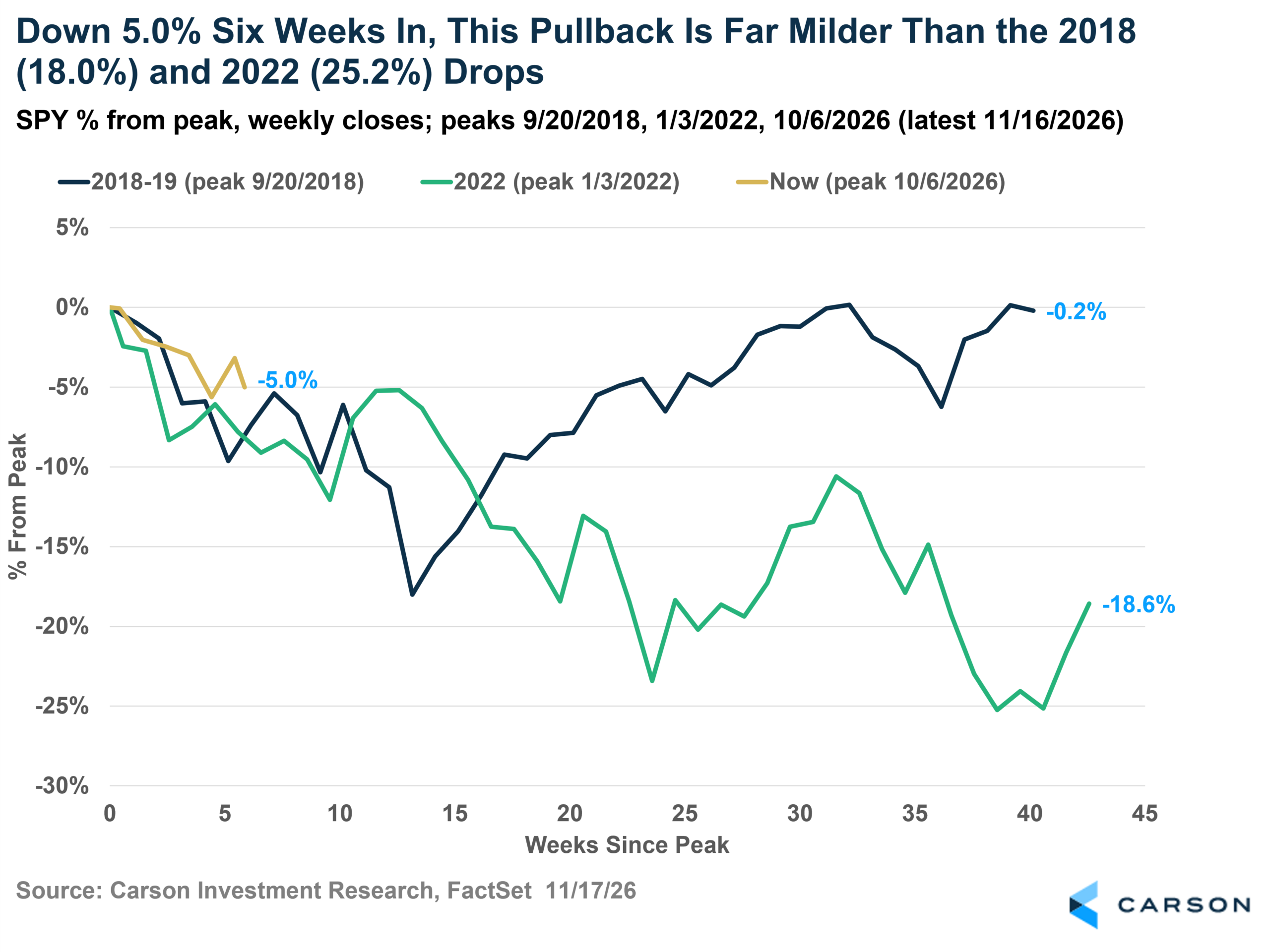
I could see stocks finishing the year on a solid note. Everyday investors keep showing up, and the end of the year tends to be kind to the market with the so-called “Santa Claus Rally.”
Heading into 2027, though, I’m a little more cautious. The player with the most power wants higher rates until inflation cools, and most of this market’s leadership is tied to AI spending, the part of the market that higher rates hurt the most. We’ve seen Fed-driven pullbacks before. In 2018, the Fed kept hiking, and the S&P 500 fell about 20% into Christmas Eve before the Fed hit pause. In 2022, inflation wouldn’t budge, the Fed kept going, and stocks fell about 25%. Which path we follow will mostly depend on inflation.
None of this is a knock on earnings. As I wrote last week in Priced Like a Peak, this has been one of the best stretches for corporate profits in years, and analysts still expect S&P 500 earnings to grow 16.2% in 2027, according to FactSet. Slower growth doesn’t have to mean lower stock prices, either. In 2019, earnings barely grew, and the S&P 500 still rose 29%. The big difference is that the Fed cut rates three times that year, and today it’s going the other way.
When the Fed raises rates, investors pay less for every dollar of earnings, so stocks can fall even while profits climb. That’s what happened in 2022, when earnings still grew about 5%, and the S&P 500 dropped about 19%. Higher rates eventually catch up to the earnings themselves too, through pricier loans for the AI buildout and customers who get more careful with their money. The one thing that would really change my mind is inflation cooling on its own, and the first place I’d look for that is those AI parts prices in the chart above. Until then, the market is forcing the Fed’s hand.
Reporting This Week
FactSet counts 14 S&P 500 companies reporting this week, including 4 in the Dow. Nvidia is the big one, which is today, the first report under interim CEO Colette Kress. New leaders usually have every reason to set a low bar they can clear, so I’ll be watching the outlook more than the quarter. Anthropic is expected to price its IPO Wednesday and start trading Thursday. We also get Walmart, Home Depot, Lowe’s, and Target, which should tell us a lot about how the consumer is holding up while all of this plays out.
It’s a big week, and I’ll be back next Tuesday.
By Harry McDonald, Analyst, Investment Research
9242408.1. – 17NOV26A