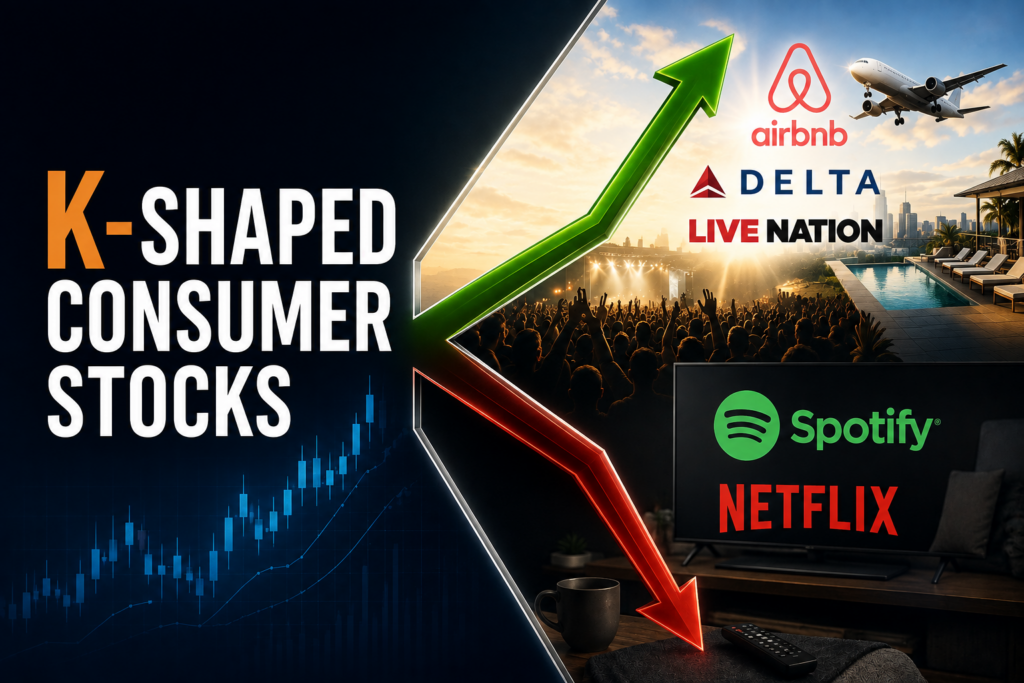
Consumer discretionary stocks have seen a wide dispersion of returns this year. To me, part of the answer may be explained by a K-shape in business models, not necessarily the targeted demographics of each company. Many consumer discretionary stocks that have done well this year may be classified as on-demand pricing models, whereas many of the consumer discretionary stocks that have lagged this year may be classified with more fixed-pricing models.
On-Demand Pricing
Airlines, accommodations and live sporting events are markets traditionally associated with on-demand or variable pricing models. The price the consumer pays can vary depending on the relative supply and demand. In a more inflationary-growth environment, there’s a solid argument in my opinion that these business can be the quickest to reprice. As consumer spending rises and dollar demand for these services increases, it can be quickly incorporated into the selling company’s economics.

Stay on Top of Market Trends
The Carson Investment Research newsletter offers up-to-date market news, analysis and insights. Subscribe today!
"*" indicates required fields
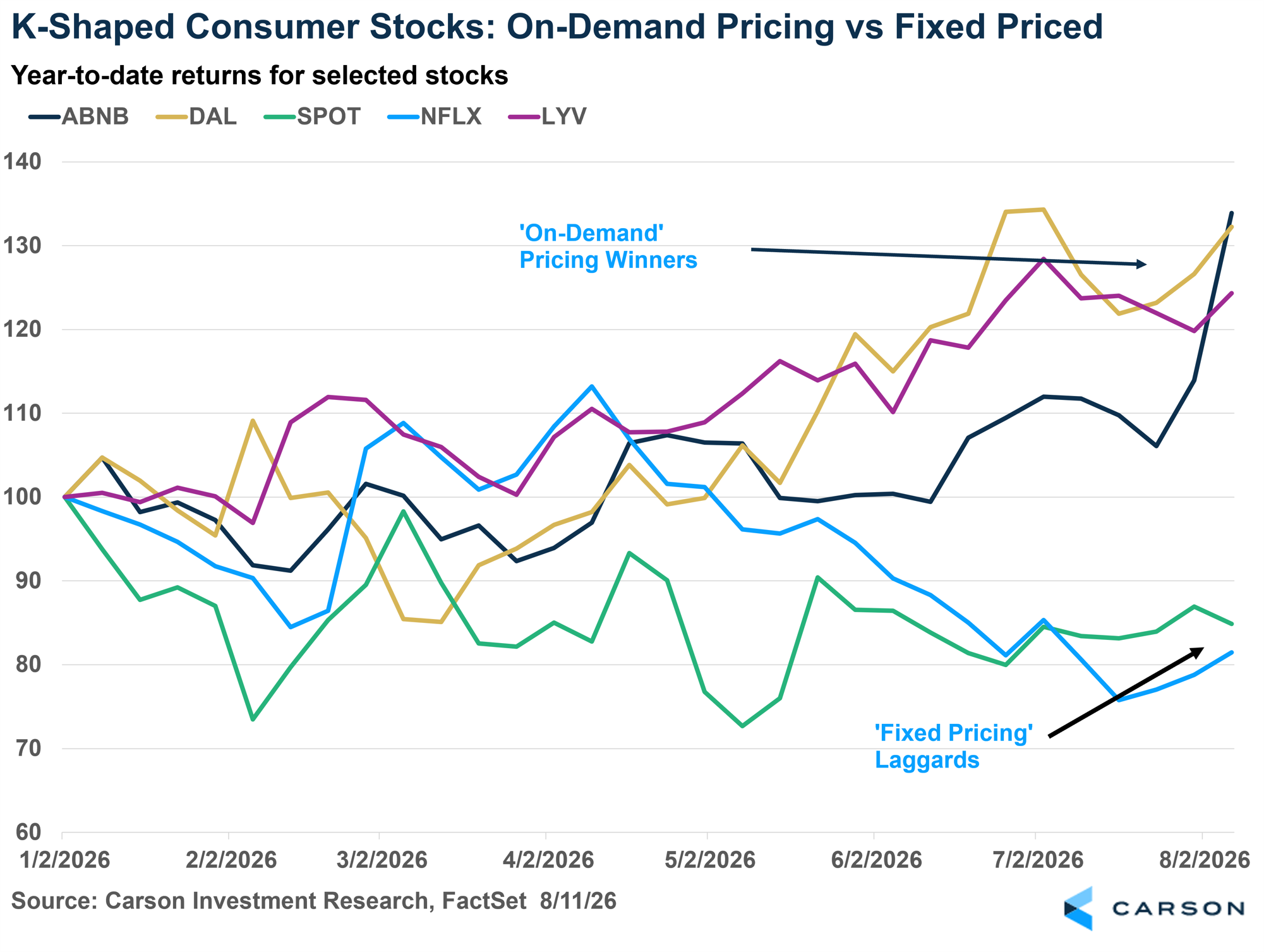
As shown below, some of the largest consumer companies with variable pricing economics have been this year’s best performing consumer stocks. AirBnB, Delta Airlines, and Live Nation (parent of TicketMaster) are on average up about +30% year to date in 2026.
Fixed Pricing Laggards
On the downside of this year’s K-shaped returns in consumer stocks are some companies which employ fixed pricing models. These fixed-price businesses include subscription services, like Spotify and Netflix, where month after month the price of their services often remains the same. While the companies often reserve the right to raise subscription prices with advanced notice, an absence of price hikes in an inflationary environment may put cost pressure on the business and challenge their economics.
As shown above, some of the largest consumer stocks which employ subscription-based models have been this year’s laggards. Spotify and Netflix are down an average –17% year to date.
To me, this K-shape in returns among groups of consumer stocks tells a cohesive narrative: in an inflationary-growth environment, businesses which can reprice their services the quickest may continue to see their economics benefit. Though the fixed-pricing businesses may lag in this environment, that’s not to count them out. Subscription price hikes may be an answer to the relative underperformance for the companies that deliver substantial value to reclaim their economics.
For more content by Blake Anderson, CFA®, Associate Portfolio Manager click here.
9077050.1. – 17AUG26A