Should I buy a house, wait, or rent? I’m 23, and some version of that question comes up in almost every conversation I have with my friends. Some are waiting for mortgage rates to come down, and a couple are sure a crash is coming. All of us are wondering whether owning a home is even in the playing cards.
I’ve spent a lot of time in the data and come to an equally unfortunate but important decision. I don’t think housing is going to get cheap anytime soon, and I don’t think waiting for lower mortgage rates is a good plan. Most of us, me included, are working off a mental map of the housing market that no longer matches reality. Updating mine made the decision much easier to think through.
The Map We’ve Been Using
For a generation or two before mine, the housing playbook was simple. Buy as soon as you can, because rates will come down and you’ll refinance, and because a house is one of the best investments you’ll ever make. (Plus you get to live in it.) For a long time, that advice was great.
The average 30-year mortgage rate peaked at 18.6% in October 1981 and then fell for 40 years, bottoming at 2.65% in January 2021. Buyers in that stretch could usually refinance into a lower rate a few years later, and the next buyer could afford to pay more because they borrowed at a lower rate. Falling rates did a lot of the heavy lifting behind the wealth people built through housing.
My generation added its own assumption on top of that. Most of us started paying attention to money in the late 2010s, when mortgage rates averaged 4.1%, and in 2020 and 2021 they averaged 3.0%. That became our idea of normal.
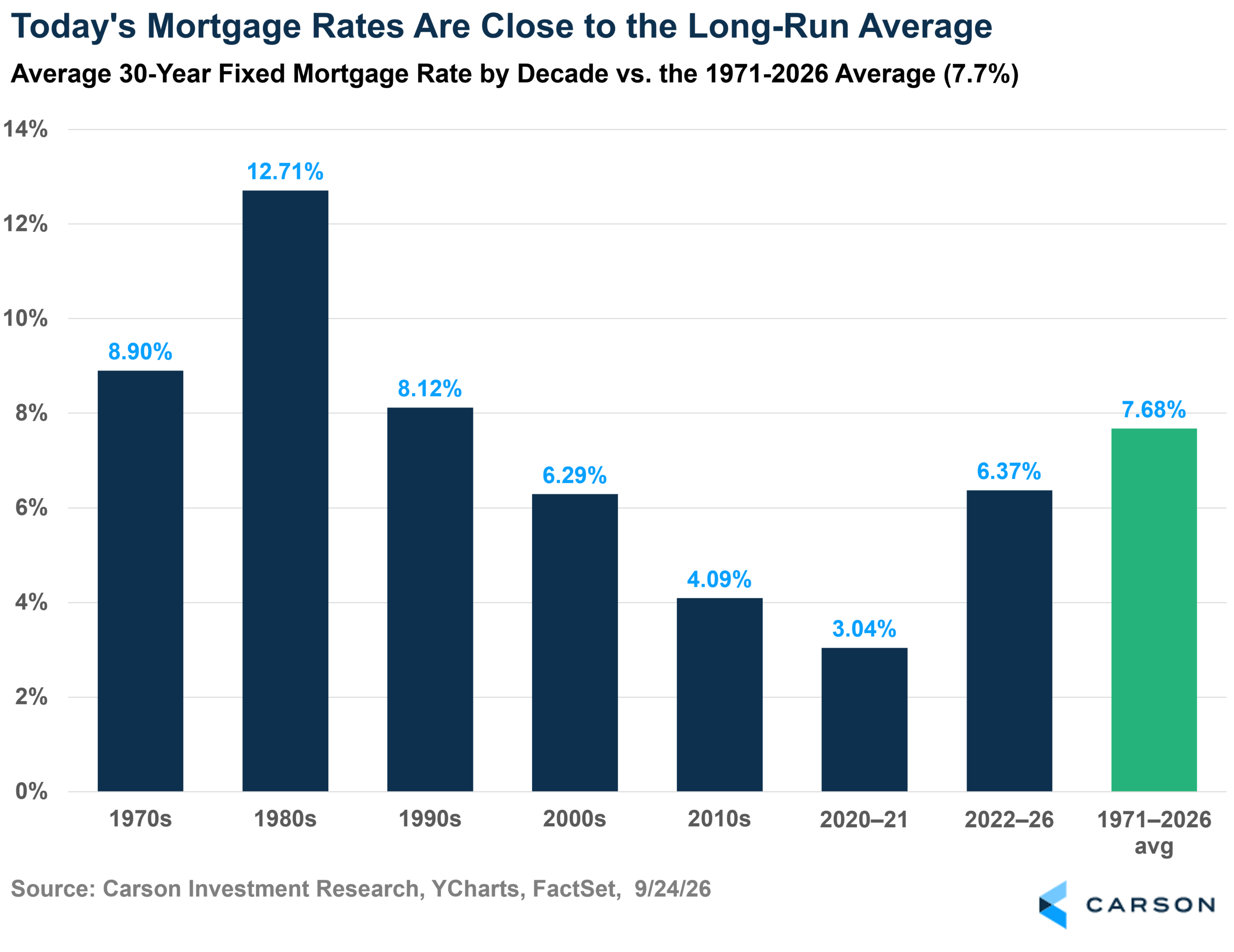
That baseline is exactly the problem. Since 1971, the average 30-year mortgage rate has been 7.7%. Sub-3% mortgages showed up in just 55 of the 2,894 weeks Freddie Mac has tracked, all between July 2020 and November 2021. Getting back there would likely take a 10-year Treasury yield around 1.2%, which has happened less than 2% of the time since 1971.
So, my first update: today’s rate of about 7% is close to the long-run average, and I shouldn’t plan around it going away. If 7% is roughly normal, though, why does the housing market feel so broken?
Why the Market Feels Stuck
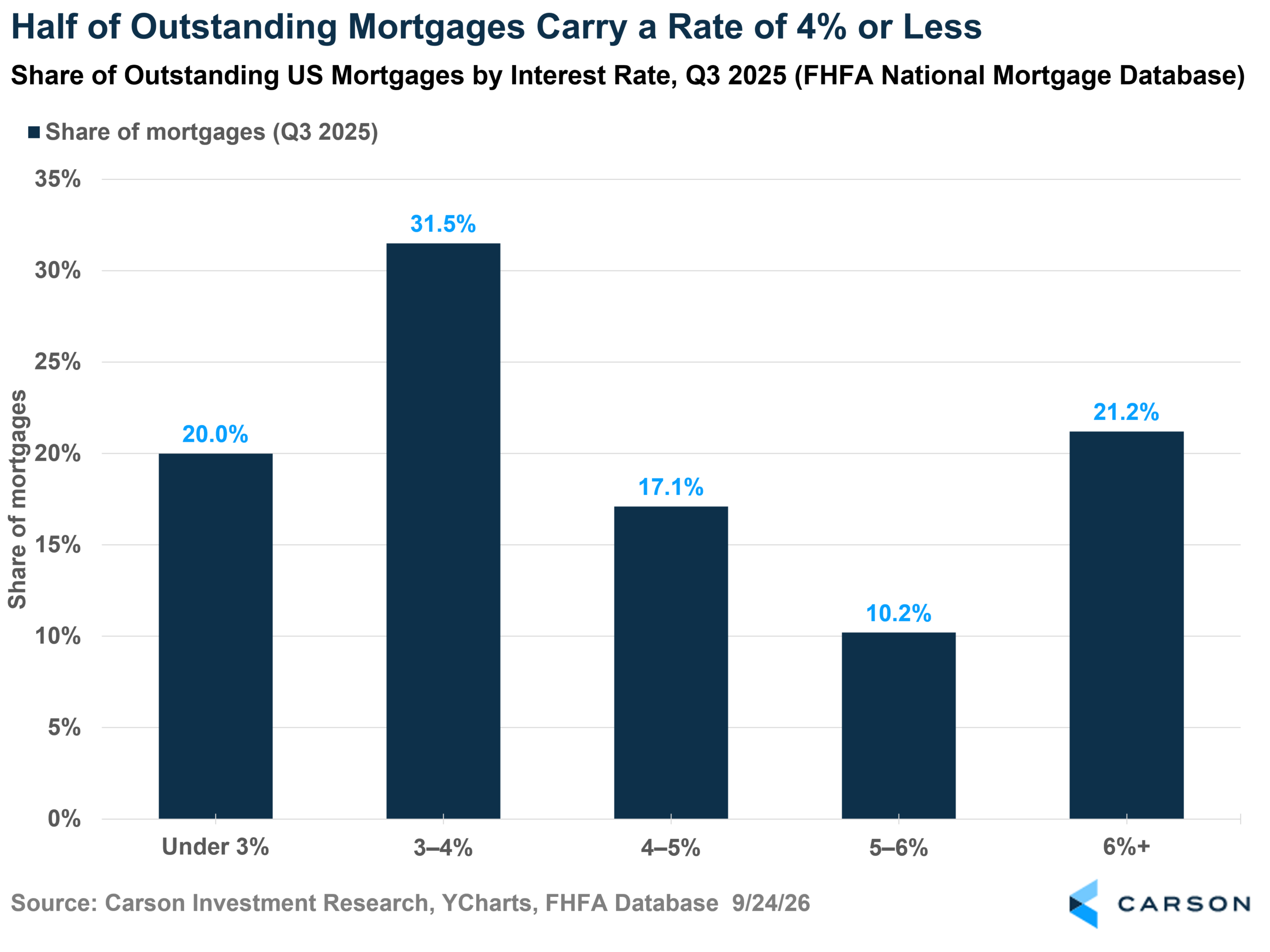
Very little housing is changing hands right now. Existing home sales ran at a 3.98 million annual pace in August, near the lowest in about 30 years, yet the median price was $429,100, the 38th straight month of year-over-year gains. The reason is the lock-in effect. About half of all mortgages carry a rate of 4% or less. If you locked in 3.5% on a $300,000 loan, the same loan at 7% would cost about $650 more every month, so most people stay put if they can.
FHFA researchers estimate lock-in kept about 1.3 million homes off the market from mid-2022 through 2023, which pushed prices up more than falling demand from higher rates pulled them down. However, it’s also why I don’t expect a crash. Crashes need forced sellers, and household debt is just over 10% of household assets, the lowest since 1962. People with cheap fixed rates and a lot of equity don’t have to sell. Even the effect of being forced to move for work has decreased as working remotely has become more common.
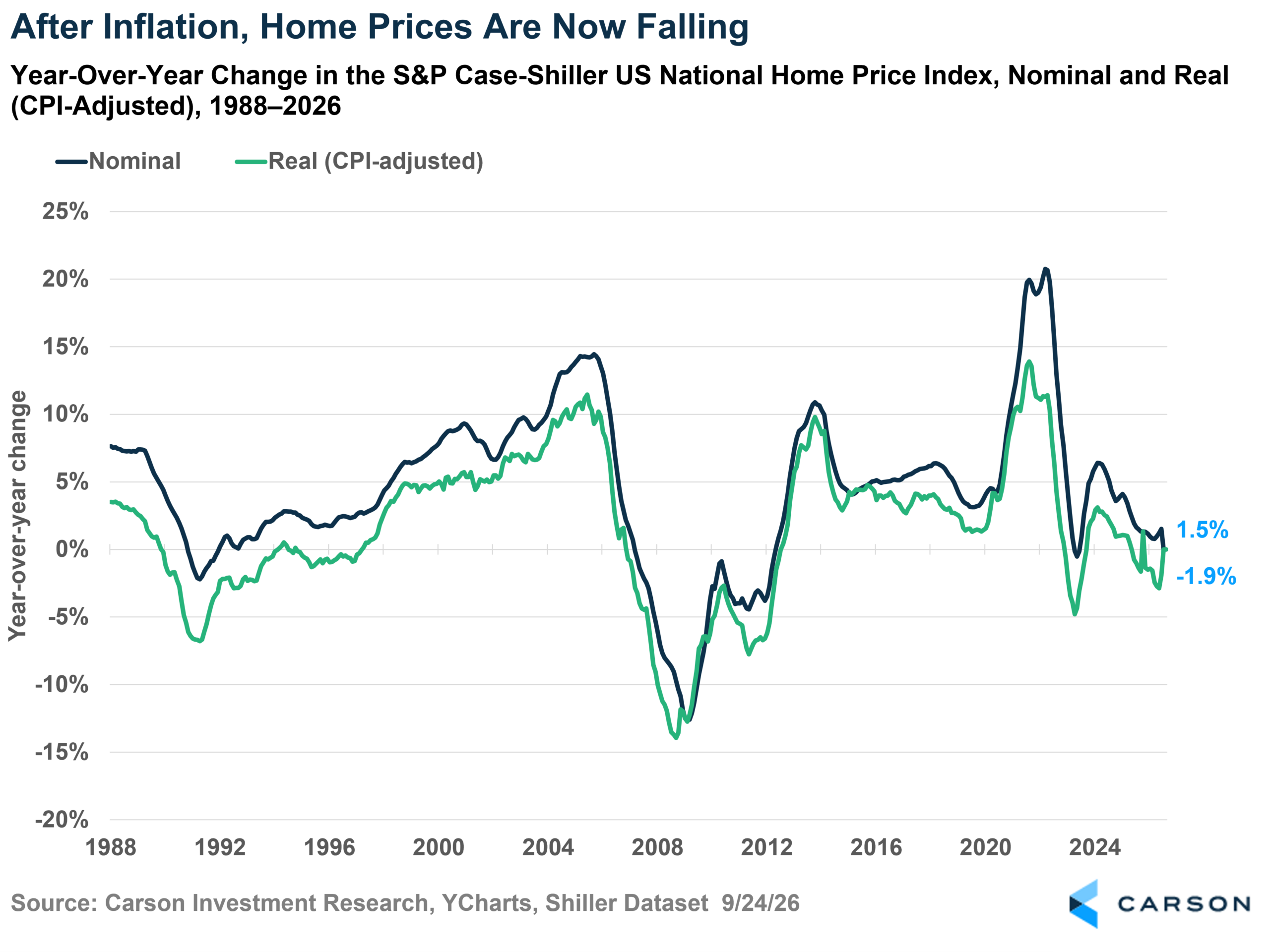
The market is still adjusting, just slowly. Inventory has climbed to 4.9 months of supply, the highest since 2015, and the median new home sold for $393,700 in August, down 5.8% from a year ago. Prices overall are already falling after inflation. Case-Shiller’s national index rose 1.5% over the year through June while inflation ran at 3.5%, so real prices are down about 2%, and they’ve been falling for more than a year.
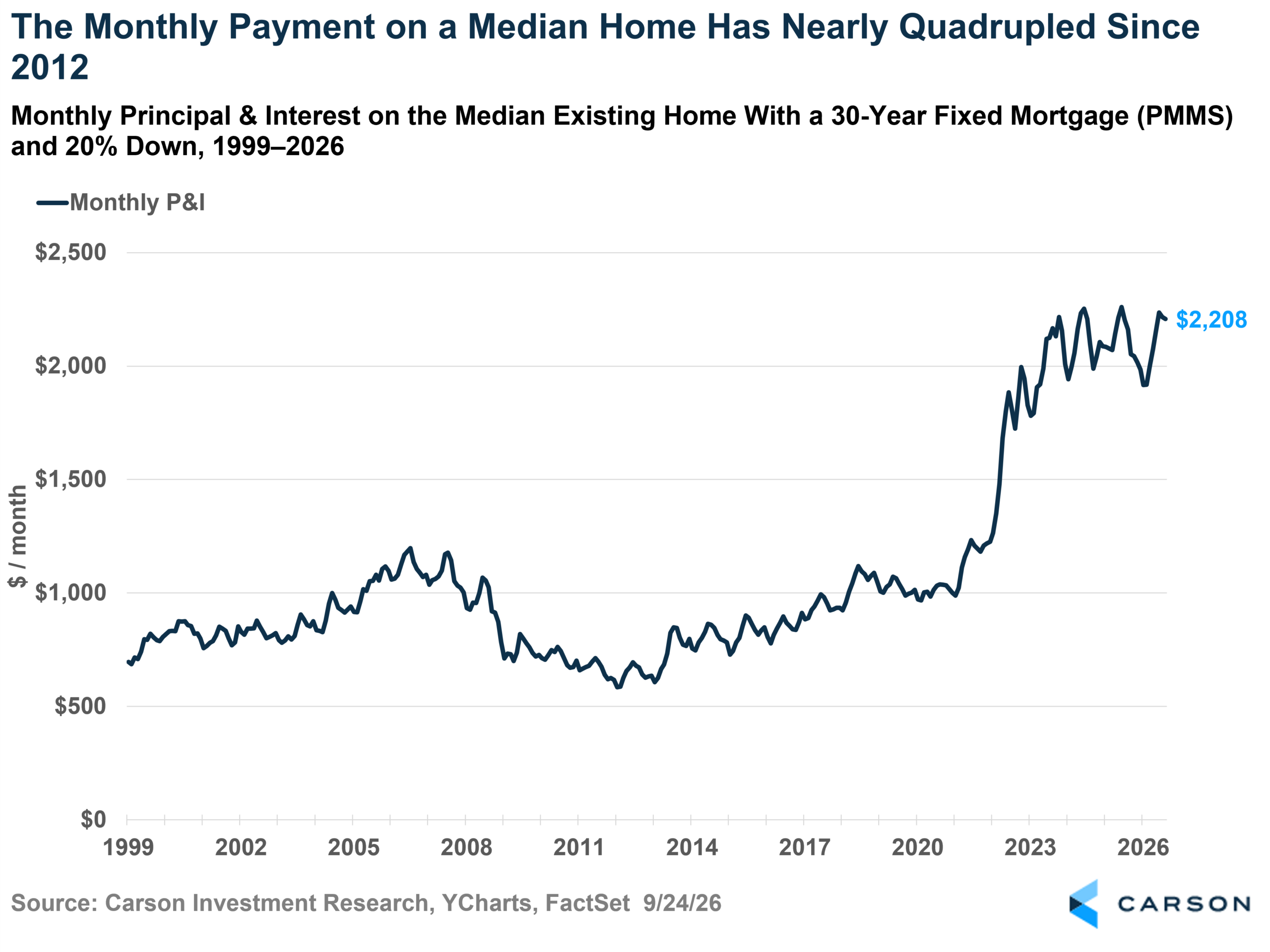
That kind of slow adjustment doesn’t help much if you’re trying to buy this year. At the August median price, with 20% down and that month’s average rate, principal and interest runs about $2,200 a month, compared to about $990 in January 2021. That’s a big reason renting a starter home is cheaper than buying one in all 50 of the largest metros.
Because the market is moving this slowly, a lot of my friends are hoping the Fed speeds things up and eventually starts cutting rates. (Although they’ve recently started raising them.) …
Why Waiting on the Fed Probably Won’t Help
The logic makes sense: if the Fed cuts rates, mortgages should get cheaper. The problem is that mortgage rates follow the 10-year Treasury yield, and the Fed has only partial control over it. Late 2024 was the perfect example. The Fed cut its policy rate by a full percentage point between September and December. Over that same stretch, the 10-year yield rose about a point, and the average 30-year mortgage rate went from 6.2% to over 7%.
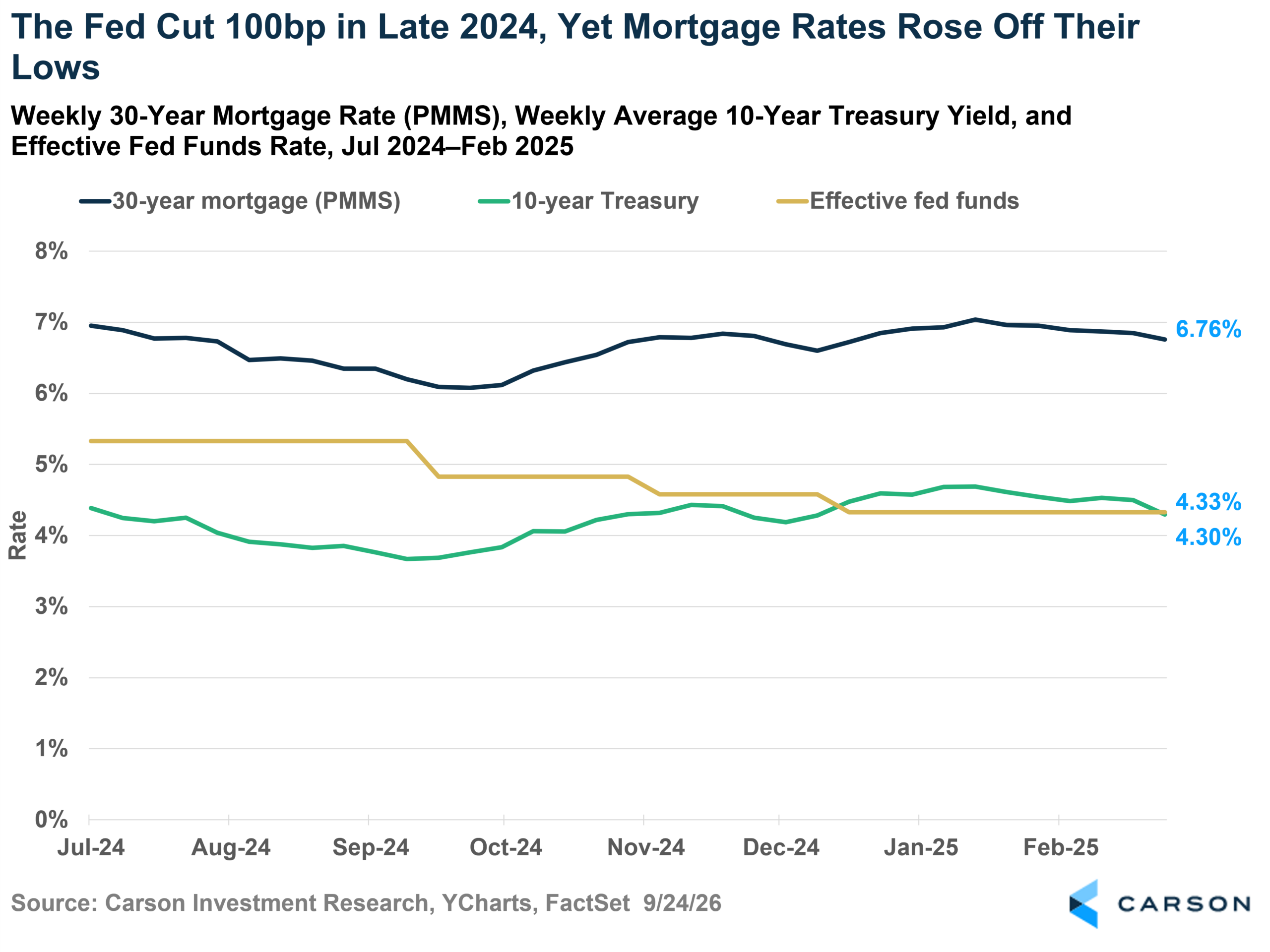
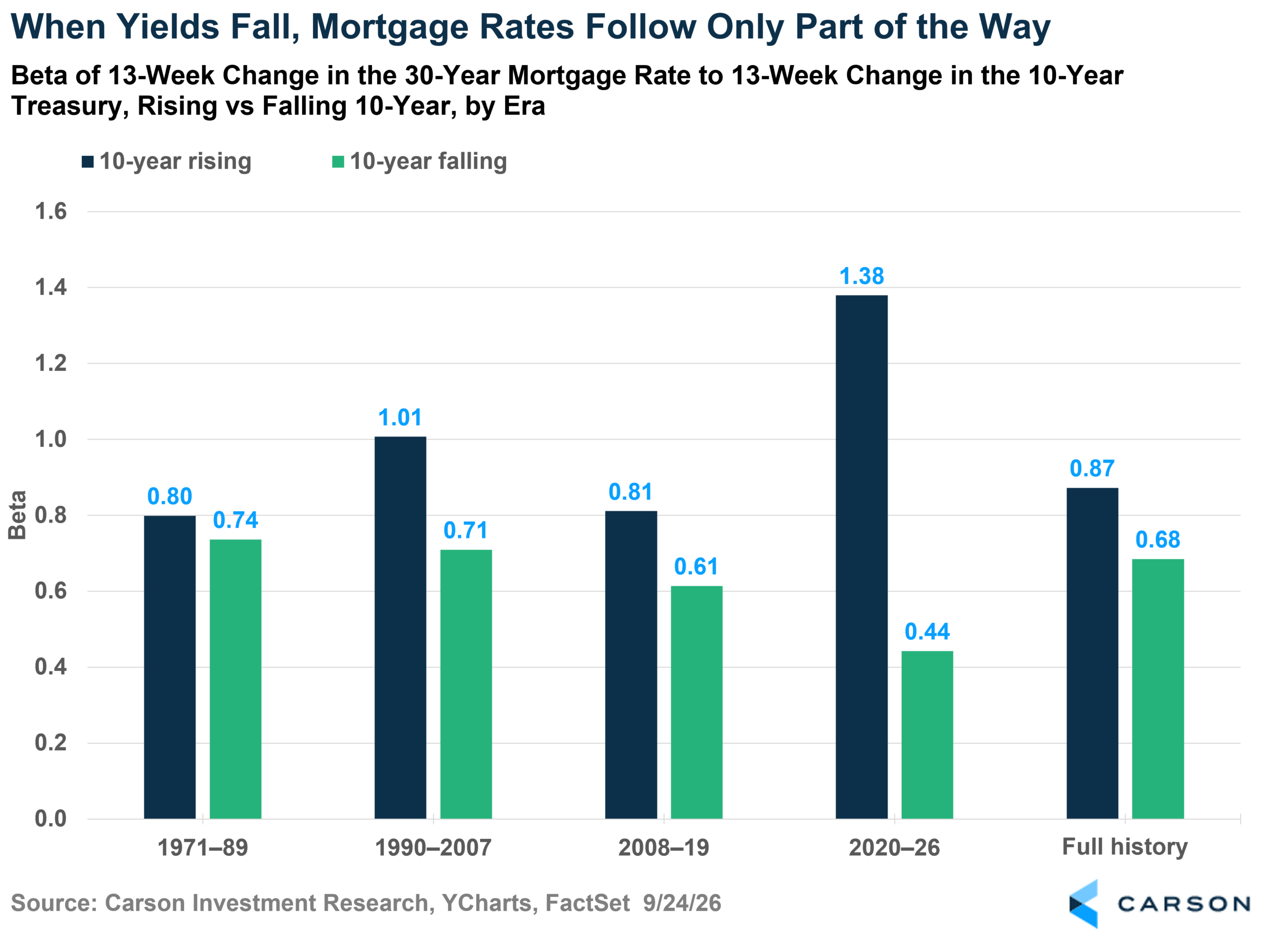
This year, the same link pushed rates up. Since the late-February low, the 10-year is up about a point and mortgage rates have climbed from 5.98% to 7.03%. When yields fall, mortgages usually don’t get the full benefit. Since 1971, mortgage rates have captured about 87% of the 10-year’s move when yields rose, but only about 68% when yields fell.
We got a live test in late February, when mortgage rates briefly dipped below 6%. Refinance applications more than doubled from a year earlier, but purchase applications rose only about 10%. The people sitting on 3% mortgages stayed put, and if rates ever fell far enough to move them, everyone on the sidelines would rush back in too.
That’s my second update: even if lower rates come, they probably won’t make housing cheap. Which leaves the obvious question of where rates go from here.
Where Things Could Go From Here
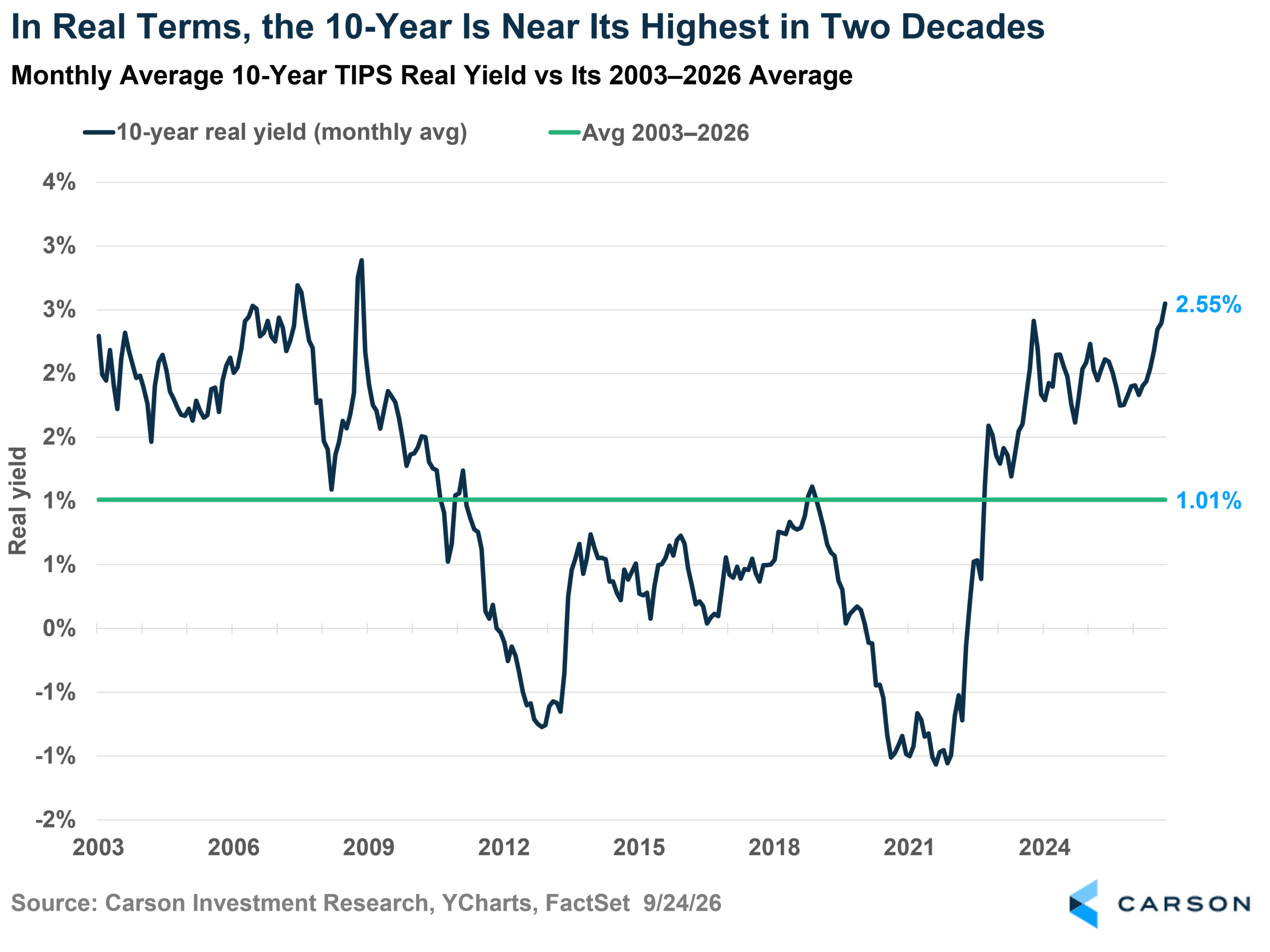
I think rates are more likely to stay high, or even keep rising, than to fall meaningfully, and the most likely way they come down fast is a substantially weaker economy. Inflation is still at 3.4%, and the Fed just raised rates for the first time since 2023. Real yields, which strip out inflation, are the highest in about 20 years.
I could be wrong, though. The 2-year Treasury yield is up about 1.35 percentage points since late February, more than the 10-year, so a lot of this year’s move is about the Fed and oil prices tied to the war with Iran. If that conflict winds down and inflation cools, rates could ease without anything breaking.
If rates stay high, which is my base case, housing stays frozen, and homes keep getting cheaper in real terms as incomes catch up. Rates could also fall, and if it’s because inflation cools while jobs hold up, the people on the sidelines jump back in, and prices firm up. If it’s because of a recession, mortgages get cheaper right when your job feels less secure. In my view, I can’t find a path where housing gets cheap and easy to buy at the same time.

Stay on Top of Market Trends
The Carson Investment Research newsletter offers up-to-date market news, analysis and insights. Subscribe today!
"*" indicates required fields
If nobody can reliably time this, me included, then the part of the decision I actually control is my own plan, which brings me back to the other half of the old playbook: the idea that a house is the best investment you’ll ever make.
A House Is a Place to Live First
Housing has built wealth for many families, and I’m not arguing against owning a home. But as an investment, it’s unusual. You’re usually borrowing most of the price to own one asset in one neighborhood, and buying and selling can cost 6% to 10%. I think it’s more honest to treat a house as a place to live first, and the money you’re saving for one as short-term money.
A hugely important part of getting ready to buy a home depends on when you’ll need the money. Money you might need in the next year or two, like a down payment, probably belongs somewhere that won’t swing much. Money you won’t touch for decades can ride out the stock market’s ups and downs. Everyone’s situation is different, so it’s worth talking yours through with a financial professional, and not some random 23-year-old (me!).
Stocks are a great long-term investment, but they can be bumpy. In the average year, the S&P 500 falls about 14.1% at some point, even though most years still end positive. If you need the money in 12 months, a drop like that at the wrong time can mean delaying your purchase or buying a smaller house.
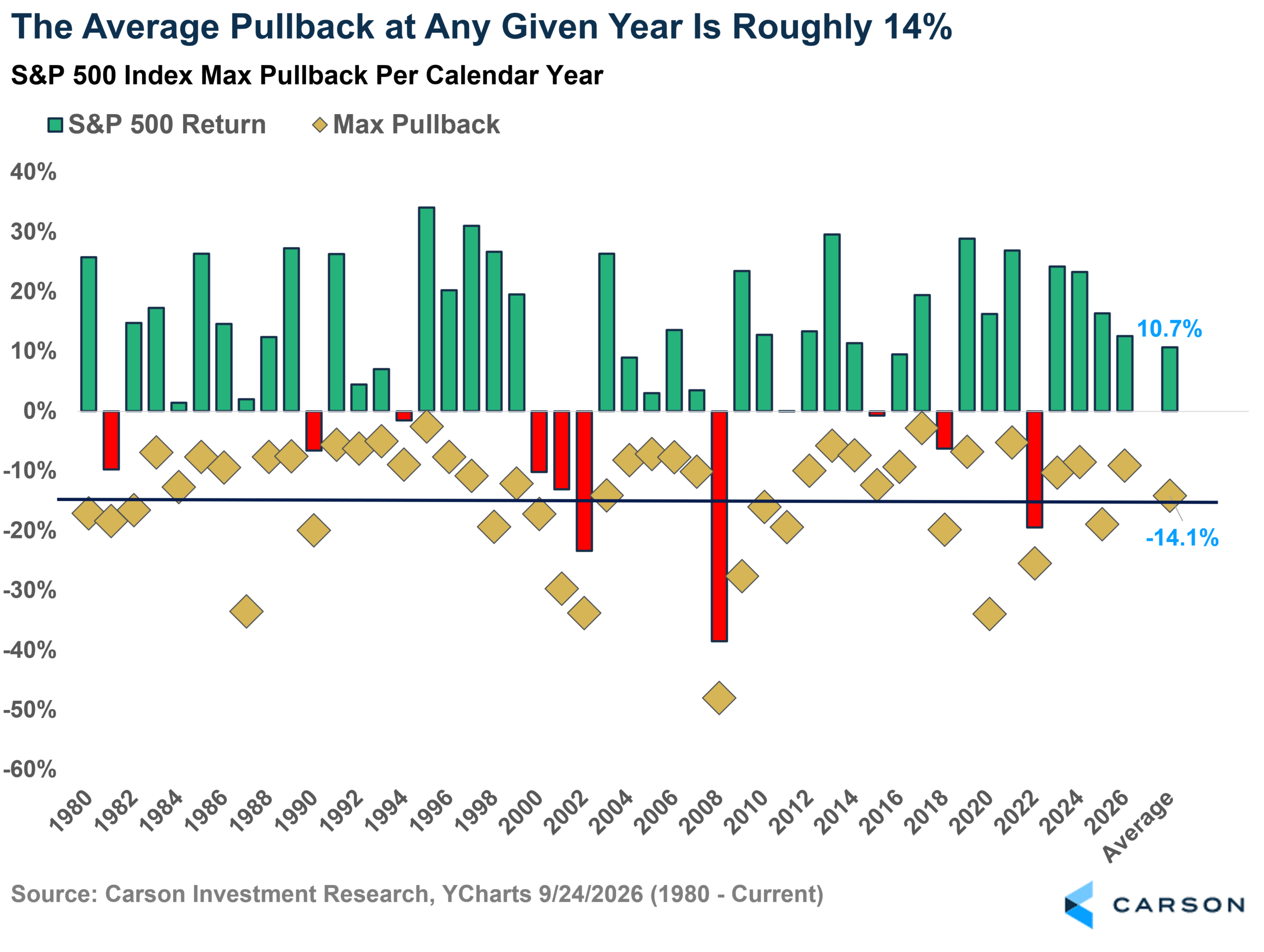
2022 is a great example. Someone saving for a down payment in stocks watched the S&P 500 fall about 25% from January to October, while mortgage rates went from about 3.1% to 7.1%. Their down payment shrank right as the house got much more expensive to finance.
The new map, however, has one upside. The same higher rates that make mortgages expensive also pay you to wait. For most of the 2010s, cash earned close to nothing. Today a three-month Treasury bill pays about 4.2%.
What I’m Doing with My Updated Map
The old playbook told people to buy as early as possible, because falling rates and rising prices would bail them out if trouble ever occurred. My updated map says 7% is close to normal, and nobody, including the Fed, can make this market thaw on a schedule.
So I’m focusing on what I can control. That means asking whether a payment works for my budget at today’s rates, without counting on a refinance that may never come. It also means keeping the money I’m saving for a house somewhere a bad year in the market can’t touch it.
Uncertainty is uncomfortable, especially when it feels like everyone before you had this figured out. Updating my map hasn’t made the uncertainty go away, but it’s made it a lot less scary.
By Harry McDonald, Analyst, Investment Research
9146792.1. – 25SEPT26A