Headline payroll growth disappointed again in September, with the economy adding just 29,000 jobs, well below expectations for a 90,000 gain. We also got downward revisions: August was revised from +162,000 to +133,000, and July from +21,000 to -10,000. Put together, employment in July and August was 60,000 lower than previously reported, and the 3-month average of job growth is down to 51,000 (from 71,000 last month).
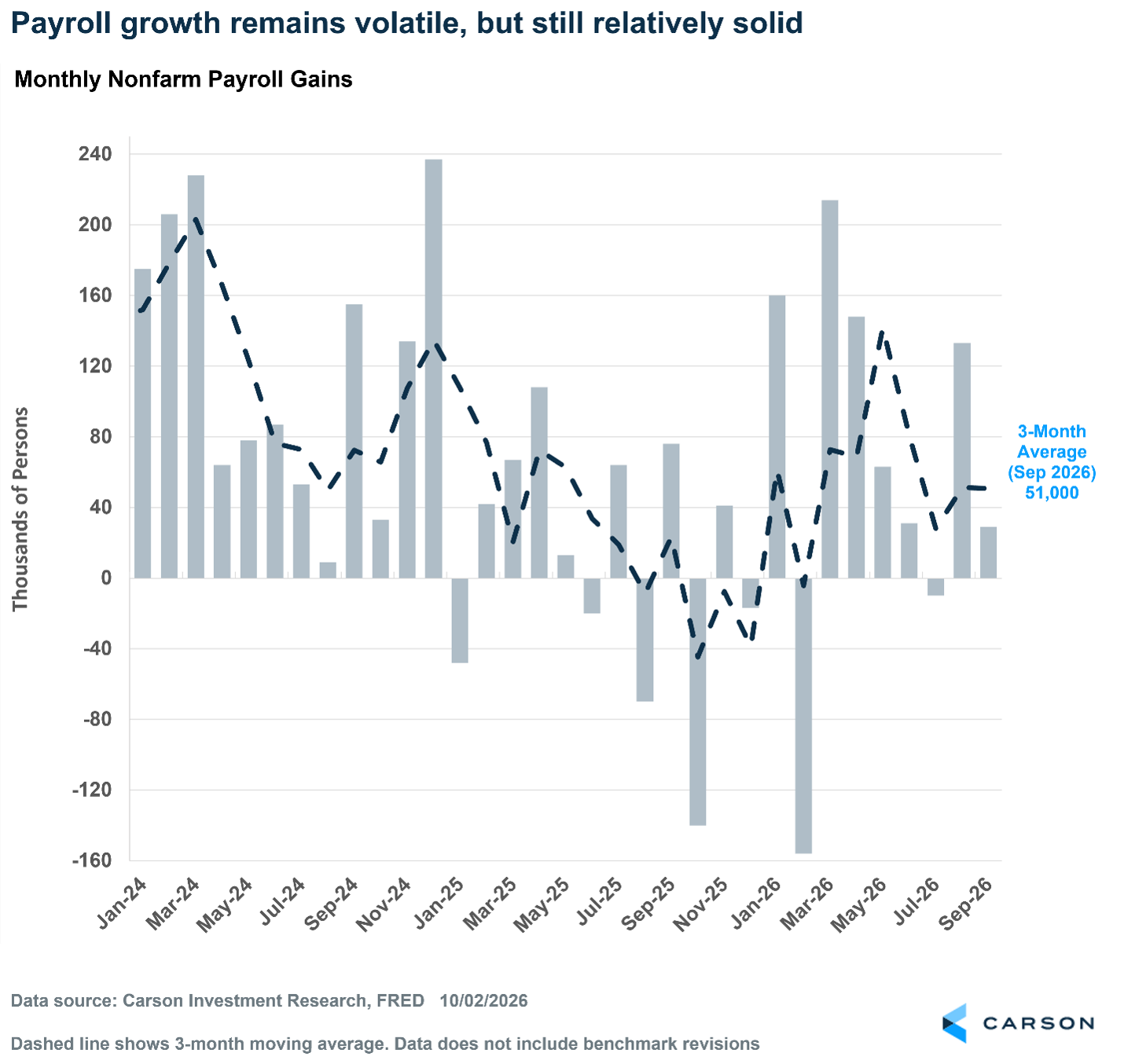
But this is not abnormal. Headline payrolls are volatile right now because labor supply is low, especially with immigration having slowed sharply. Breakeven employment, which is the number of jobs the economy needs to create to keep up with population growth, is only around 25,000 a month. On top of that, the payroll survey has a 90% confidence interval of about plus/minus 120,000 jobs. That means we could very easily get months with negative payroll growth (like July) and some with over 100,000 (like August).
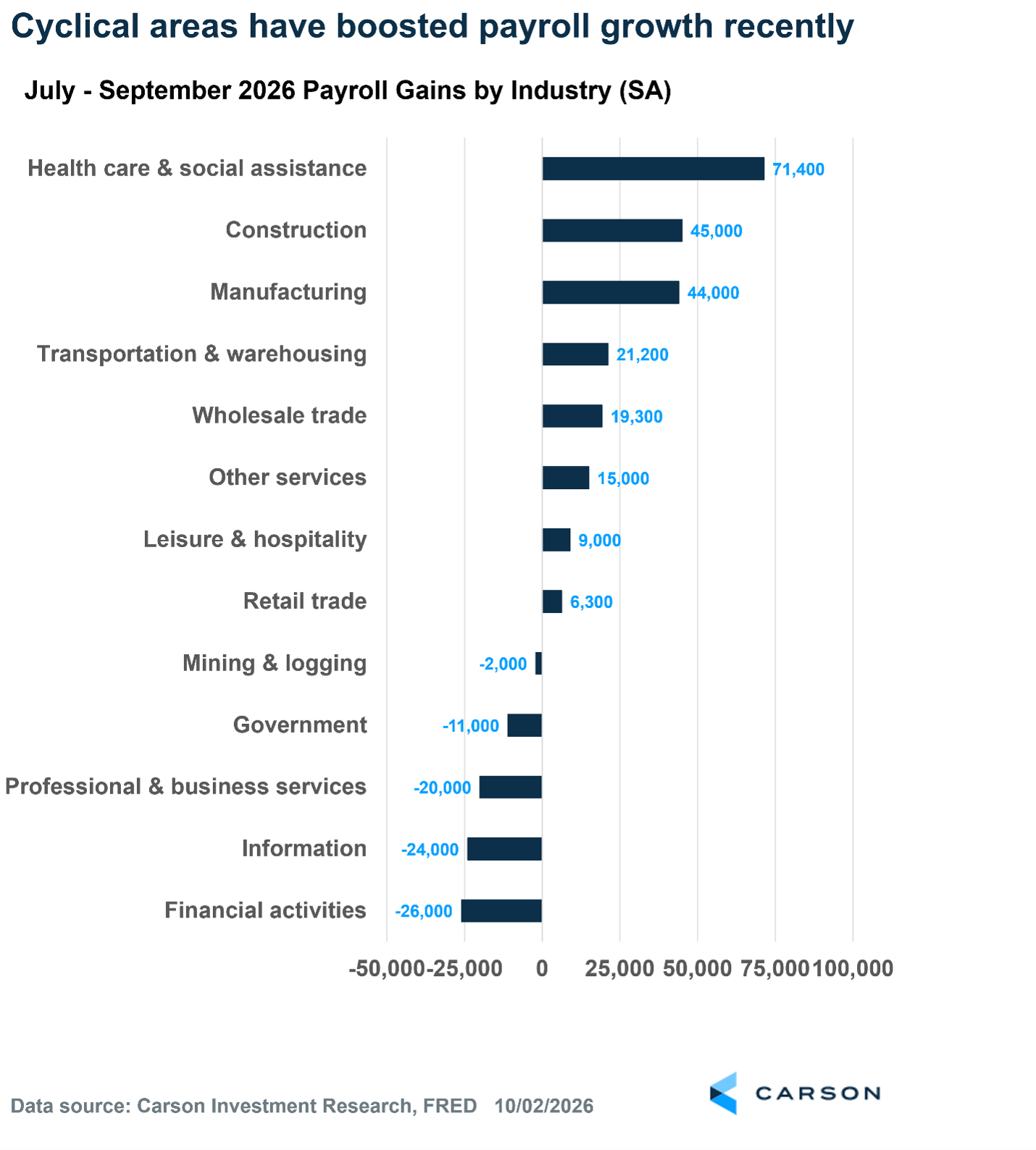
Under the hood, health care continues to do much of the heavy lifting, accounting for 71,000 of the 163,000 private-sector jobs added over the last three months. Construction (+45,000) and manufacturing (+44,000) are also adding jobs, likely helped by data center construction and AI-related investment. Financial activities and information continue to shed jobs, and professional and business services have cooled as well.
So I’d set aside the volatile payroll data, which only muddies the labor market picture, and focus on more stable metrics (that don’t tend to get revised).
The Labor Market Is Quite Solid
The unemployment rate rose from 4.14% to 4.18% in September (4.2% rounded). That’s still historically low. In fact, the unemployment rate has now been at 4.5% or below for a record 60 consecutive months, or five full years.
Even better, the prime-age (25-54) employment-population ratio jumped from 80.4% to 80.7%. I like this measure because it cuts through a lot of the noise in the unemployment rate. The ratio is now higher than at any point in the 2000s or 2010s expansions, including 2018-2019, when the labor market was strong. And it’s only a bit below the 80.9% peak for this cycle.

Stay on Top of Market Trends
The Carson Investment Research newsletter offers up-to-date market news, analysis and insights. Subscribe today!
"*" indicates required fields
Layoffs also remain low. Initial jobless claims are near historical lows, coming in at just 197,000 last week. Continuing claims are running about 10% below last year, which suggests it’s getting a tad easier for unemployed workers to find a job.
The Fed Is Willing to Wait
Ultimately, the labor market is quite solid, so the Fed’s focus will remain on inflation. But recent comments from Fed officials suggest they’re willing to wait it out a bit longer. Even the more hawkish officials don’t seem inclined to do more than reverse last year’s “insurance cuts” of 0.75%-points.
Which is why the odds of an October rate hike fell from 70% earlier this week to just 20% now. Markets have also pulled back on hikes for the rest of the year. Earlier this week, futures were pricing in 150% odds of a rate hike (100% odds of one hike and 50% odds of a second). That’s now down to 95%, i.e., only one more hike priced in for this year.
Markets are treating this as a “bad news is good news” report, but this is about as good a version of bad news as you can get. That really makes it a Goldilocks report for markets. The immediate relief will be a stop to the surge in yields as markets price in an easier Fed. The 10-year Treasury yield, which hit 5.34% earlier this week (the highest in over two decades), fell to around 5.2% after the report. That should also boost stocks. But the inflation problem remains, and the question is how long the Fed will let things run hot.
For more content by Sonu Varghese, Chief Macro Strategist, click here.
9159671.1. – 2OCT26A