

“Don’t trust a skinny ice cream man.” Ben & Jerry’s Ben Cohen
The volatility and confusion continue. On Monday, hope was the war in Iran would be over soon, but that quickly lost steam and crude oil soared back up close to $100/barrel later in the week.
There are a couple ways to look at this year so far. We have the war in Iran, software stocks crashing on AI worries, private credit stocks imploding, crude oil up nearly 70% year to date, inflation that looks to be more of a worry than most think, a real chance there won’t be any Federal Reserve (Fed) rate cuts this year, and global yields moving higher. When you put all of that together, the fact the S&P 500 is down only 2.5% for the year and down less than 5% from the late January peak is really incredible. But this brings up the question, are stocks looking past these issues to better times ahead or will prices turn lower on continued bad news?
The truth is usually somewhere in the middle, but we are on the side that we are still in a bull market that will bring higher stock prices by year end, but that doesn’t mean more churn won’t happen first.
After a 40% rally off the April lows last year, seeing a sideways and choppy overall market since late October isn’t that abnormal. In fact, we think it’s actually quite healthy with the market catching its breath for a likely next move higher.
Ok, so let’s get to some bad news and some good news.
The Bad News
The S&P 500 had a December closing low of 6,721 last year. Well, on Thursday it closed beneath that and we’ve found that when the December low is violated in the first quarter of the following year it can mean trouble.
This happened last year for instance. Stocks came back by the end of the year, but it was still a warning something was off and stocks did crash into mid-April. Then there are years like 2008, 2018, and 2022, which all saw the prior year’s December low violated and were all bad years for investors. Here’s a list of all the times this happened. I will note, until 1978 (another Year of the Horse) this was extremely bearish for the full year, but since then it hasn’t been nearly as bad. Still, we’d file this under a potential worry for the bulls.
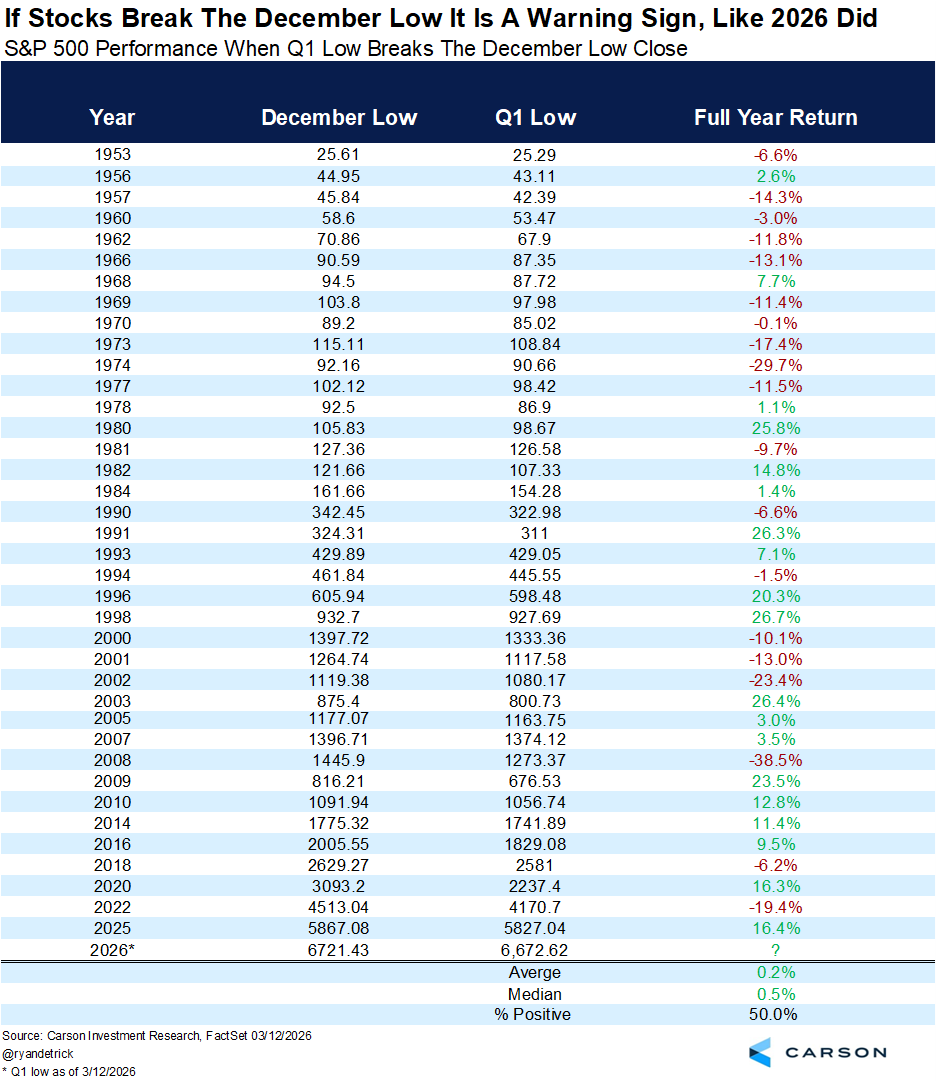
Interestingly, this is the 38th time the lows in December were violated in the first quarter of the next year. That’s out of 76 years, so there were 38 times it didn’t happen too. Here are those 38 other years, and it’s clear we’d have preferred this scenario.
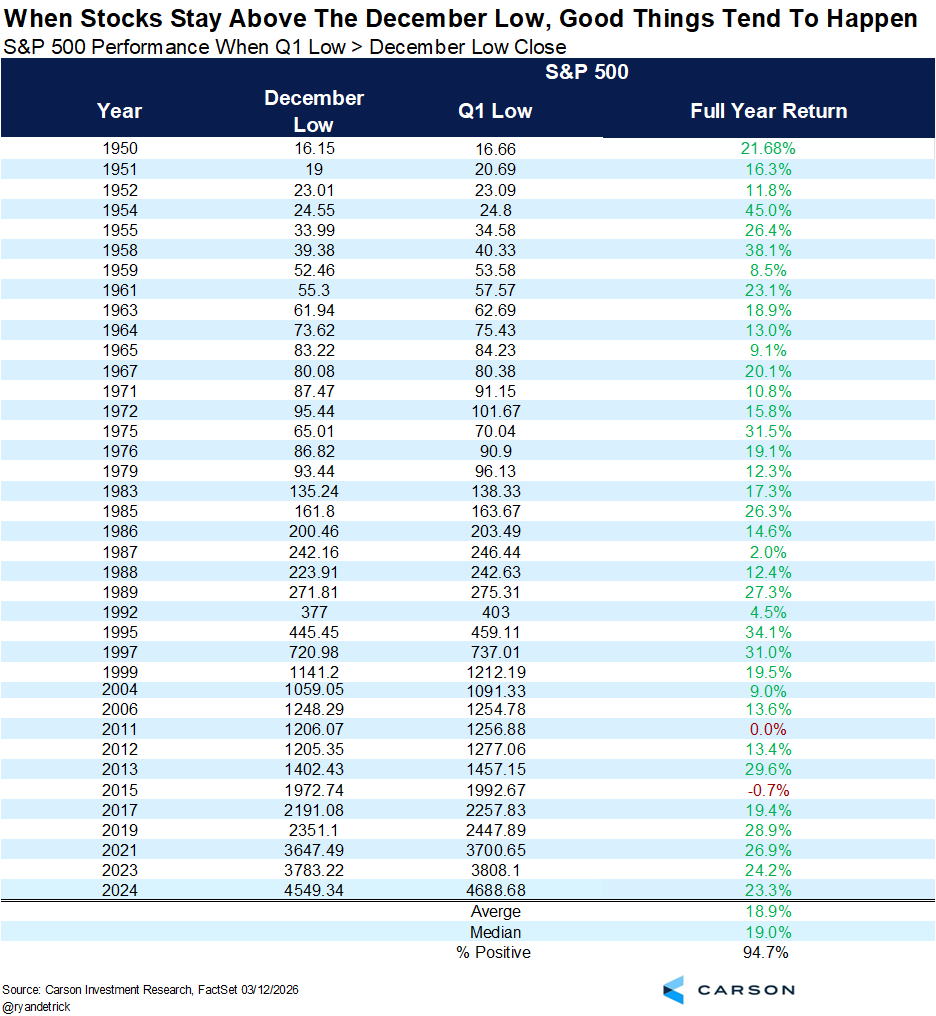
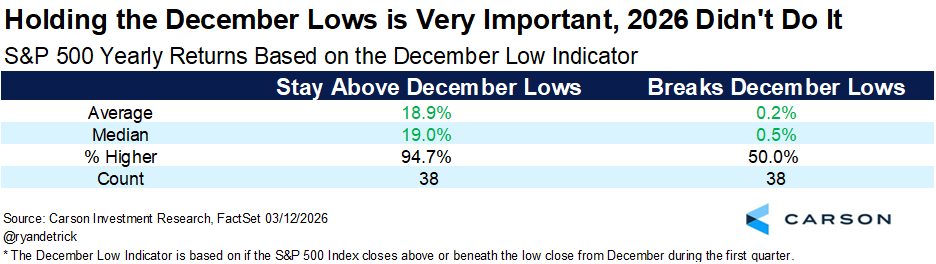
When stocks stayed above the December low the next year, the S&P 500 was up on the year about 95% of the time and up nearly 19% on average; when the lows are broken the full year was flat and up a coinflip of the time.

Stay on Top of Market Trends
The Carson Investment Research newsletter offers up-to-date market news, analysis and insights. Subscribe today!
"*" indicates required fields
Now Some Good News
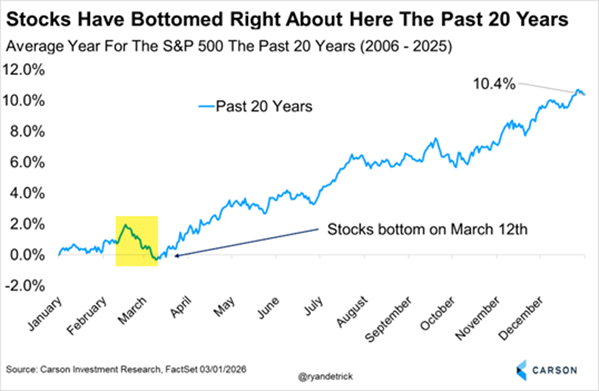
We’ve noted many times since early February that the mid-February to mid-March period can be weak historically. I’ve jokingly named it the banana peel period and safe to say we slipped on a banana peel this year.
The good news? If you look at the past 20 years, the S&P 500 bottomed on average on March 12 and then moved higher. No, we don’t ever suggest investing purely on seasonals or the chart below, but it does give a nice potential path for higher prices should we get some positive news out of the Middle East.
The other bit of good news is we are seeing some extreme signs of negative sentiment. This is a necessary evil for major lows to form. It doesn’t mean stocks will bottom today or tomorrow, but we are in the ballpark for a potential rally on any good news.
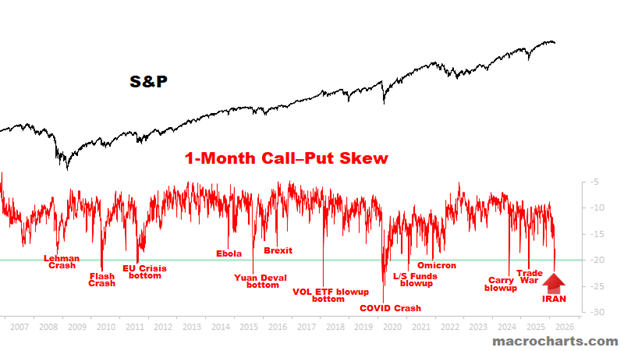
This chart from MacroCharts really stood out to me. It shows that investors are willing to pay up for put protection right now, in line with previous other times of crisis. When everyone wants insurance and will pay nearly anything for it, it means a lot of bad news is likely priced in and as you can see below, previous negative spikes like this have occurred near market lows. If you want to learn more about option skews, here’s a great writeup from our friends at Investopedia.
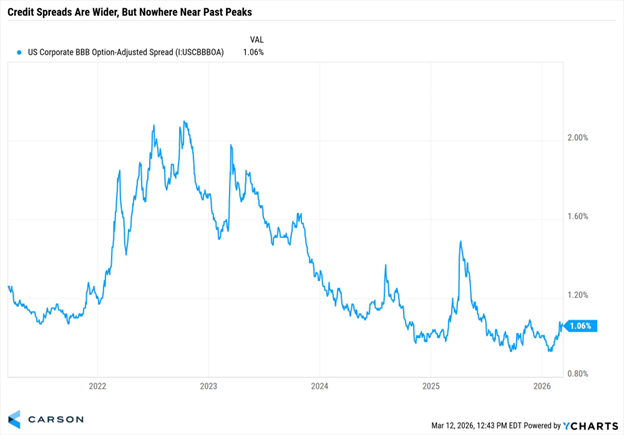
Lastly, credit markets are still functioning. We are seeing some signs of stress, with spreads widening, but by no means are spreads blowing out. I’ve long said the credit markets are the smartest people in the room and with all the worries over private credit and software and now the war, if a monster was really under the bed, we’d expect to see it show up here and thankfully it hasn’t yet.
In fact, BBB spreads have tightened since the end of February. I’ll admit, this one really surprised me, but it is some good news in a sea of bad news. When it comes to gauging market risk, we don’t want to pay a lot of attention to skinny ice cream man in the quote above, which is why we like to pay attention to credit markets.
As always, thank you for reading and for trusting our team in these highly emotional times. We don’t have all the answers, but we can say we will be here for you every day, sharing what we think really matters to your investments.
Lastly, be sure to watch our latest Facts vs Feelings, as we dove into AI with two industry leaders for a very timely and informative conversation.
For more content by Ryan Detrick, Chief Market Strategist click here.
8822043.1. – 13MAR26A