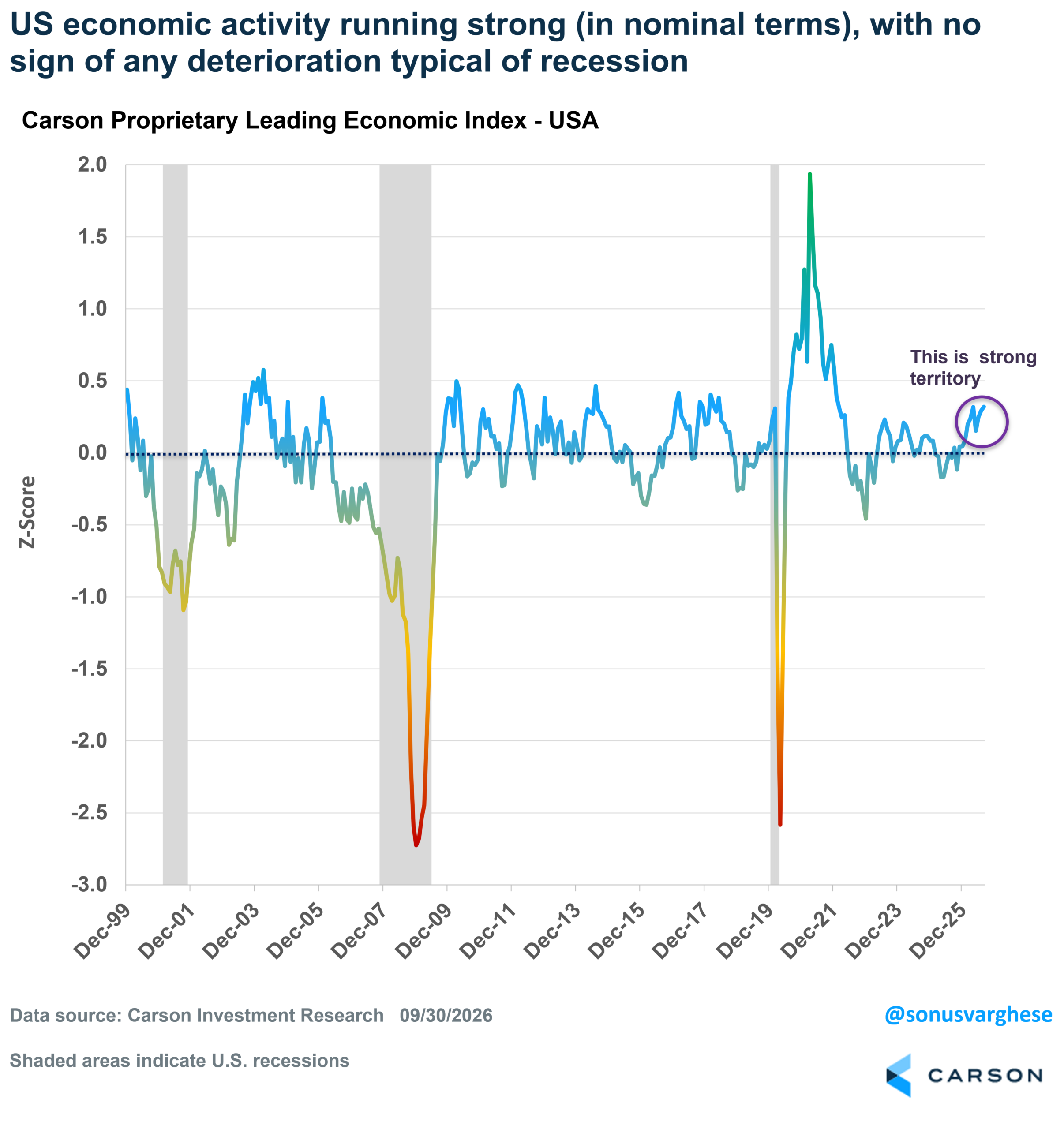
I’ve written a lot this year about an inflationary growth environment (strong economic activity alongside rising prices). We flagged this in our 2026 Outlook (and again in our Midyear Outlook), and the latest update of our proprietary Leading Economic Index (LEI) for the US points to exactly that: strong nominal growth, boosted by inflation, which matters for company revenues and profits. The index combines consumer indicators, housing, business and manufacturing activity, and financial markets. It dipped amid last year’s tariff chaos but has been grinding higher since, recently reaching historically firm territory. Even at its weakest last year, the index remained well above levels normally associated with recession.
Beyond the LEI, the latest ISM surveys for manufacturing and services tell a similar story. Activity is running strong across both sectors, and so are prices. Much of that comes back to the AI capex boom, especially the race to build data centers.
Manufacturing Is Expanding at a Solid Clip
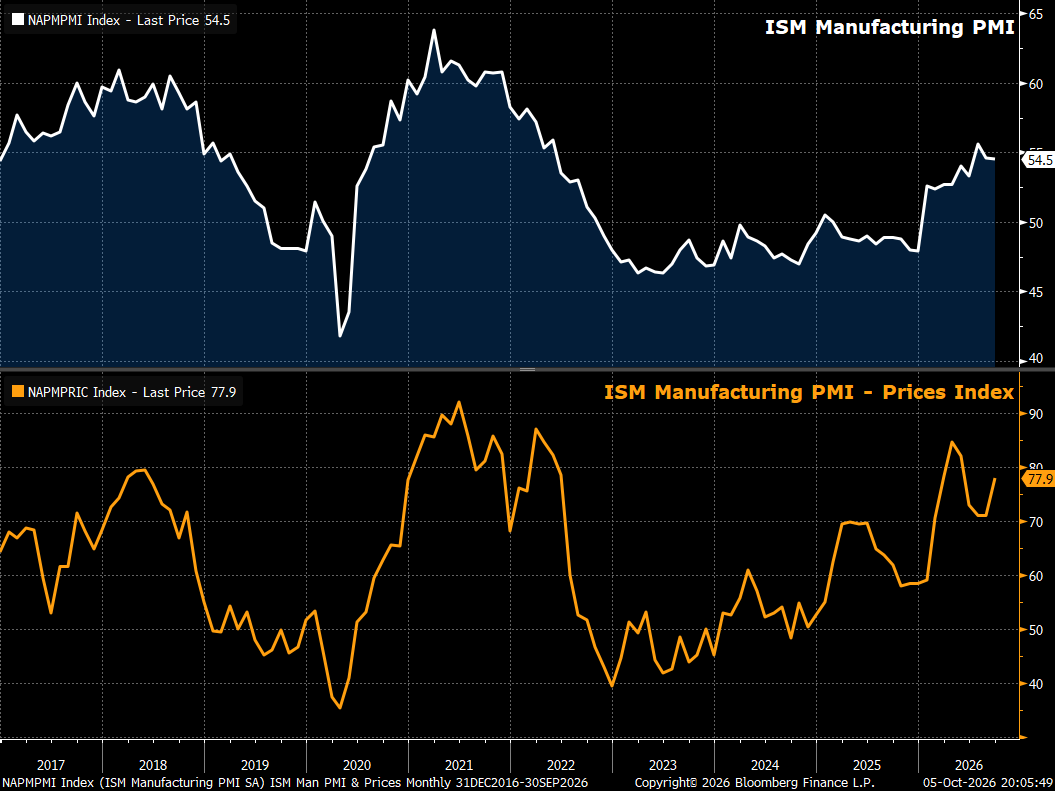
The ISM Manufacturing PMI came in at 54.5 in September, barely changed from 54.6 in August. A reading above 50 indicates expansion, and this is the ninth straight month above that mark. That’s a big turnaround from the end of last year, when the index was 47.9 amid the tariff chaos. It hit 55.6 in July, the high for this cycle, and has held close to that level since.
The strength is fairly broad, with 12 of 18 manufacturing industries reporting growth, including five of the six largest. New orders rose to 55.3, while production came in at 56.7, the 11th straight month of rising output.
The problem is what’s happening alongside all that activity: raw material prices are surging again.
Raw Material Prices Are Surging Again, and Nothing Is Getting Cheaper
The prices index jumped 6.8 points to 77.9, close to its March reading at the start of the Iran war. Nearly 59% of respondents reported paying higher prices in September, up from 46% in August, and no industry reported paying less.
The commodity list was even more striking. ISM asks respondents which commodities are rising or falling in price. In September, none were reported as falling, while 24 were rising. Aluminum has been on the list for 34 straight months, copper for 15, and steel for 11. Memory components, electronic components, semiconductors, and printed circuit boards are rising too.

Stay on Top of Market Trends
The Carson Investment Research newsletter offers up-to-date market news, analysis and insights. Subscribe today!
"*" indicates required fields
Shortages are spreading as well. Earlier this year, they were concentrated in AI-related hardware, including electronic components, electrical components, and memory. Those remain in short supply, but industrial metals like copper, steel, and aluminum have now joined them.
Data Centers Are Stretching Supply Chains
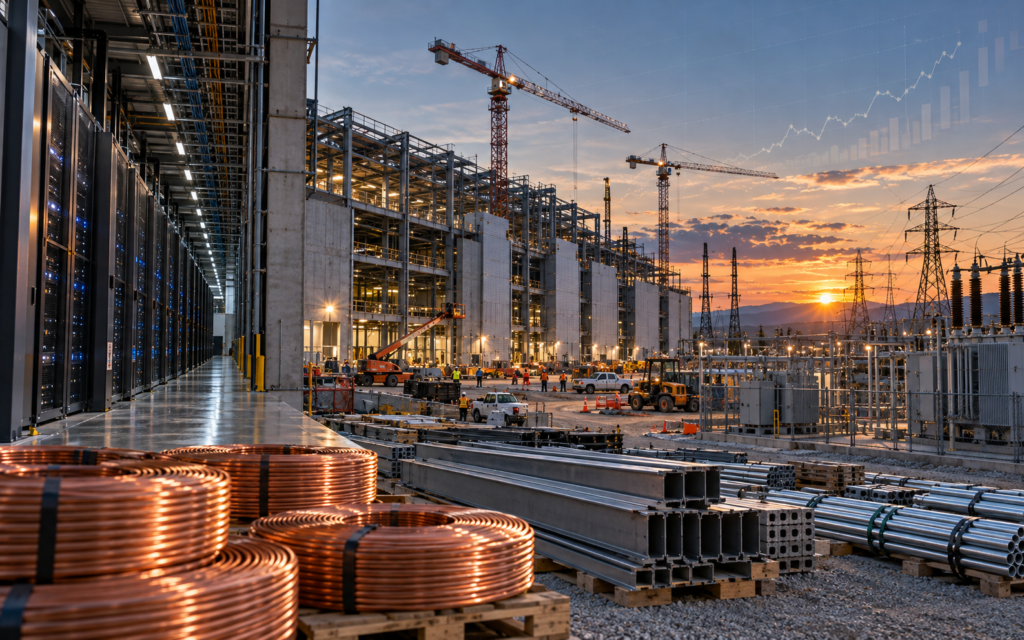
That gets to data center construction. These projects require enormous amounts of steel, copper, and aluminum, plus the electrical equipment needed to power them, before you even get to the chips inside. A recent New York Times piece noted that construction spending on data centers alone hit an annual rate of $85 billion in August, more than double the pace of two years ago. And this demand does not appear especially sensitive to cost. Once a project clears its hurdles, it tends to get built.
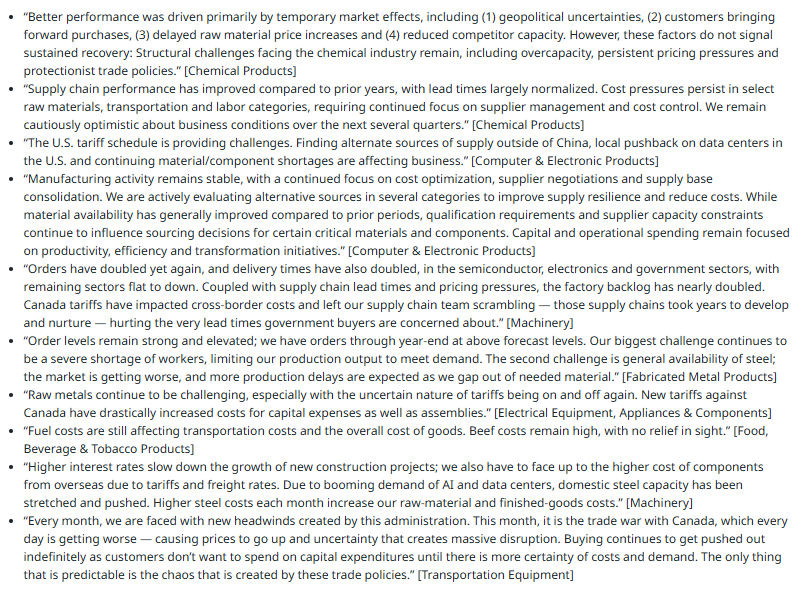
You can see the pressure in the ISM comments:
- One machinery respondent said booming AI and data center demand had stretched domestic steel capacity, with higher steel costs feeding into raw material and finished goods costs.
- A computer and electronics respondent cited continued material and component shortages.
- Another machinery respondent said orders and delivery times had doubled in semiconductor and electronics markets, while its factory backlog had nearly doubled.
Tariffs are a big part of the story too, especially the escalating trade fight with Canada. But AI-related demand is hitting many of the same pressure points.
Source: September 2026 ISM Manufacturing PMI Report 10/6/26
Services Are Telling the Same Story
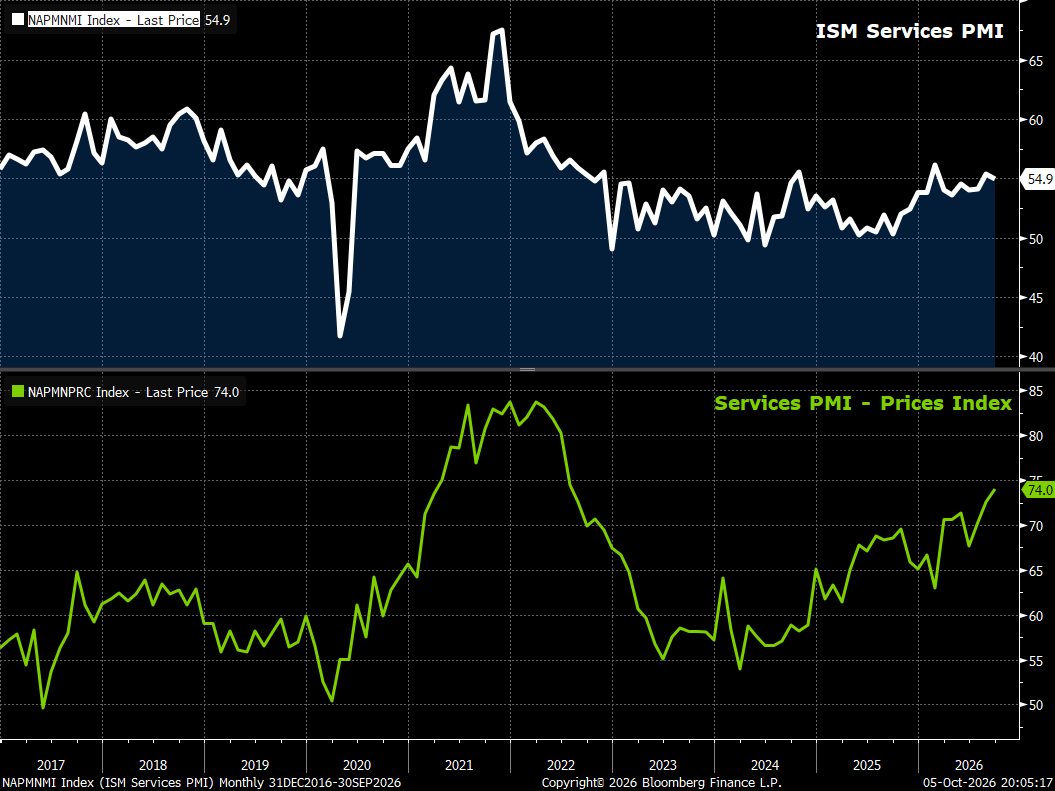
The services side of the economy shows the same pattern. The ISM Services PMI came in at 54.9 in September, down slightly from 55.4 in August. That’s the 27th straight month of expansion and above the 12-month average of 54.1. The business activity index eased to 56.5, while new orders came in at a robust 59.8, the 16th straight month of growth.
Prices are rising here too. The services prices index climbed to 74.0, the highest since July 2022. Prices paid by services firms have now risen for 112 consecutive months, and the index has been above 70 in six of the past seven months. Seventeen industries reported paying higher prices in September, while none reported paying less.
The commodity picture mirrors manufacturing. Only lumber and pork fell in price. Copper has been rising for 10 straight months and memory products for nine.
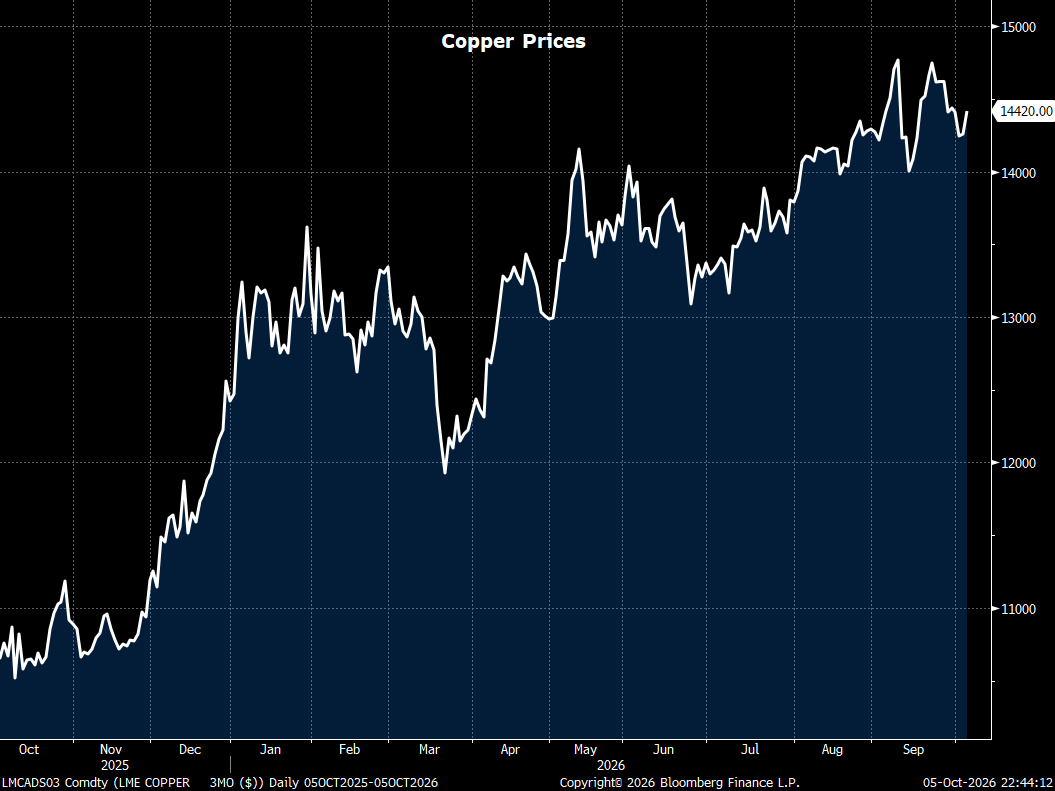
Here’s a chart of copper prices, which are up about 35% over the past year:
Notable additions to the short-supply list include switchgear and computers, joining wire and cable, steel products, memory components, and solid-state drives. Switchgear and wire and cable are exactly what you need to build data centers and expand the electrical grid that powers them.
- A utilities respondent said steel was particularly difficult to source domestically, with strong demand leading to longer lead times and project delays.
- A wholesale trade respondent said weekly price increases in copper and aluminum had become the norm.
There’s an important contrast within services. Construction was the only industry to report a decline in new orders in September, for a second straight month, with respondents pointing to high interest rates pushing buyers out of the housing market. So rate-sensitive residential construction is struggling even as data center construction keeps going. The Times noted that builders are shifting their focus toward data centers as a result.
Good for Profits, Tough for the Fed
All this to say, the September PMIs reinforce the inflationary growth story. Activity is strong in manufacturing and services, and the AI buildout is contributing to that strength. But the same buildout is soaking up steel, copper, aluminum, memory, and electrical equipment at a time when tariffs and the Iran war are already pushing up costs.
That’s good for nominal revenue and profit growth, which helps explain why stocks have done well this year, especially technology and energy. It also makes the Fed’s job harder. Higher rates do less to slow investment when companies believe they are building a transformational technology, so more of the pressure falls on rate-sensitive areas like housing. With the 10-year Treasury yield above 5.3%, the bond market is already reflecting some of that tension.
Data centers are getting built almost regardless of cost. The rest of the economy is paying those costs too. For now, that’s still good for stocks, with no sign of a reversal on the horizon. Pressures are building, and we have a good sense of what is likely to undo this bull market eventually. But mistimed anxiety about what may undo markets down the road often comes with a high opportunity cost. We’ve seen that act a few times already in the current bull market.
The PMI data tells us that the AI wave is still rolling. As long as that continues, and there’s little sign of it slowing, an inflationary growth environment will remain the base case unless we see an extremely aggressive Federal Reserve. For now, the Fed remains largely passive. For us, that means our Midyear Outlook theme of Still Riding the Wave remains in play and may continue for some time.
For more content by Sonu Varghese, Chief Macro Strategist, click here.
9164372.1. – 6OCT26A