
Source Date: August 10, 2026
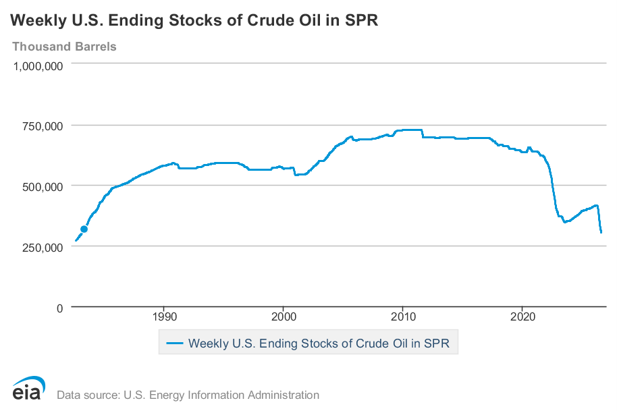
We have all seen the Strategic Petroleum Reserve (SPR) in the news this week as it dropped below 300 million barrels, a level not seen in more than 40 years. While that sounds ominous, and every American has been feeling the ongoing War with Iran in things like prices at the pumps lately, you might be wondering whether that is actually concerning and how the SPR relates to your everyday life. Created more than 50 years ago following another Middle Eastern energy crisis, the SPR is essentially America’s emergency oil insurance policy, a stockpile designed to cushion the economy when normal supplies are severely disrupted.
Today, that insurance policy is being put to use. After entering 2026 with roughly 415 million barrels, the SPR has fallen below 300 million barrels for the first time since 1983.
Born From an Energy Crisis
The SPR traces its origins to the 1973–74 Arab oil embargo. Following U.S. support for Israel during the Yom Kippur War, Arab members of OPEC imposed an oil embargo on the United States and several other countries. Supplies tightened, prices surged, and gasoline shortages produced long lines at filling stations.
The episode exposed a major vulnerability. America had become increasingly dependent on foreign oil but had little ability to respond if those supplies were interrupted.
Congress responded with the Energy Policy and Conservation Act of 1975, authorizing the creation of the SPR. The government began filling massive underground salt caverns along the Texas and Louisiana Gulf Coast in the late 1970s. Inventories approached 500 million barrels by the mid-1980s and eventually peaked near 727 million barrels in 2009.
What Does the SPR Actually Do?
The easiest way to think about the SPR is as insurance against an oil supply shock.
When war, natural disasters, embargoes, or other events remove significant oil supplies from the market, the federal government can release crude from the reserve. Those barrels are delivered to refiners and eventually converted into gasoline, diesel, jet fuel, and other petroleum products.
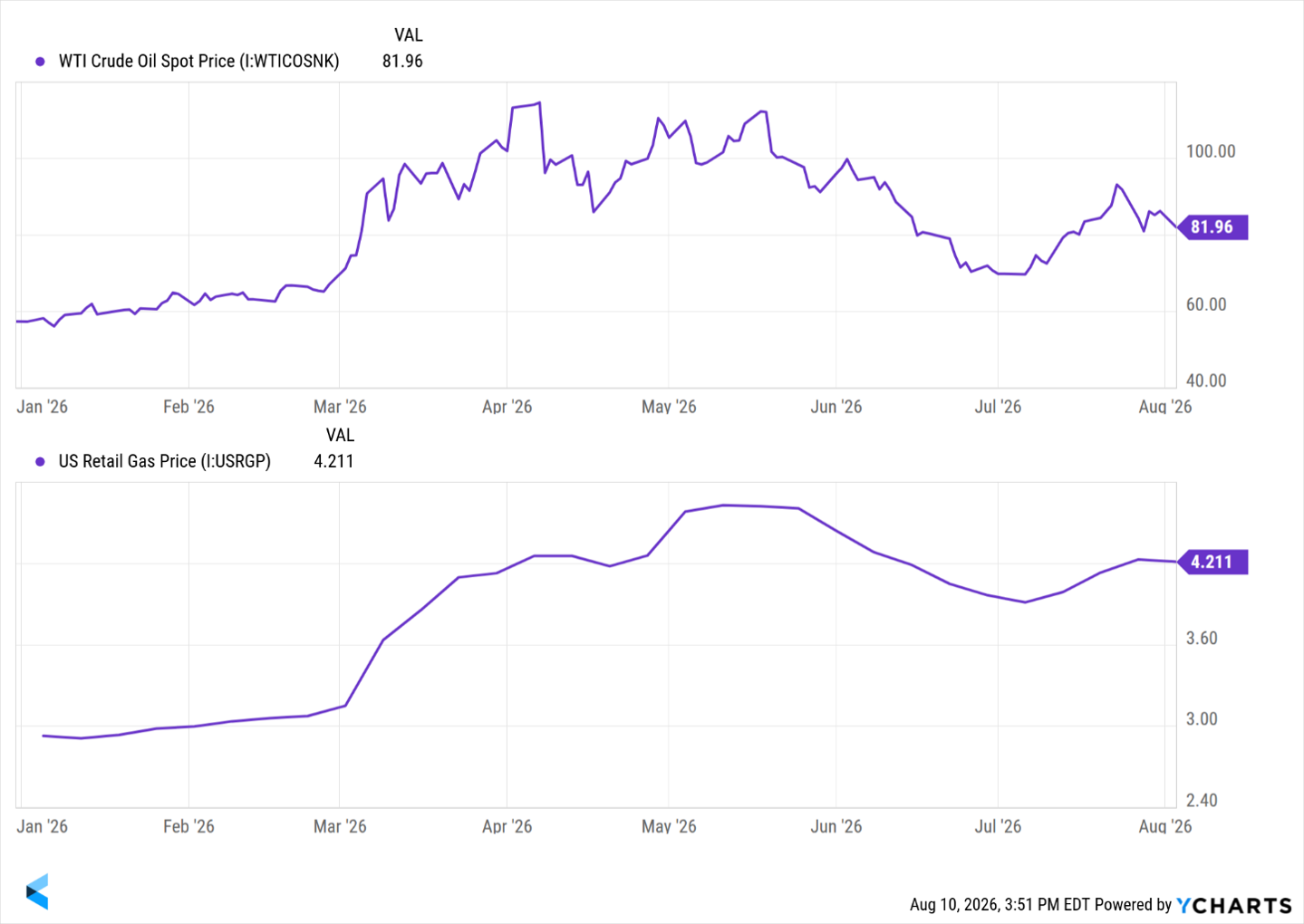
The additional supply can help moderate extreme oil price increases, reducing the potential impact on gasoline prices, transportation costs, inflation, consumer spending, and economic growth. This can help smooth the impact between a sharp rise in wholesale prices (WTI, Brent) and what you see at the pump. The SPR also gives policymakers time to respond to an international crisis while disrupted production or transportation networks recover.
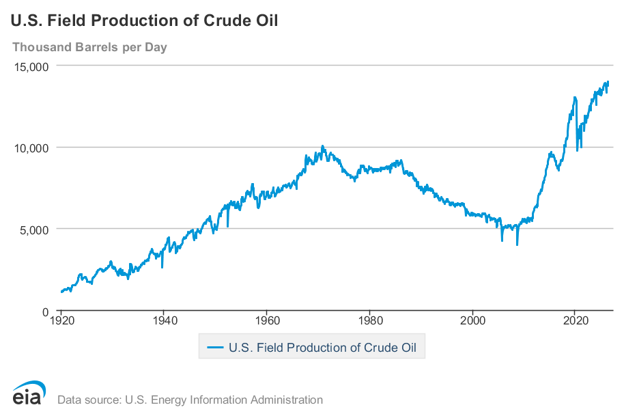
Its role has evolved, however. When the SPR was created, the United States was increasingly dependent on imported oil. Today, the U.S. is one of the world’s largest oil producers and a major exporter.

Stay on Top of Market Trends
The Carson Investment Research newsletter offers up-to-date market news, analysis and insights. Subscribe today!
"*" indicates required fields
But oil remains a global commodity. A disruption in the Middle East can reduce worldwide supply and raise prices regardless of how much oil America produces domestically. The SPR has therefore evolved from an emergency supply source for an import-dependent country into something closer to a strategic shock absorber for the U.S. economy.
From Record Reserves to a 43-Year Low
The amount of oil available in that shock absorber has declined considerably.
After peaking near 727 million barrels in 2009, SPR inventories gradually declined before falling sharply in the 2020s. The largest previous emergency drawdown occurred following Russia’s invasion of Ukraine in 2022, when President Biden authorized the release of 180 million barrels as energy prices surged.
The reserve subsequently began rebuilding, reaching approximately 415 million barrels before the U.S. and Israel attacked Iran on February 28, 2026.
The resulting disruption to global oil flows, particularly through the Strait of Hormuz, prompted another historic intervention. In March, President Trump authorized a 172-million-barrel SPR release as part of a coordinated 400-million-barrel release by International Energy Agency countries. Much of the U.S. program was structured as an exchange, meaning companies receiving oil are required to return barrels later, along with additional oil as a premium.
Nevertheless, the near-term decline has been dramatic. The SPR fell by another 6.1 million barrels during the latest reported week, bringing inventories to 298.7 million barrels as of August 7, the lowest level since January 1983.
Once the full 172-million-barrel release is completed, government inventories could fall to approximately 243 million barrels, compared with the reserve’s roughly 714-million-barrel storage capacity.
Source Date: August 10, 2026
How Much Oil Is Really Available?
The headline inventory number also overstates how much oil could necessarily be deployed immediately.
The SPR’s infrastructure is aging, and portions of the system have been taken offline for construction and maintenance. A Government Accountability Office review found that more than one-quarter of SPR oil was unavailable for drawdown as of December 2025 because of construction and underground cavern outages. One subsequent estimate suggested at least 103 million barrels of current inventory may not be immediately deployable.
That does not mean the SPR is about to run dry. The Energy Department estimates roughly 70 million barrels must remain in the system for safe operation, leaving room for another emergency release if necessary.
However, it does mean that 300 million barrels of reported inventory should not be viewed as 300 million barrels of immediately accessible emergency supply. The distinction becomes increasingly important the longer the Iran conflict and disruption to global oil markets persist.
The Trade-Off Going Forward
The current situation illustrates the fundamental trade-off policymakers face when using the SPR.
Releasing oil can replace disrupted supplies, moderate extreme price increases, and give global production and transportation networks time to adjust. In that sense, the 2026 drawdown represents the SPR performing exactly the function Congress envisioned when it created the reserve in 1975.
But every barrel released today reduces the cushion available for tomorrow’s emergency. That concern becomes more significant as inventories approach levels last seen while the reserve was still being built more than four decades ago.
The key question is therefore not simply whether the SPR should be used, but how aggressively it should be drawn down and how quickly it can ultimately be replenished.
Fifty years after the Arab oil embargo prompted its creation, America’s energy landscape looks dramatically different. Yet the Iran war demonstrates that geopolitical disruptions can still move quickly through global oil markets, affecting inflation, economic growth, and American consumers.
The SPR remains, at its core, an insurance policy. Its value, as well as the potential cost of depleting it, becomes clearest when the emergency it was designed for actually arrives.
By Michael Barczak, VP, Investment Due Diligence
9072251.1. – 12AUG26A