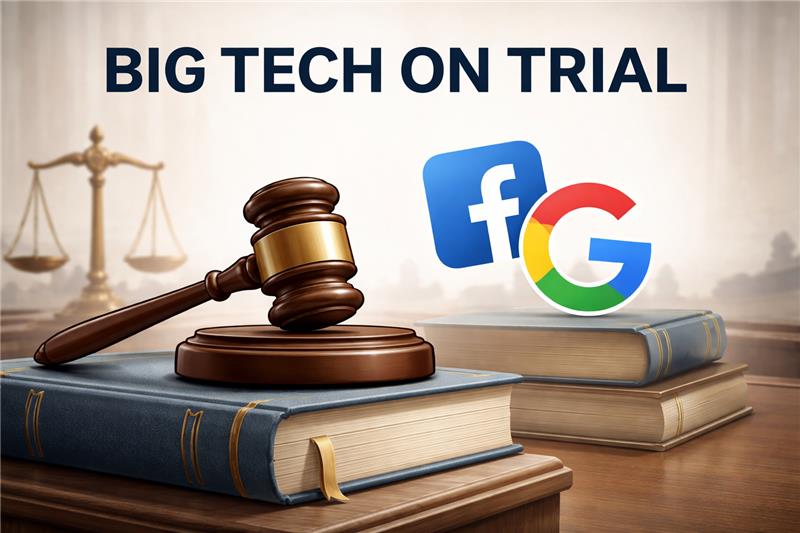
Two separate verdicts last week challenge the protective moats Big Tech companies have long enjoyed. While the near-term financial penalties imposed are not especially burdensome, the potential long-term remedies introduce significant emerging risks to social media business models. Investors may just be waking up to the implications.
Section 230 Protections
Content platforms such as Meta and Google-parent Alphabet benefit from the protection of Section 230. This protection shields content platforms from the liability for harmful user-generated content. This framework has allowed social media companies to focus on increasing the distribution and reach of news and content – arguably a social ‘good’ in a free speech society. However, it does so at the potential detriment that all content – helpful or harmful – can spread widely. As a result, social media business models have historically emphasized distribution and engagement over safety. This dynamic has helped companies avoid meaningful legal scrutiny in the past, despite growing evidence linking their platforms to real-world harm.
A New Focus
But these recent trials focused on the distribution and engagement practices of social media companies. They represent direct scrutiny on the companies’ core growth drivers. In specific, the guilty verdict levied against Meta in State of New Mexico v. Meta found the company liable for “violating New Mexico’s consumer protection laws” after the prosecutors “demonstrated that Meta intentionally designs its platforms to addict young people and, contrary to Meta’s public commitments, expose them to dangerous content related to eating disorders and self harm.”1 To me, this case represented a new focus for legal scrutiny against social media companies where consumer protection isn’t just about content moderation but about addressing addictive platform design.
Similarly, in K.G.M. v. Meta et al., heard in Los Angeles Superior Court, a jury ruled that Meta and Google were liable for designing addictive platforms that harmed a young user’s mental health. Prosecutors argued that features like infinite scroll, autoplay, and algorithmic feeds were intentionally engineered to maximize engagement at the expense of user well-being. To me, this case represented that courts may now accept the idea that platform design – something these social media companies have used as core growth drivers – can cause harm and may be a focus of future remedies.

Stay on Top of Market Trends
The Carson Investment Research newsletter offers up-to-date market news, analysis and insights. Subscribe today!
"*" indicates required fields
A Bigger Shift
Together, these rulings may suggest a legal turning point. Social media companies are no longer insulated by the argument that they merely host content. Instead, courts are increasingly treating them like product manufacturers which are responsible for how their systems are built and the harms they may foreseeably cause. With thousands of similar lawsuits pending, these cases may prove to be the opening chapter of a broader reckoning, one that could force structural changes to the very mechanics of the social media economy.
- https://nmdoj.gov/press-release/new-mexico-department-of-justice-wins-landmark-verdict-against-meta/
For more content by Blake Anderson, CFA®, Director, Portfolio Management, click here.
8847615.1. – 30MAR26A