In Episode 187 of Facts vs Feelings, Ryan Detrick, Chief Market Strategist at Carson Group, and Sonu Varghese, Chief Macro Strategist at Carson Group, ask the question on every investor’s mind: Does today’s market feel like 1999?
The episode opens with genuine nostalgia. Ryan recalls tripling his play money on Sycamore and Juniper Networks before losing it all on margin. Sonu remembers 75% of his engineering class having job offers by August of senior year. The vibes were very different then.
From there, Ryan and Sonu dig into the numbers raising eyebrows. Semiconductors now make up roughly 22% of the S&P 500, up from around 6% at last April’s lows. A telecom ETF built around AI infrastructure is up 44% year to date. These are not boring numbers. But beneath all that heat, sentiment is in the toilet, breadth is holding up, and credit spreads are making new cycle lows in ways that look nothing like the quiet deterioration that began in 1998. Ryan and Sonu make the case that this is not 1999. Not yet, anyway.
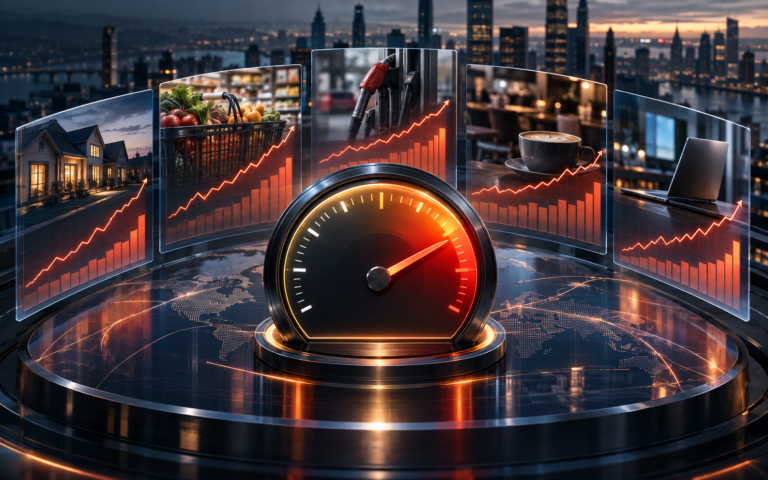
Then Sonu drops inflation data that deserves a second read. Computer software and accessories, where AI token and cloud spending shows up in CPI, is running at an 83% annualized pace over the last three months. The Fed has a real problem. Ryan and Sonu walk through why stable jobs plus hard inflation plus a dovish Fed still adds up to bullish for equities, before closing out with a stronger-than-expected labor market update, a preview of the US-China trade meeting, and a record-breaking Uber ride from O’Hare to Cedar Rapids.
Key Takeaways:
- Semiconductor stocks and AI infrastructure names are posting numbers that feel frothy on the surface, but earnings growth and genuine demand provide far more fundamental support than the dot-com era ever did.
- The NYSE advance decline line just hit an all-time high. In 1998, it peaked 18 months before the market did. That divergence is not happening today.
- AI-related inflation is real and showing up in the data. Computer software in PCE is running nearly 60% annualized over the last six months. This is not just an energy or tariff story.
- The S&P 500 has posted six consecutive weekly gains totaling over 16%, the second best such streak on record. One year later, the market has historically been up 17% on average.
- The labor market is quietly stabilizing. Blue-collar sectors that were bleeding jobs in 2024 are turning around, and prime-age employment sits at its highest ratio since before the 2008 financial crisis.
- The longer the Fed delays action on inflation, the greater the Volcker-style risk in 2027 or 2028. The AI capex boom has driven roughly 45% of real GDP growth over the last five quarters. When that fades, the math changes.
Jump to:
0:00 — Welcome and the 1999 Question
2:00 — College Memories and Dot Com Vibes
6:20 — New Highs with Rotten Sentiment
10:30 — Frothy Semis and Leverage Lessons
15:50 — AI Infrastructure Trade and Sector Gaps
22:40 — Breadth, Credit Spreads, and Bull Signals
33:10 — CPI Heat from Tariffs and AI Bottlenecks
41:50 — Fed Risks and When Booms Break
49:40 — Payrolls Update and Blue-Collar Turn
54:20 — China Trade Talk, Travel Chaos, and Wrap
Connect with Ryan:
- LinkedIn: Ryan Detrick
- X: @ryandetrick
Connect with Sonu:
- LinkedIn: Sonu Varghese
- X: @sonusvarghese
Questions about the show? We’d love to hear from you! factsvsfeelings@carsongroup.com
Carson Group is committed to advancing financial literacy. Schedule a consultation to learn how Carson can help you help your clients and grow your business.
8925062.1-0526-A