Almost every friend of mine who has looked for a job this year has a similar story. They sent out dozens of applications, sometimes hundreds, and heard back from maybe two or three. The ones who landed something usually knew someone on the inside.
For a long time, the advice was simple. Get good grades, go to a good school, and a good job will be waiting for you when you graduate. For many people my age, that path isn’t working the way it used to.
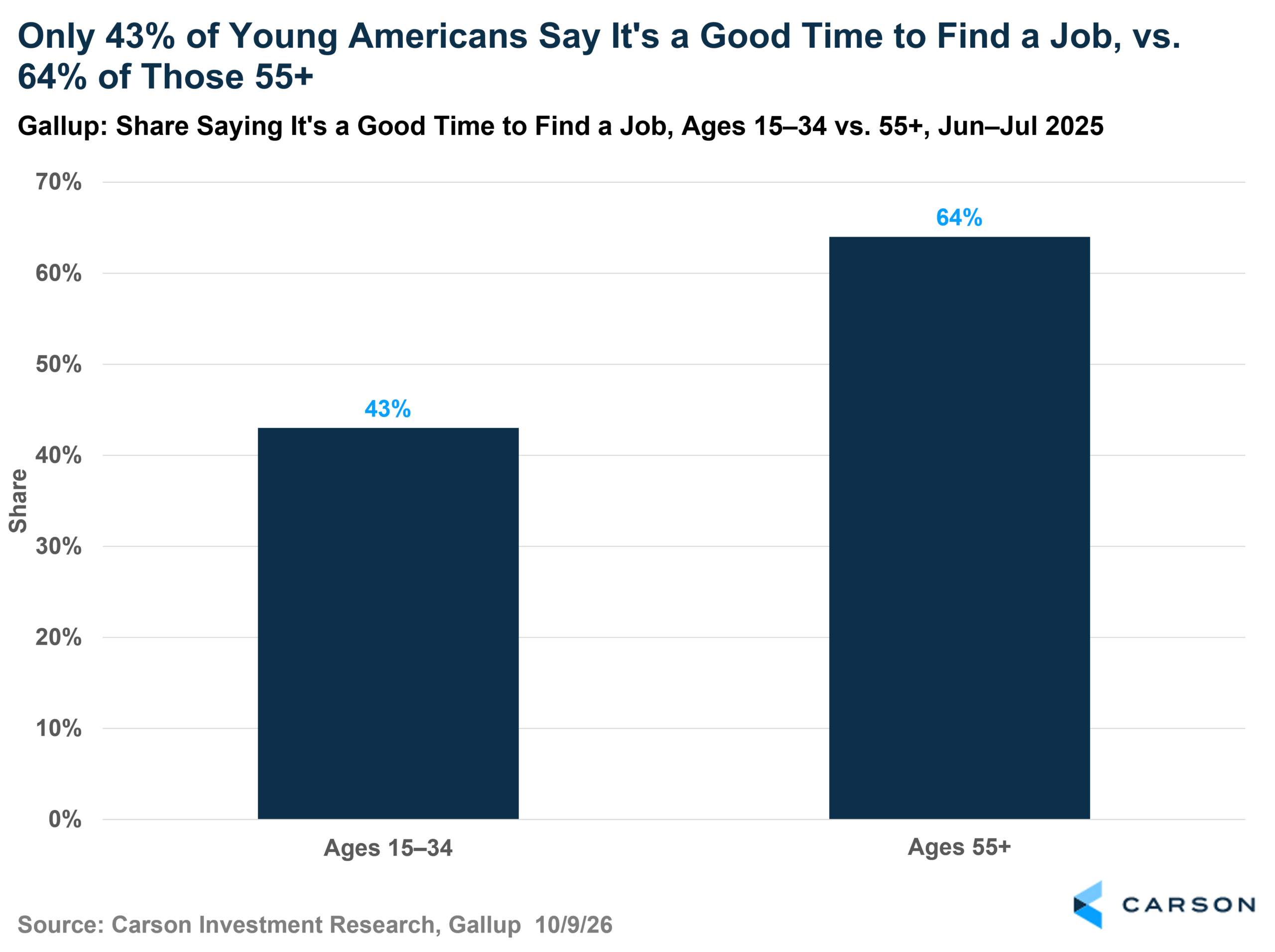
On paper, the job market looks fine. Unemployment is 4.2%, and layoffs are near record lows, which is why Sonu Varghese, Carson’s Chief Macro Strategist, called the labor market perfectly fine back in June. Young people don’t see it that way. In a Gallup poll released this spring, 43% of Americans aged 15 to 34 said now is a good time to find a job where they live, compared with 64% of people 55 and older.
I graduated in May 2025, so I’ve been in this job market about as long as the people I’m writing about, and I don’t have it all figured out. Right now, I approach anything, whether it’s jobs, housing, or the stock market, by assuming the map in my head is out of date. A lot of what worked for people starting their careers 30 years ago doesn’t match what people my age are walking into. So I go in like I know nothing, look at what’s changed, and update. This post is what that looks like for the job market. And if you’re watching a kid or grandkid go through this, I hope it helps explain what they’re up against.
The Job Market a Few of Us Might Remember
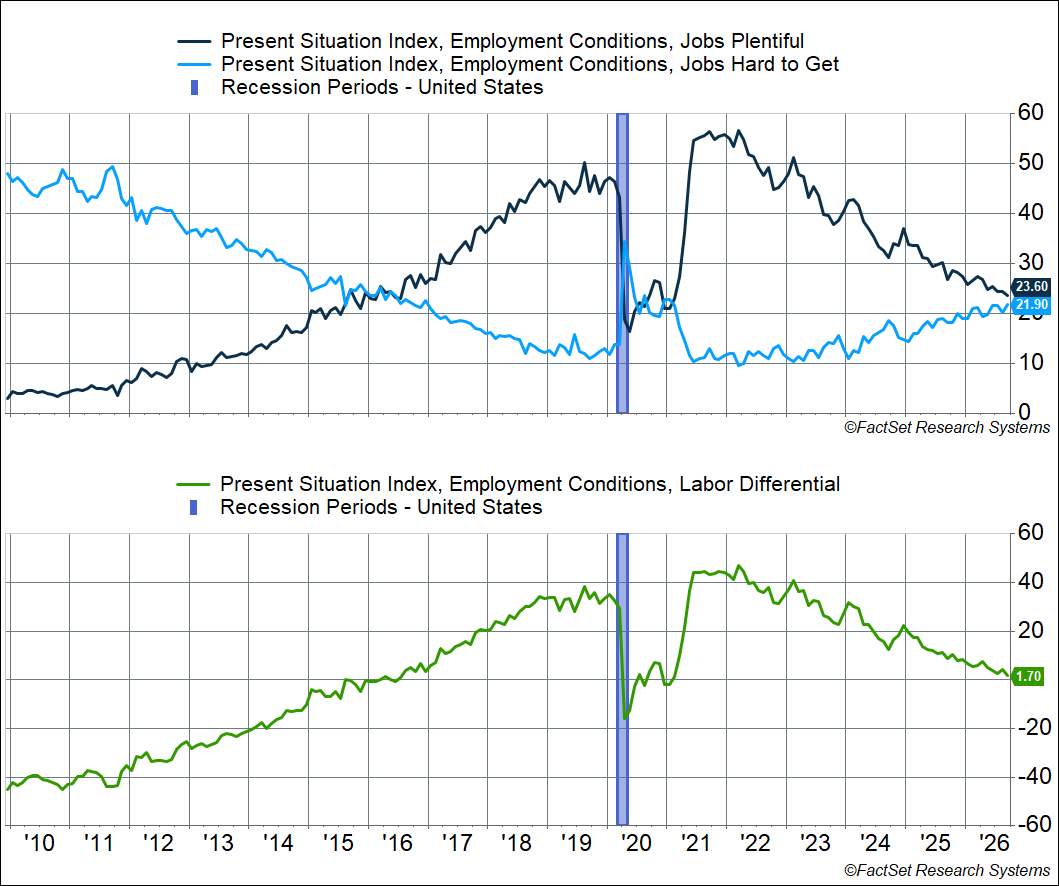
Many of us formed our picture of the job market in 2021 and 2022, when employers couldn’t hire fast enough. More than half of consumers told the Conference Board that jobs were plentiful. If you wanted a big raise, you switched companies. In mid-2022, job switchers saw their pay grow 8.5% a year, compared to 5.9% for people who stayed put.
Source: Carson Investment Research, FactSet 9/30/26
The market looks very different now. In September, the share of people saying jobs are plentiful was only 1.7 points higher than the share saying they’re hard to get. The extra raise for switching jobs has shrunk to about 1.3 points.
The gap between how the job market looks and how it feels comes down to what the headline numbers measure.
Companies Have Nearly Stopped Hiring
The unemployment rate measures how many people want a job and can’t find one out of the total labor force (that group and the people already employed). It depends in part on how many people are looking for work. It doesn’t measure how often anyone gets hired, and that number looks a lot worse. In August, employers hired the equivalent of 3.3% of their workforce. Outside of 2020, the only other long stretch of hiring this slow since the data starts in 2000 ran from late 2008 through 2013, when unemployment averaged about 8.5%.
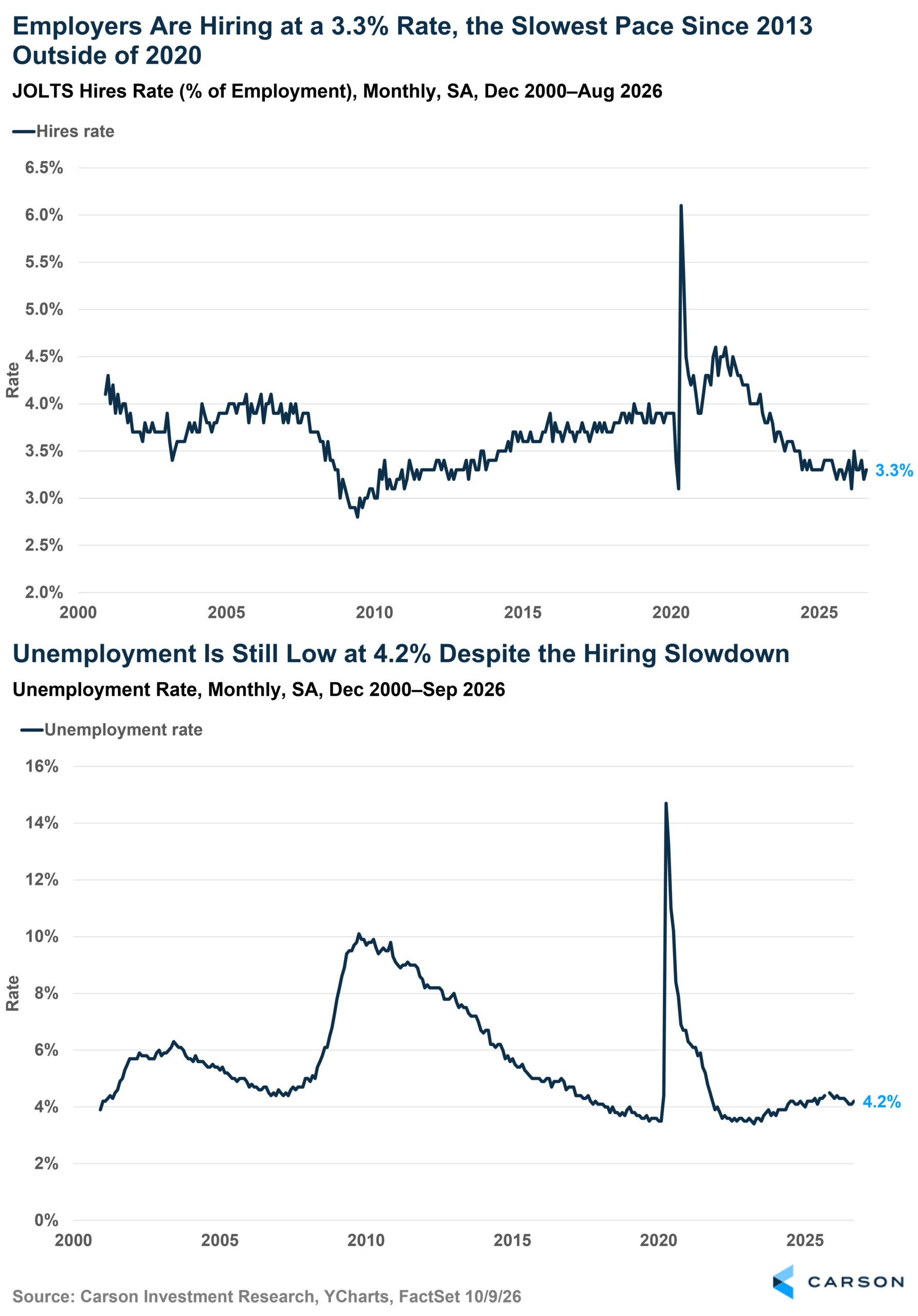
Unemployment stays low because almost nobody is leaving. People are quitting less, and companies are laying off fewer workers than before the pandemic. It works a lot like the lock-in effect in housing. Homeowners who locked in a 3% mortgage don’t want to sell and take on a 7% one, so first-time buyers are forced to wait. Workers with stable jobs aren’t quitting a lot right now, so first-time job seekers wait.
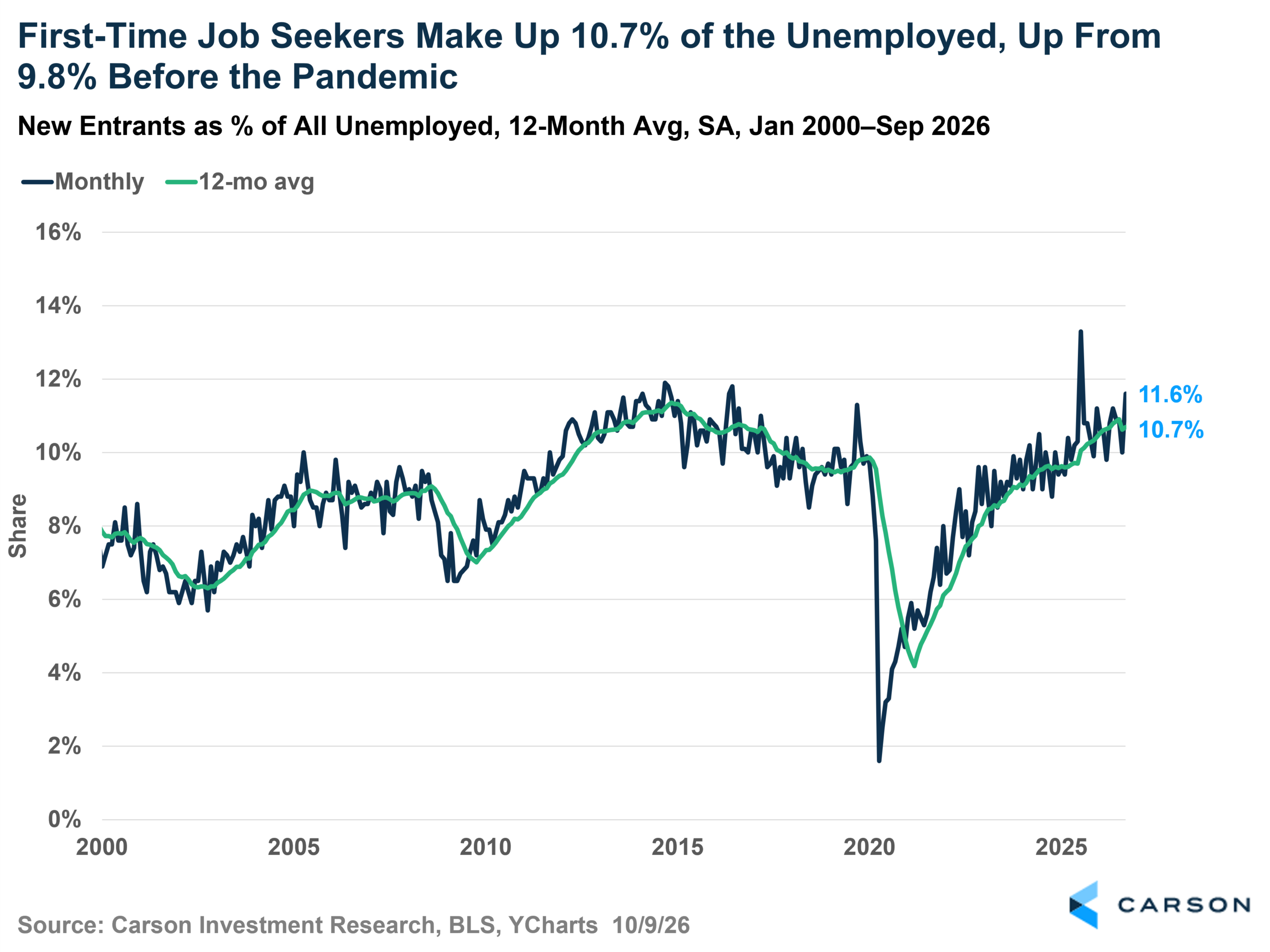
You can see it in who’s unemployed. Over the past year, people looking for their very first job have made up about 11% of the unemployed, up from under 10% before the pandemic.
Young College Grads Have Lost the Most Ground
Unemployment for 20- to 24-year-olds jumped to 8.0% in September, but compared with the overall rate, young people are about where they were in 2019. College grads are a different story. Over the past year, unemployment for 16- to 24-year-olds with a bachelor’s degree has averaged 7.6%, versus 4.3% for all workers. In 2000, the gap was small. By 2019, it was 1.6 points. Today it’s 3.3 points, near the widest since at least 1985. A degree still helps, since young people with only a high school diploma face 10.3% unemployment. It just doesn’t give you the head start it used to.
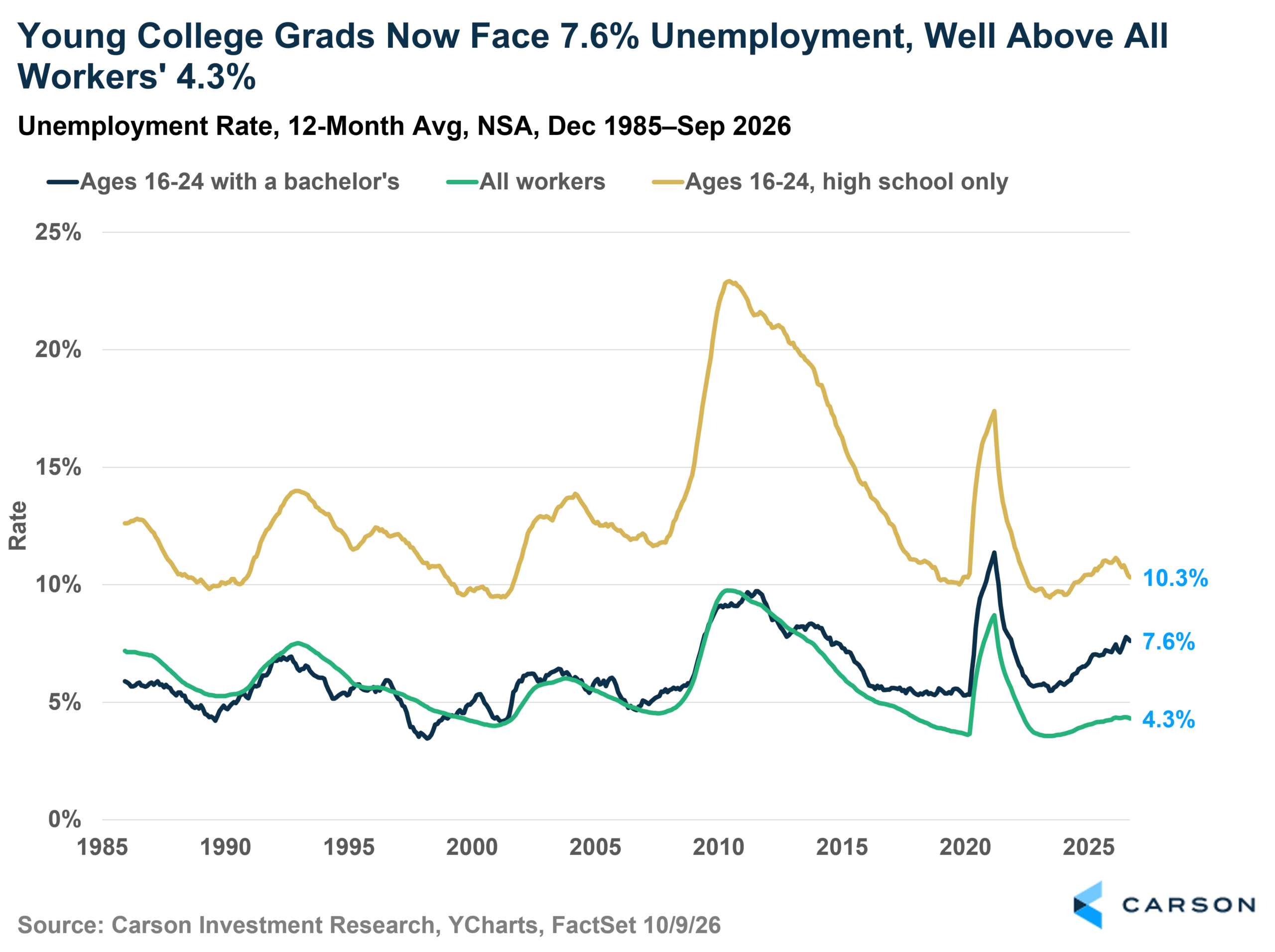
More people have degrees now, and the jobs grads usually target haven’t grown as fast. Remote work probably made it harder too. It’s much easier to learn a job sitting next to someone who already knows it than over Zoom, so remote teams tend to hire people who can hit the ground running.
What surprised me most is that all of this is happening while businesses are doing great.
Companies Are Growing Without Adding People
Profits for S&P 500 companies, the 500 large U.S. companies most people think of as “the market,” are at a record over the past year.
And they’re getting there with the people they already have. Before the pandemic, businesses grew output about 2.9% a year and needed about 1.6% more hours each year to do it. Since 2024, output has grown about as fast, 2.8% a year, while hours worked have grown just 0.2%.
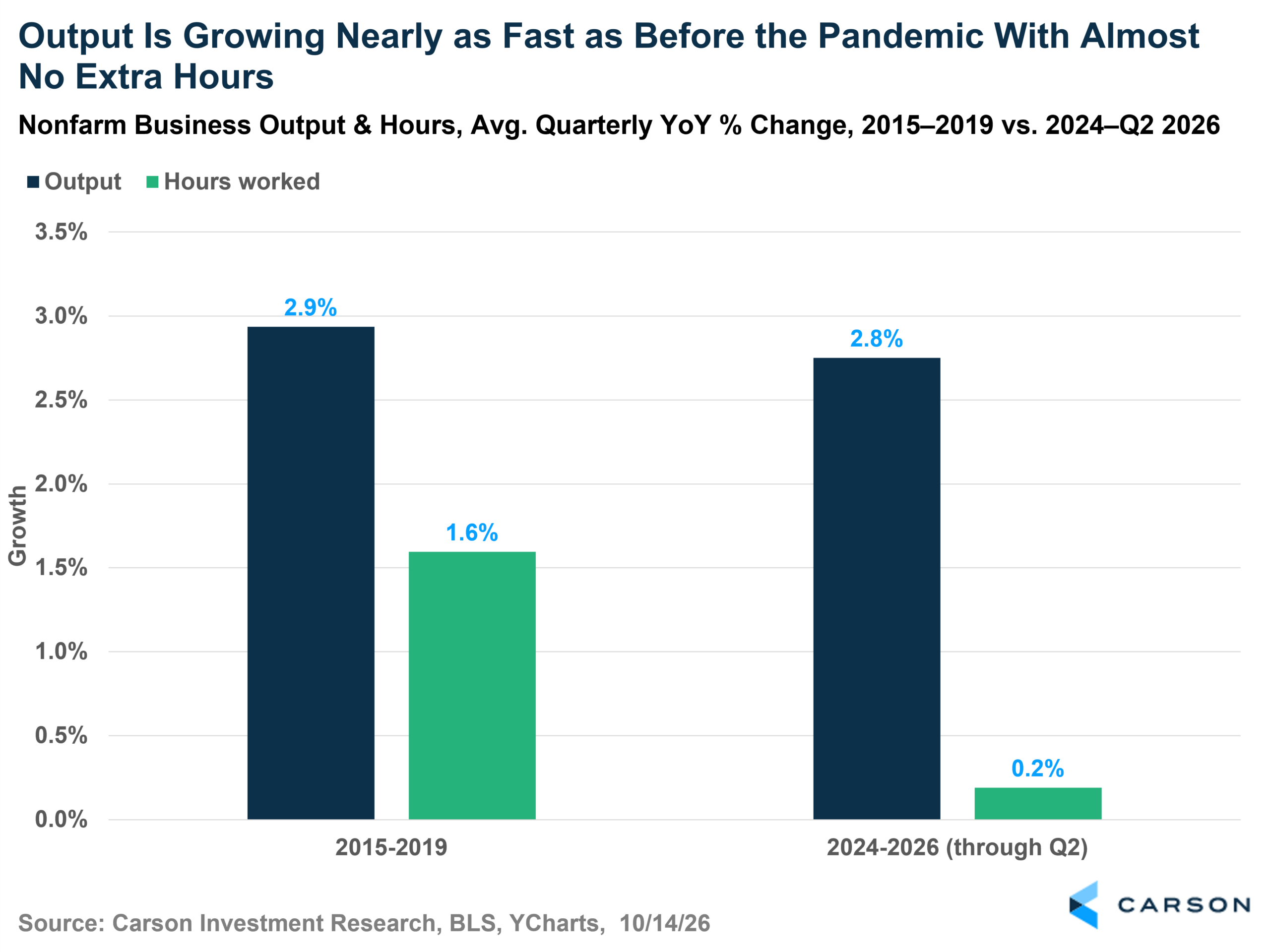
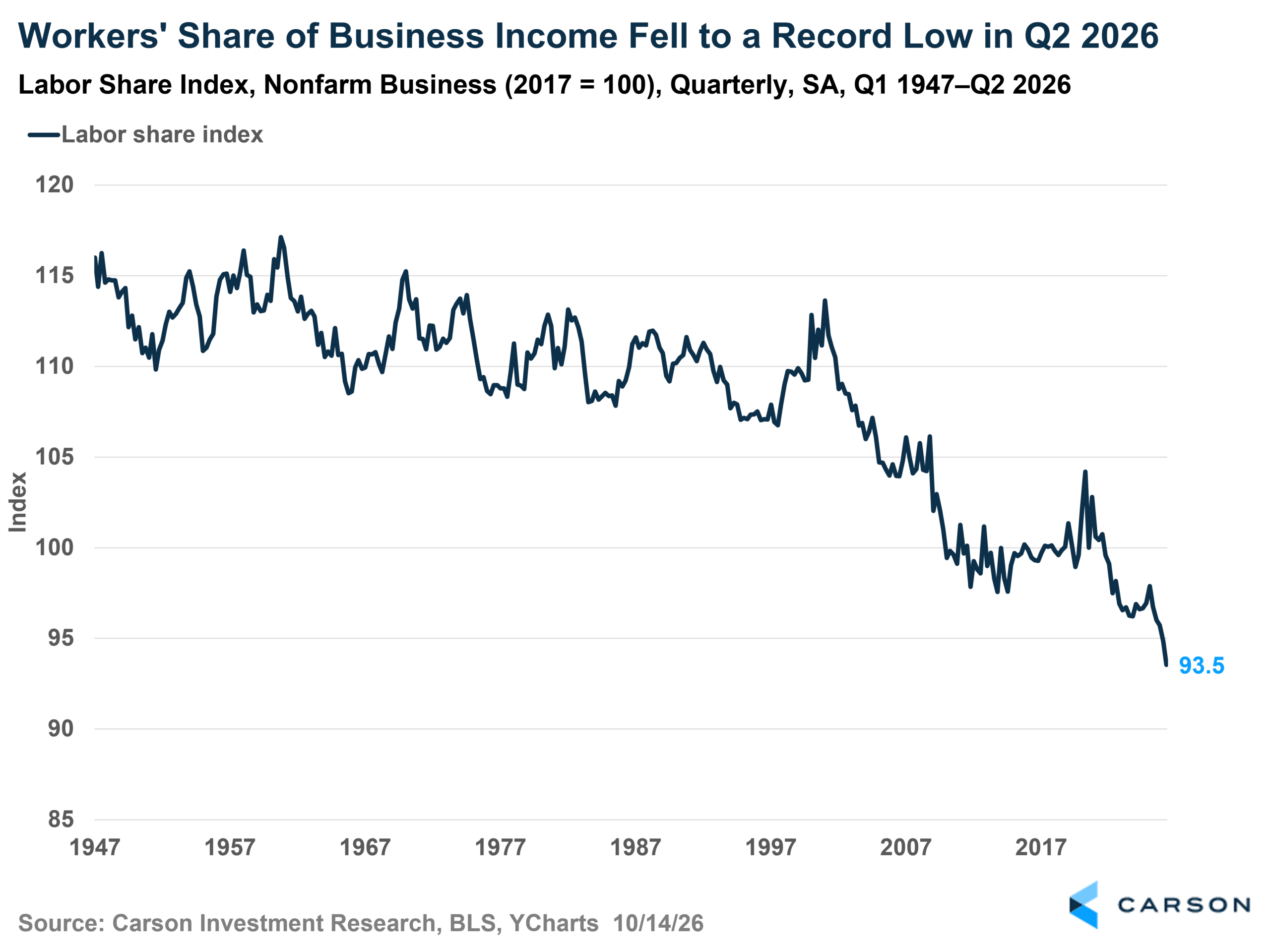
That shows up in who gets paid. The share of business income that goes to workers fell in the second quarter to its lowest level since the government started tracking it in 1947. It has been drifting lower for decades, but the drop since 2022 has been fast. For investors, that’s great news, since revenue growing faster than payroll pushes profit margins higher. For someone trying to get hired, it means companies have learned to grow without adding many seats.
Higher interest rates add to it. Hiring someone right out of school is an investment. You pay them for months before they’re fully up to speed, and the payoff comes years later. When borrowing costs rise, companies get pickier about anything that takes a long time to pay off, and right now much of their spending is going into AI and data centers. Sonu and I wrote about that split in our post on whether rate hikes can slow the AI boom. So far, the Fed’s hikes are hitting housing and household budgets, while AI spending keeps going, and I’d guess entry-level hiring is taking a hit too. This isn’t because AI is doing the work. It’s that the infrastructure investment is pulling away from some hiring.
Whether AI use is replacing entry-level work is still an open question to me. I don’t see it in the economy-wide numbers yet, and the problems for young grads started well before ChatGPT came out in late 2022.
Internships Have Become the Front Door
With one-click applications, anyone can apply to 50 jobs before lunch. The best way in is still to get your foot in the door early. Internship postings on Handshake, the job board most colleges use, have fallen at least 10% in each of the last three recruiting seasons, and applicants per posting rose about 75% last year. The students who do land one are more likely than ever to stay. Companies offered full-time jobs to 63% of last year’s interns, the highest rate in five years. An internship today works a lot like a two- to three-month job interview.
What’s Worked for People I Know and Me
I’m not going to pretend I have a playbook, but a few things have worked for friends who’ve landed jobs recently and for me, and they line up with what I found in the numbers.
Put the last few sections together: Applying has never been easier, and companies aren’t hiring much, so every opening gets buried in applications, and yours has to stand out. The most reliable way I’ve found to do that is to have someone who can vouch for you. Sending out another hundred applications usually just adds to the pile.

Stay on Top of Market Trends
The Carson Investment Research newsletter offers up-to-date market news, analysis and insights. Subscribe today!
"*" indicates required fields
That means talking to people, and not only your closest friends. LinkedIn ran one of the largest experiments ever done on how people find jobs. Over five years, it randomly changed which connections it recommended to more than 20 million users, then tracked who changed jobs. The results, published in Science in 2022, showed the most helpful connections were acquaintances, people you know a little but don’t talk to often. Your close friends tend to know about the same openings you do. Acquaintances hear about different ones. A 20-minute call with a former coach, a professor, or a friend’s older sibling costs almost nothing.
The other way to stand out is to keep investing in yourself. AI has made it easy for anyone to send a polished resume, so the things that are harder to fake count for more, like explaining your work clearly in a conversation or picking up a skill employers are asking for through a certification, a class, or learning to use AI tools well.
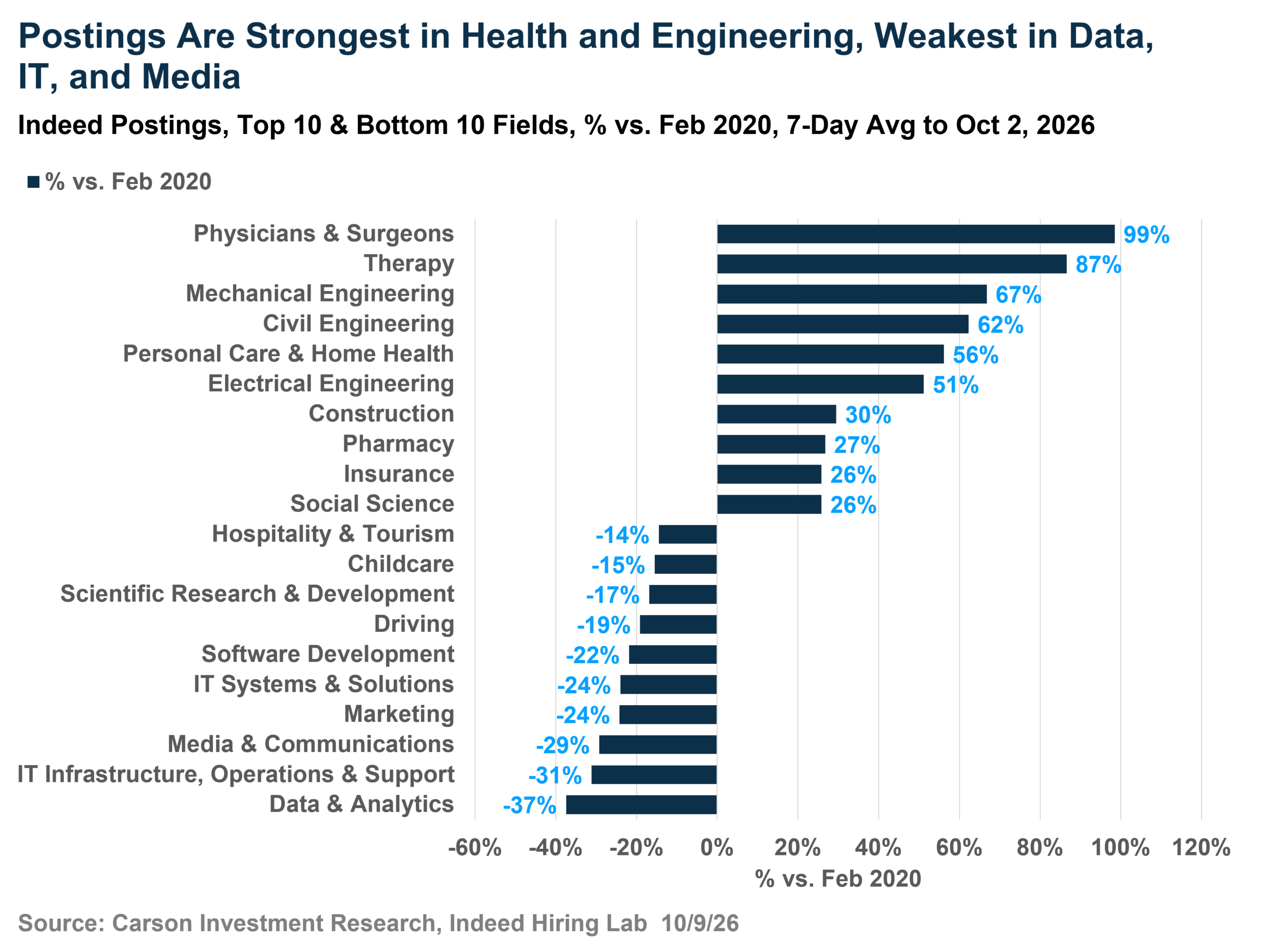
It also helps to look where the openings are. Compared to February 2020, Indeed postings for therapy jobs are up 87%, and mechanical engineering is up 67%, while software is down 22% and data and analytics is down 37%. Growing industries also need finance and operations people.
If you already have a job, line up the next one before you leave. The typical job search now takes 11.5 weeks, up from 8.7 in 2019, so it’s worth keeping a bigger cash cushion. And if you’re a parent or grandparent of someone in their twenties, one introduction can do more than another round of resume edits.
What Would Change My Mind
If the hiring rate climbs back above about 3.6% and people start quitting more, the door would be opening. If first-time job seekers fall back below 10% of the unemployed, the line is moving in the right direction. The bigger risk is layoffs. If weekly jobless claims climb above about 250,000 and stay there, hiring won’t keep up with the people who lose their jobs.
I’ll keep checking my map against the data and changing course when it changes. For now, the old path of good grades, a good school, and a good job right after graduation looks harder and more complicated than it did for the generations before us. It can still work, but getting there takes more people in your corner and more willingness to adjust along the way.
By Harry McDonald, Analyst, Investment Research
9182545.1. – 15OCT26A