Welcome to Carson Investment Research’s Earnings Check-In. This series is built weekly from FactSet’s Earnings Insight report (John Butters, VP, Senior Earnings Analyst with FactSet), with index weights and market caps sourced from YCharts, and aggregation performed in-house. We tie every figure to FactSet’s published numbers, then add Carson’s perspective on top of that. We publish our Earnings Check-In weekly during earnings season.
Last week was one of the wildest weeks I’ve seen in my time studying markets. The S&P 500 fell 8.6%, its worst week since April 2025, and then jumped 4.7% on Monday after Nvidia brought its CEO back… Wild! There are more open questions in this market right now than I can count, and I don’t think anyone has good answers to them yet. So for Thanksgiving week, I’m going to sit still. With 93% of the S&P 500 reported, the third quarter is basically over, and I want to look back at how this season unfolded and what I learned along the way.
Where the Season Stands
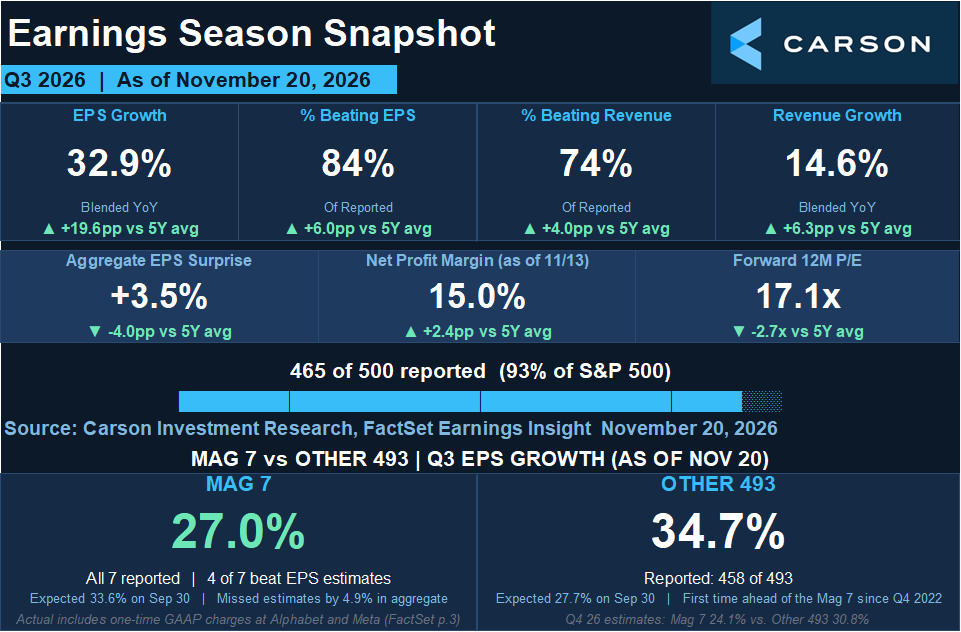
Earnings are up 32.9% from a year ago, up from 32.0% last week, according to FactSet, and Nvidia’s report was the biggest driver of the bump. 84% of companies beat estimates, above the 5-year average of 78%, and revenue is growing 14.6%. Things are going well!
How We Got Here
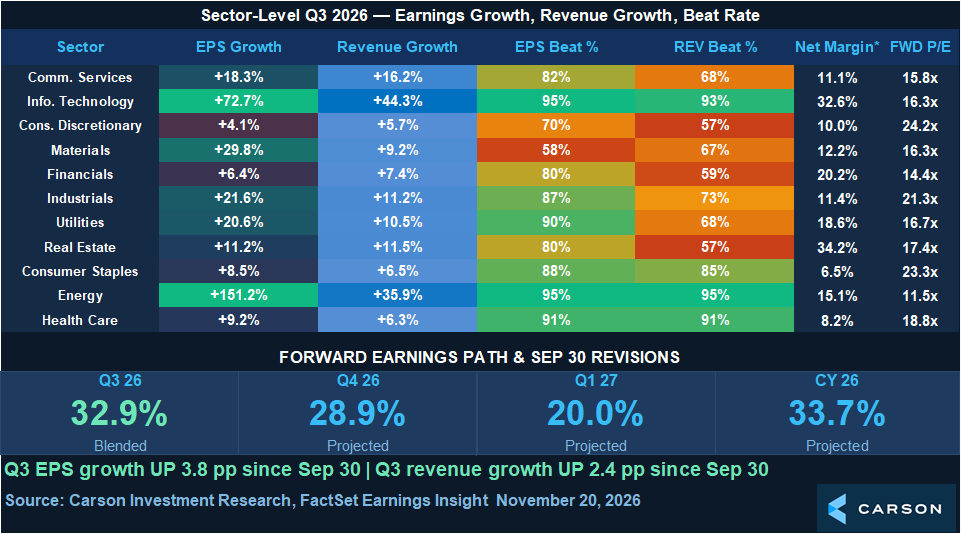
When we kicked off the season in The Shortage Quarter, I said this quarter’s profits were coming from things the world couldn’t get enough of, mainly AI chips and oil. That held up. Oil averaged $85.68 a barrel in the quarter, 32% above a year ago, and Energy earnings grew 151.2%. Technology, led by the chip makers, grew 72.7%.
That raised the next question: who was paying for all those chips? Meta beat estimates in late October, and its stock still fell 7%. When I dug into it, I found that Meta was spending more on data centers than its business was bringing in. A week later in Following the Money, Alphabet and Amazon looked the same way. Together, the four biggest AI buyers went from $61.7 billion in free cash flow a year earlier to negative $26.4 billion.

Stay on Top of Market Trends
The Carson Investment Research newsletter offers up-to-date market news, analysis and insights. Subscribe today!
"*" indicates required fields
That money didn’t just disappear. It turned into revenue for the companies selling the chips, and a lot of them sit outside the Magnificent 7. By the end of the season, the other 493 companies in the S&P 500 grew earnings 34.7%, ahead of the Mag 7’s 27.0% for the first time since late 2022.
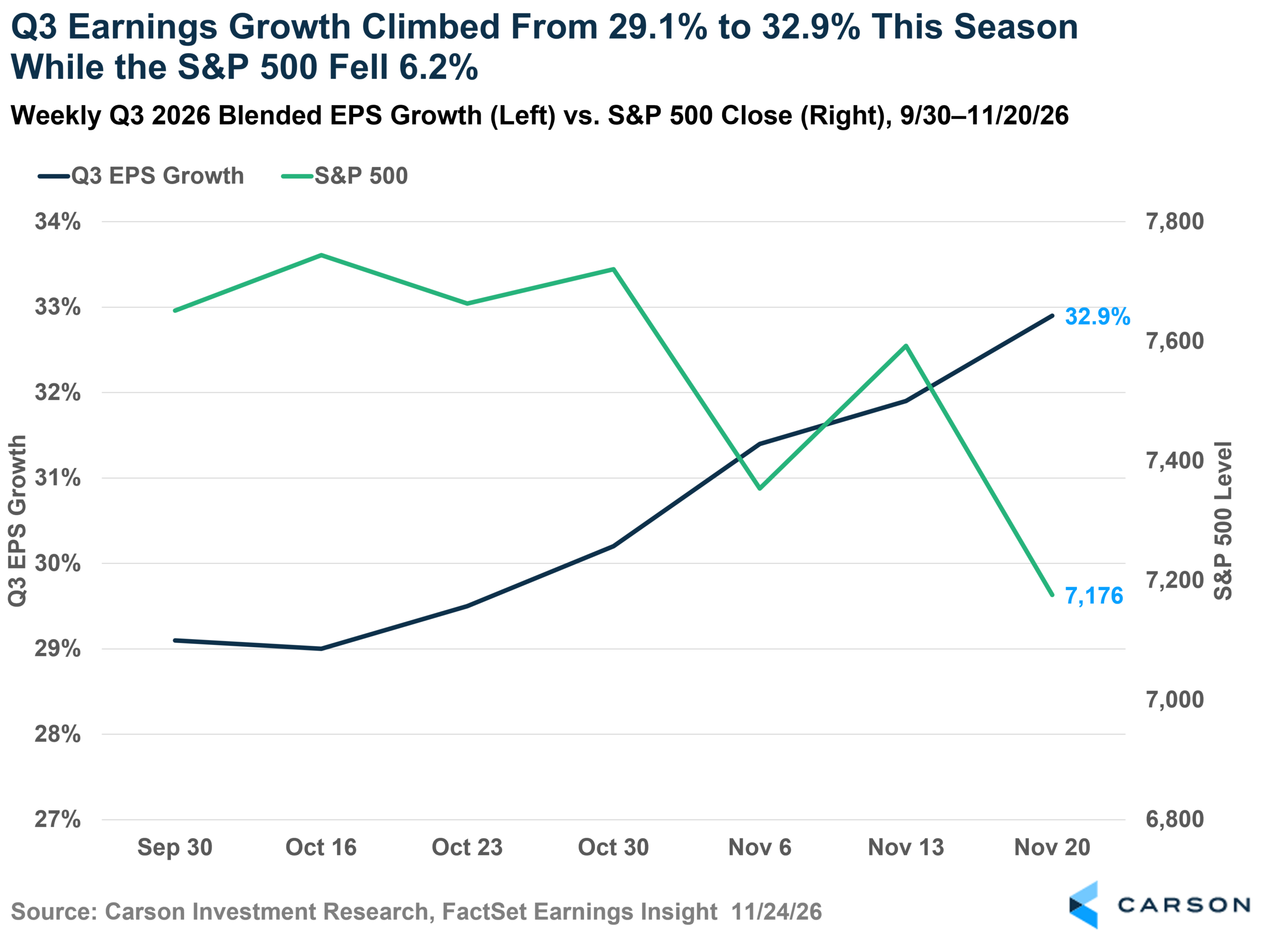
Stocks, however, took a different path. By Priced Like a Peak, investors were paying less for every dollar of expected earnings, and by last week’s Who Has the Power at the Table?, the Fed’s rate hikes had become the biggest worry in the room. Meanwhile, after the first week of the season, earnings estimates rose every week. Since the end of September, analysts raised their earnings estimates for the next 12 months by 4.4%, while the S&P 500 fell 6.2%.
What I Learned
The biggest lesson is that the businesses themselves are doing really well. Companies sold 14.6% more in goods and services than a year ago, the best quarter since late 2021, except for the second quarter of this year. With inflation running around 3%, most of that growth came from customers buying more. All 11 sectors grew sales, and companies beat revenue estimates more than usual.
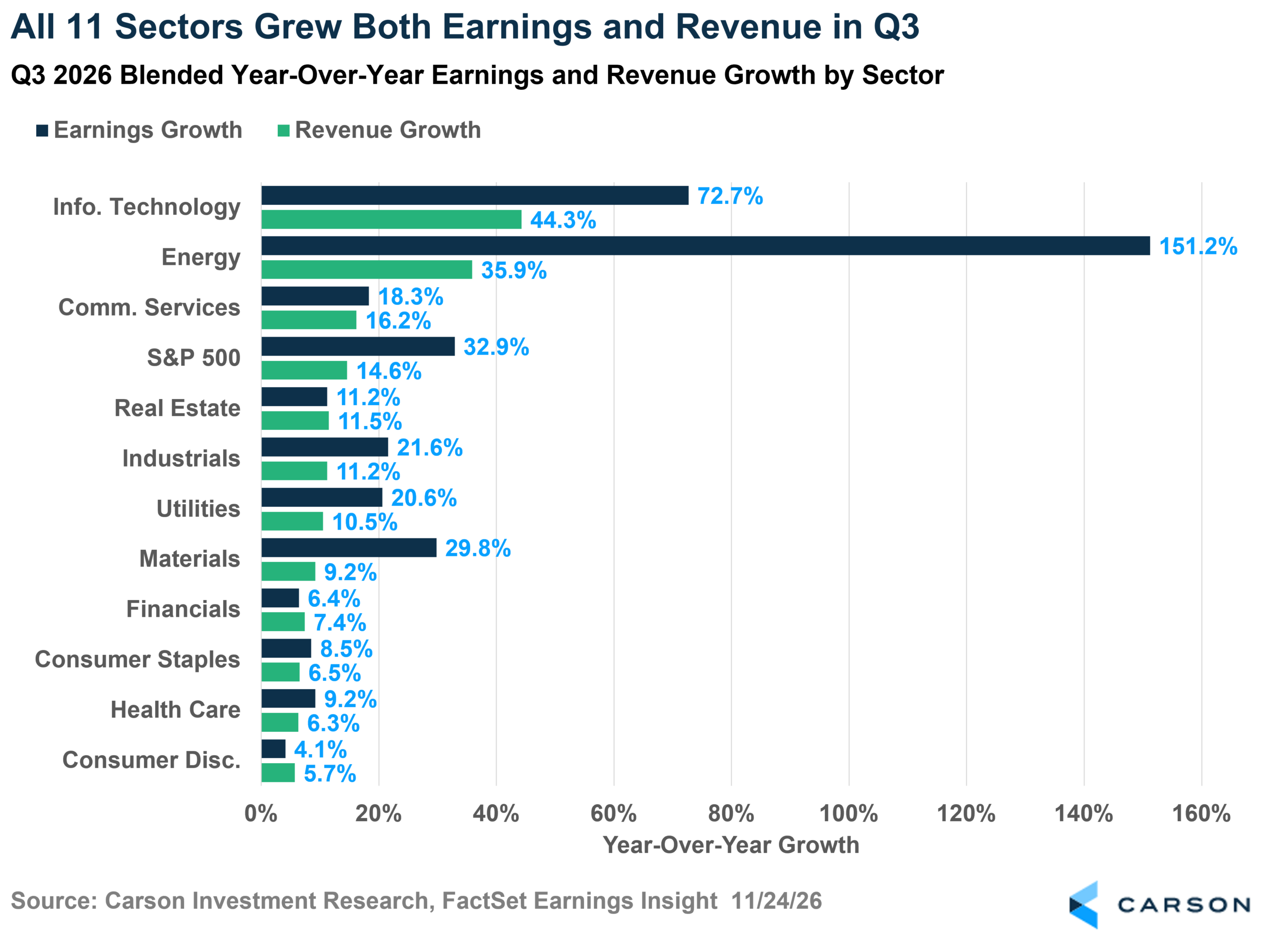
That’s about as close as I’d want to see from companies in a healthy economy. If sales were barely keeping up with inflation, or if earnings were shrinking, I’d be a lot more nervous.
The other lesson is that earnings and stock prices run on different clocks. Earnings tell us what companies already did. Stock prices are a bet on what comes next, and right now investors are worried about the Fed and how long AI spending will last.
What Comes Next
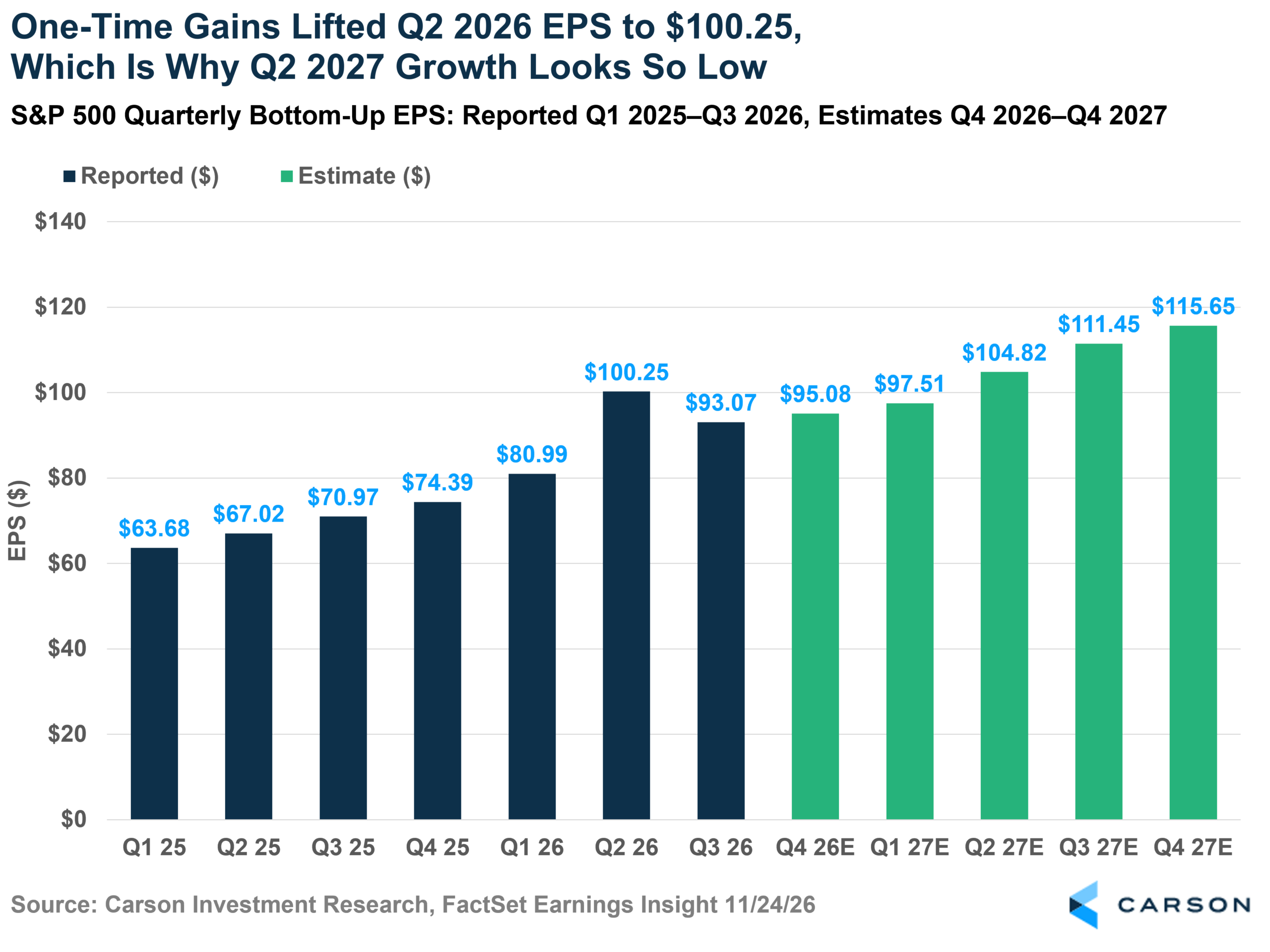
Looking ahead, analysts expect S&P 500 earnings per share to keep climbing, from $93.07 in the third quarter to $115.65 by the end of 2027. The one bar that sticks out is the second quarter of this year, which got a big one-time boost from investment gains at Alphabet and Amazon. Next year’s second quarter will be measured against that bar, which is why FactSet’s growth estimate is only 3.6%. For all of 2027, analysts expect 16.4% growth, about half this year’s pace but still above the 12.6% average of the past 10 years.
Reporting This Week
Only 13 S&P 500 companies report this week. FactSet is off for Thanksgiving, so we’ll skip next Tuesday and come back on December 8 to wrap up the season, after we’ve seen one more FactSet report and gotten closer to the Fed’s December meeting. Until then, I’m happy to let the dust settle and eat too much turkey.
From all of us at Carson, Happy Thanksgiving!
By Harry McDonald, Analyst, Investment Research
9254602.1. – 24NOV26A